Photo: Core Visuals NYC
A corporate suite can look like a sports assignment from the outside, but the useful coverage is usually about the people hosting and being hosted. The arrival, the introductions, the conversation, the small service details, and the shared view of the arena tell that story. The game supplies context. It rarely supplies the whole point.
Corporate suite coverage should prioritize the hosted relationship over the game itself. A useful brief identifies arrivals, priority guests, natural conversation, service details, a few wide contextual frames, and any privacy boundaries the crew must respect. Access varies by event, so the assignment should describe the room and the people before it describes the scoreboard.
Table of Contents
- The assignment is the hosted relationship
- Arrival is the first story beat
- Priority guests and privacy need a clear plan
- Conversation is usually the most useful deliverable
- Service details explain what the host created
- Arena frames should stay contextual
- When a staff phone is enough
- Brief the deliverables before choosing the gear
The assignment is the hosted relationship
Corporate suite event coverage is primarily a record of the hosted relationship, not a substitute for the broadcast. The useful frame shows who arrived, who greeted whom, where conversation happened, and what the host created for the guests. A few arena views can establish place without taking over the story. That framing keeps the assignment useful after the final whistle.
That distinction changes the brief before a camera appears. Instead of asking for every dramatic play, ask which relationships matter in the room and what a guest should remember later. The host may care about a client conversation, a warm introduction, or the fact that a group stayed engaged through the evening. Those are human moments, and they disappear quickly when every lens points toward the action on the field or court. Coverage can still include the energy of the event, but the energy should support the hosted experience. The game is the setting. The people are the reason the suite exists.
Arrival is the first story beat
Arrival coverage gives a corporate suite story its beginning. Photograph the host preparing to receive people, guests entering, greetings, coats or bags being settled, and the first exchanges before the room becomes busy. These frames make the hospitality feel intentional and give the final gallery a clear opening. They also make later conversations easier to understand.
Arrival is also when the room is easiest to read. Seating is still available, the food table is intact, and the host can often identify priority guests without interrupting a conversation. A photographer who arrives late may still make attractive pictures, but the gallery starts in the middle of the evening and loses the reason everyone gathered. The practical brief should name the expected arrival window, the person who can point out priority guests, and any areas where the crew should stay clear. None of that requires a dramatic production. It requires being present for the first useful exchange, which is usually earlier than people expect.
Priority guests and privacy need a clear plan
Guest privacy is part of the coverage plan, not a detail to solve after delivery. Before the event, identify priority people, any people who should not appear, and who can answer a quick question when a photographer is unsure. A short named list gives the crew a usable boundary without turning the room into a compliance exercise. It also keeps a busy evening from becoming guesswork.
Privacy also affects how a moment is approached. A photographer can stay with a greeting, a shared laugh, or a group conversation without forcing every guest into a camera-facing pose. If someone turns away, is in a private exchange, or makes it clear that they do not want a photograph, that signal is enough. The assignment is to document hospitality, not to win an argument with a lens. It helps to tell the crew whether the host wants a few priority portraits, mostly candid conversation, or a mixture. Clear priorities let the photographer move lightly and give guests room to remain guests.
Conversation is usually the most useful deliverable
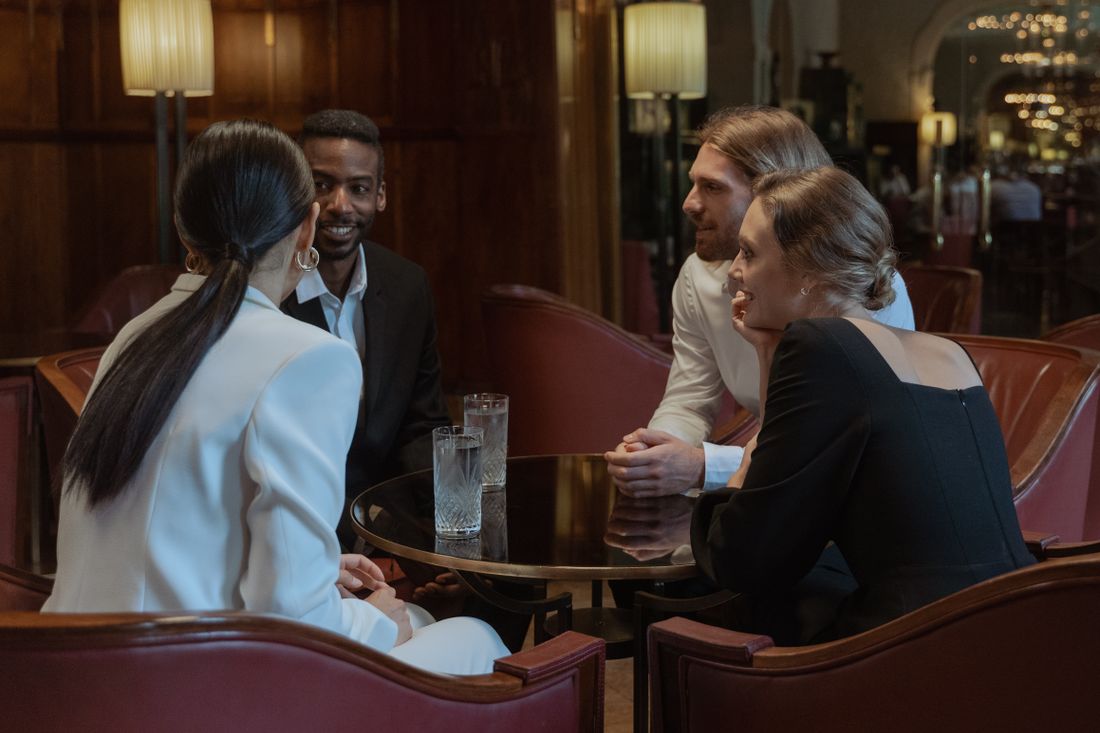
Conversation photographs often carry more value than another frame of the game. They show attention, recognition, and the social reason for the invitation. Look for people listening, greeting, leaning into a story, or sharing a reaction. The goal is a record of connection that still feels natural when someone sees it later.
This is where a photographer earns the difference between documentation and a room full of evidence. Posed group shots have a place, especially when the host needs a clear record of a particular group. They should sit alongside the quieter moments, not replace them. A suite can become visually repetitive if every frame shows the same seating area and the same smile toward the camera. Vary the distance and the relationships. Use a wide frame to show the room, a medium frame to show two people talking, and a closer frame for a reaction or small exchange. That sequence gives the viewer a sense of being there without pretending every moment was staged for the camera.
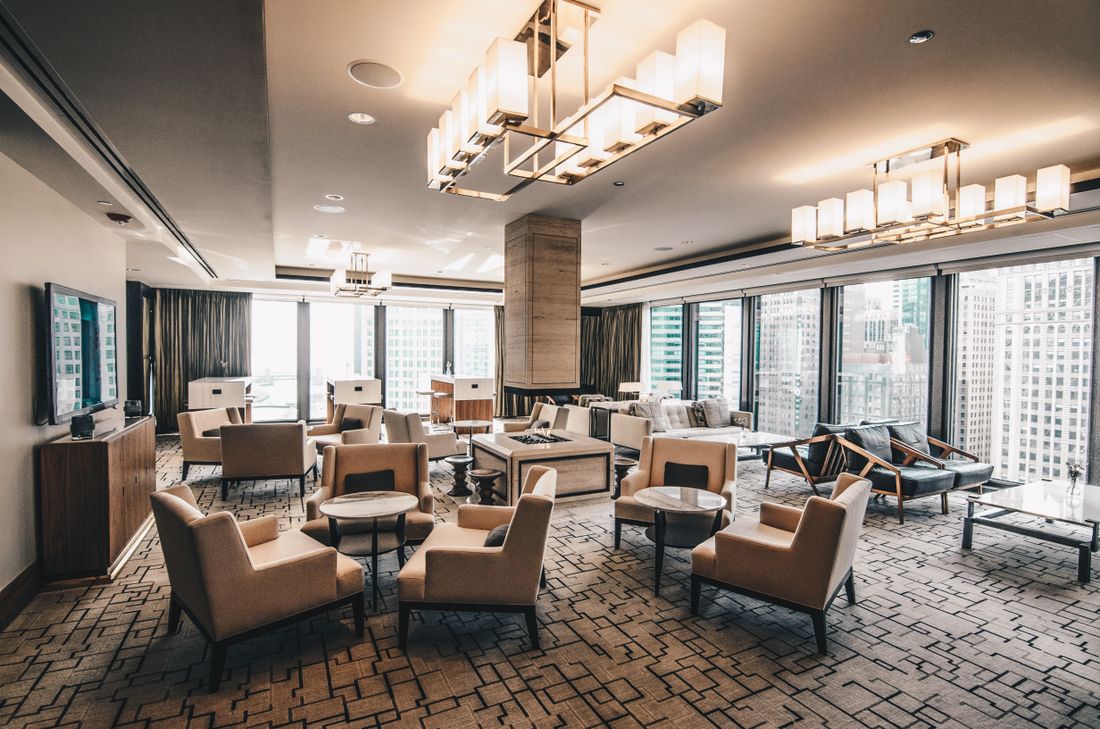
Photo by Karl Solano via Pexels.
Service details explain what the host created
Service details give hospitality coverage a physical layer. A prepared table, arranged seating, a handoff, or a quiet room before guests arrive can show the care behind the invitation. Photograph these details without readable labels or brand marks when they are not part of the assignment. They should support the story, not become an accidental advertisement.
Room context matters for the same reason. One or two wide frames can establish the suite, the view, and the relationship to the arena without turning the post into venue documentation. The most useful composition usually leaves enough space for the room to breathe while keeping people or the hosting setup as the visual focus. Detail coverage also gives the final set an edit point between conversations and arrival photographs. It lets the gallery move from anticipation to welcome to shared experience. The result feels complete because it includes the small evidence of preparation, not because it contains a photograph of every object in the room.
Arena frames should stay contextual
Arena frames are useful when they locate the gathering, but they should remain contextual. A wide view through glass, a glimpse of the crowd, or a moment that connects the suite to the event can establish atmosphere. The assignment rarely needs a full game record, and access or sightlines may limit what is possible.
Those limits are ordinary production facts, not something to hide with overpromising. A suite photographer may be working from inside a private room, behind glass, or within boundaries set by the host and venue. The brief should ask what viewpoints are available and whether any areas or moments are closed. It should also separate the desired experience coverage from any expectation of professional sports imagery. If the client needs action photographs, that is a different requirement to discuss with the appropriate access in mind. If the client needs the guests to feel present and remembered, a few honest contextual frames will do more work than a long sequence of distant action that the photographer was never positioned to make well.
When a staff phone is enough
A staff phone can be enough when the goal is a quick internal memory, a same-night message, or a few informal posts and nobody needs a consistent finished gallery. It is a sensible choice when the host values immediacy over polish, the guest list is small, and privacy boundaries are simple enough for the staff member to manage.
Professional coverage earns its place when the record needs to feel considered and usable after the night ends. A photographer can stay attentive to arrivals and conversations while creating a consistent set across changing light, mixed distances, and a moving room. That matters when several people will use the images for follow-up, internal communication, or future event storytelling. There is no virtue in hiring a production company for a need a phone already handles. The useful question is what has to exist afterward. If the answer is a handful of casual memories, use the phone. If the answer is a coherent record of the hosted experience, bring someone whose job is to notice it.
Brief the deliverables before choosing the gear
The brief should define the people, moments, boundaries, and finished deliverables before it defines equipment. For corporate event coverage, that means deciding whether the priority is photo, video, or both, how much arrival and conversation coverage matters, which contextual frames belong in the set, and who receives the finished work.
That order keeps the production proportional. Core Visuals describes its event work around fixed pricing and deliverables, with photo, video, or both available depending on what the event needs. The same logic fits a suite. A small guest list and a phone-first need may call for no outside crew. A hosted relationship that has to be documented cleanly may call for a photographer, a videographer, or both, scoped around the actual moments rather than the prestige of the venue. Write down the expected timing, priority people, access questions, privacy notes, and intended use. Then the crew can plan coverage that is reliable and easy to brief, which is the less glamorous part of the work and often the part that makes the evening feel effortless.
Frequently Asked Questions
What should a photographer cover at a corporate suite event?
A corporate suite photographer should cover arrivals, greetings, priority guests, natural conversation, service details, and a few wide frames that establish the arena as context. The assignment usually does not require a full record of the game. The strongest brief explains which relationships matter, which moments are private, what access is available, and whether the final deliverable is photo, video, or both. It should also name the person who can answer questions on site.
Should corporate suite event coverage focus on the game?
Usually, no. Corporate suite event coverage is generally about the hosted relationship and the experience created for guests. The game can provide atmosphere through a small number of contextual frames, but the useful story is often in arrivals, introductions, conversation, and reactions inside the room. If the client needs sports action photography, that should be scoped as a separate requirement because access and sightlines may be different.
How can a corporate suite photographer respect guest privacy?
Respect guest privacy by identifying priority people, people who should not appear, and a named contact who can answer questions before the event begins. A photographer should also give private conversations and clear refusals space without pressing for a frame. The goal is to document hospitality while letting guests remain comfortable participants, not turn the room into a portrait line. A short pre-event conversation makes those choices easier in practice.
When is a phone enough for a corporate suite event?
A staff phone can be enough when the goal is a few informal memories, a same-night message, or casual internal posts and nobody needs a consistent finished gallery. Professional coverage becomes more useful when the images need to show arrivals, relationships, and the room with a coherent look, or when staff should stay focused on hosting instead of documenting the evening. The choice depends on the finished use.
How should I brief a photographer for a corporate suite event?
Start with the finished use, then list the arrival window, priority guests, important relationships, privacy boundaries, available viewpoints, and the balance of candid conversation, group portraits, service details, and arena context. State whether you need photo, video, or both. That information lets a crew plan proportionate coverage and ask access questions before the room is full. Include the on-site contact for quick decisions before the evening gets busy.
Related Reading
Trying to lock down coverage for an event that's still taking shape?
Give us the rough schedule and we'll tell you whether hourly or a package actually saves you money.
See Event Coverage Packages