Photo by Edmond Dantès via Pexels.
A company sports day looks like the easy assignment on paper. No keynote to protect, no slide deck to time cutaways around, just people outside having a good time. In practice it's one of the harder formats to cover well, because everything that makes a ballroom event predictable is missing. There's no stage, no run of show, and no single place to point a camera and wait. Here's how a coverage plan actually has to change for a field day, wellness fair, or team competition, and what the resulting photos and video are for once the day is over.
Corporate sports day photography and employee wellness event video need a zone-based plan, not a timeline-based one, because activities run simultaneously in different places with no schedule to anchor coverage to. The plan should be built around end use (recruiting, internal comms, culture content) before the day starts, with a second shooter covering separate zones at once.
Table of Contents
- Why Doesn't a Ballroom Coverage Plan Work at a Field Day?
- What Actually Changes About Gear and the Shot List Outdoors or in a Gym?
- How Should a Field Day Plan Handle Weather?
- Why Does a Wellness Event Need a Real Opt-Out for Photos?
- What Is the Resulting Photo and Video Library Actually For?
- Why Does a Sports Day Need a Second Shooter?
- Should Sports Day Coverage Be All Candid, or Are Posed Shots Still Needed?
- What Should a Company Publish Externally Versus Keep Internal?
Why Doesn't a Ballroom Coverage Plan Work at a Field Day?
A ballroom coverage plan fails at a field day because it's built around one stage, one microphone, and a printed run of show, and a sports day has none of those. Games run in parallel across a park or gym floor, nobody calls the schedule from a podium, so the plan has to work by zone instead of by timeline.
At a conference, I can stand in one spot and know where the next usable frame is coming from, because the agenda tells me. A field day doesn't hand out an agenda that specific. Tug-of-war can peak at the same moment the relay race starts fifty yards away, and the wellness tent's demo table draws its own small crowd the entire afternoon, unrelated to anything else on the field. Chasing a timeline means missing whichever of those is happening somewhere else at that moment. Working in zones instead means deciding in advance which areas matter most, assigning coverage to each one, and rotating through them on a loop rather than waiting on a schedule that was never going to arrive. It's a different planning exercise than a keynote, not a harder version of the same one.
What Actually Changes About Gear and the Shot List Outdoors or in a Gym?
Gear and the shot list change because subjects are moving fast and unpredictably, not walking to a podium, and the light is either full outdoor sun with hard shade lines or a gym's mixed overhead fixtures. Faster shutter speeds, a longer lens for action from the sideline, and a plan for two very different lighting situations become non-negotiable.
Outdoors, a field day at midday throws harsh shadows across faces the moment someone steps under a tree or a tent, so the shot list has to account for both open sun and pockets of shade in the same set of frames rather than assuming one consistent look all day. A gym swaps that problem for mixed color temperatures and lower, uneven light from whatever fixtures the building already has, which changes exposure and white balance far more than a ballroom's controlled house lights ever would. None of this is exotic, but it's a different kit and a different set of habits than a stage-and-podium event, and packing for the wrong one shows up in the frames later, not on the day itself.
How Should a Field Day Plan Handle Weather?
A field day plan should treat weather as a real production variable with an honest backup, not an afterthought: know the rain-or-shine call in advance, know where the event moves if it rains, and build the shot list so it still works indoors if the whole day gets relocated at short notice.
This isn't the place to relitigate every detail of outdoor weather planning, since that's its own subject. What matters here is narrower: an outdoor sports day depends on the client's own contingency decision, made by the people running the event, not by the photographer. If there's a rain plan, coverage needs to know it before the day starts, including where the backup location is and roughly what activities survive the move indoors. A shot list built only for the outdoor version is the wrong document to be holding if the morning weather call changes everything by nine a.m., so the honest move is asking the question early and keeping the plan flexible enough to follow whatever the client's own team decides.
Why Does a Wellness Event Need a Real Opt-Out for Photos?
A wellness fair puts people in athletic clothes doing things they may never have agreed to appear on a careers page doing, which makes consent a specific problem here. An opt-out mechanism, something as simple as a colored wristband, is a real production step planned before the day starts, not a courtesy improvised on the spot.
A conference attendee in a blazer photographed at a podium is a low-stakes ask. Someone mid-stretch at a wellness station, sweating through a team relay, or trying a fitness activity for the first time in years is a different situation entirely, and plenty of people are fine being there but not fine being recruiting content. Building an opt-out into check-in, and briefing whoever's shooting on who's tagged out, protects the company from publishing something an employee never agreed to and protects the photographer from guessing wrong in the moment. It's a small logistics line item, arranged with the client's own event organizers, that prevents a real problem later for both the company and the people who showed up.
Photo by RDNE Stock project via Pexels.
What Is the Resulting Photo and Video Library Actually For?
The library from a sports day or wellness event mostly ends up doing recruiting work: careers-page imagery, internal comms newsletters, and the culture slide in a hiring or all-hands deck. Knowing that before the day starts should shape the shot list directly, because those three uses want different things from the same afternoon.
A careers page wants a handful of genuinely appealing, work-safe frames that a stranger scrolling job listings would read as inviting. Internal comms wants a wider, faster-turnaround set that captures the actual range of people and activities, since the audience already knows the context. A culture deck wants a small number of strong, versatile images that hold up next to text on a slide. Planning the shot list around those three end uses, rather than just shooting broadly and sorting later, means walking away with images that are already organized for where they're going instead of a large undifferentiated folder someone has to comb through under deadline. It also changes what happens on the day itself: knowing a frame needs to work on a careers page means composing with room for text and cropping in mind, not just capturing the moment and hoping something usable turns up afterward.
Why Does a Sports Day Need a Second Shooter?
A second shooter matters at a sports day for coverage, not volume, because the event genuinely happens in two or more places at once. One person covering the field competition while another covers the wellness tent isn't extra insurance, it's the only way both zones get covered while they're actually happening, since neither moment repeats later.
A keynote with a second shooter is often about getting a wide shot and a tight shot of the same speaker at the same time, which is a real benefit but a smaller one. A field day with only one shooter means picking a zone and accepting that whatever happens in every other zone during that window goes uncaptured. That's a different kind of loss than missing an alternate angle. Two shooters assigned to two zones, checking in on a rotation rather than staying glued together, is what makes zone-based coverage actually work in practice instead of just on paper. It's the same logic as staffing a wedding with two shooters for a ceremony and a getting-ready room at once, just applied to a field instead of a venue.
Should Sports Day Coverage Be All Candid, or Are Posed Shots Still Needed?
Candid action is the backbone of this format, since a posed portrait doesn't capture what a field day actually looked like. That said, a handful of deliberate group frames, teams lined up, the whole department together, still belongs on the shot list, because the internal comms team will ask for one clean group shot even at the most informal event.
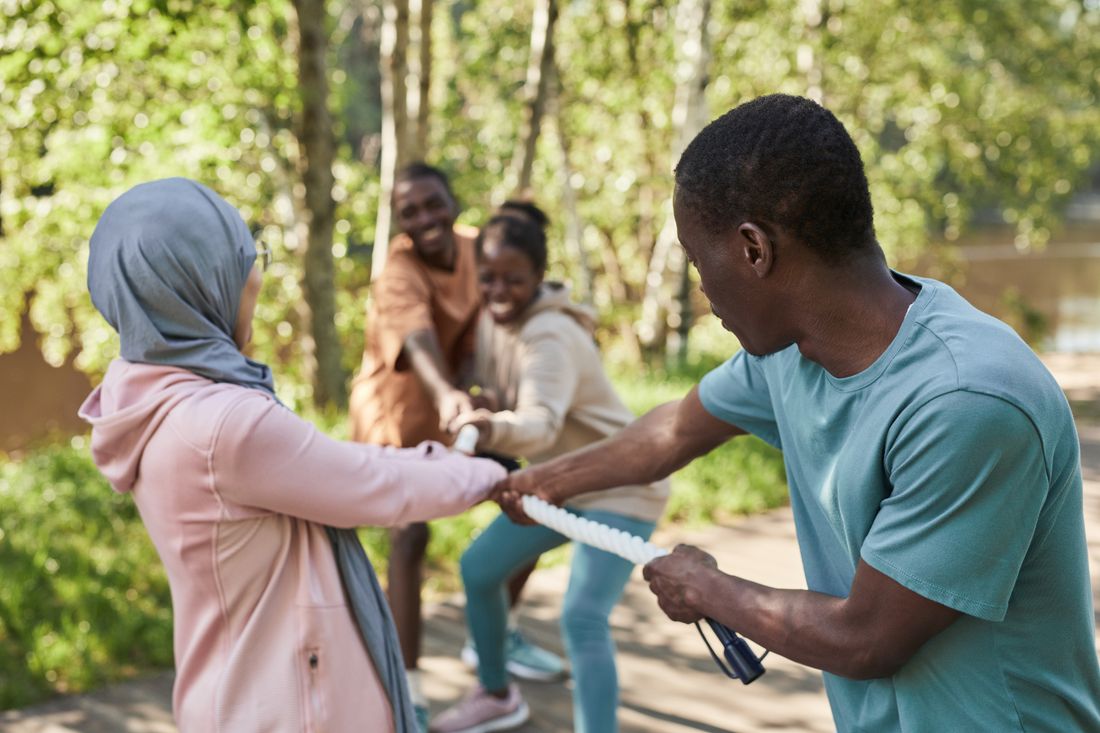
The instinct to shoot everything candid makes sense here. A posed lineup at a tug-of-war doesn't read as authentic, and authenticity is most of the point of this kind of coverage. But experience says there's always a request afterward for one image that shows the whole team or department together and identifiable, something a newsletter or a department page can use without hunting through action shots for a frame where everyone happens to be facing the camera. Building in two or three minutes for a quick, deliberate group frame per zone costs little and avoids a scramble to recreate the moment later, which usually isn't possible anyway.
What Should a Company Publish Externally Versus Keep Internal?
What goes external, careers pages, recruiting decks, public social, should be the small set of images that are flattering, work-safe, and clearly opt-in. What stays internal, the newsletter, the intranet, the all-hands recap, can be a wider and more candid set, since the audience already has context an outside viewer doesn't.
An outside viewer scrolling a careers page has no context for the goofy face mid-relay or the exhausted grin after a fun run, and out of context those images can read differently than they felt in person. Employees seeing the same photo in an internal recap read it correctly, because they were there or know people who were. That gap is exactly why the split matters: it's not about hiding anything, it's about matching each image to an audience that can actually read it the way it was meant. Sorting for that split at delivery, not scrambling for it after something's already published, is the whole job. A gallery organized into an external-ready folder and a broader internal one, handed over already labeled, saves whoever's publishing from having to make that judgment call themselves under a deadline.
Frequently Asked Questions
How is covering a corporate sports day different from covering a conference?
A conference has a stage, a schedule, and one focal point at a time, so a photographer can plan around the agenda. A sports day has none of that: activities run in different places simultaneously with no run of show to anchor to. Coverage has to be planned by zone, deciding in advance which areas matter most and rotating through them, rather than following a timeline that doesn't exist for this kind of event.
Does an outdoor field day need different equipment than an indoor gym event?
Yes. Outdoor coverage deals with full sun, hard shade lines, and fast-moving subjects across open space, which favors faster shutter speeds and a longer lens for action from the sideline. An indoor gym swaps that for mixed, uneven fixture lighting and different color temperatures. Planning for only one of those conditions, when the event could involve both, is the most common gear mistake for this format.
What happens to sports day photography if it rains?
That depends entirely on the client's own rain-or-shine call and backup plan, since weather decisions belong to the people running the event, not the photographer. Coverage should know the contingency location and roughly which activities survive a move indoors before the day starts. A shot list built only for the outdoor version is the wrong document to be working from if the event relocates on short notice.
Why does a wellness event need an opt-out for photos and video?
A wellness fair puts people in athletic clothes doing physical activities they may not want appearing on a careers page or in recruiting content, which is a more specific consent problem than a standard office event. A simple opt-out at check-in, like a colored wristband, protects both the company from publishing something an employee never agreed to and the photographer from guessing wrong about who's comfortable being featured.
Can this kind of event photography be used for recruiting and careers pages?
Yes, and planning for that use before the shoot changes the shot list. Careers pages want a small number of flattering, work-safe, clearly opt-in frames. Internal comms and culture decks can use a wider, more candid set, since that audience already has context an outside viewer lacks. Deciding which images serve which audience at delivery, rather than after something is already published, is what keeps the split honest.
Related Reading
Not sure if hourly or a package makes more sense for your event?
Tell us the expected length, and we'll run the actual numbers before you book.
See Event Coverage Packages