
Photo by Julia M Cameron via Pexels.
A volunteer day generates two kinds of photos: the group shot in matching t-shirts, and everything else. Companies keep the group shot and then discover, four months later, that the sustainability report needs something showing actual work being done.
Corporate volunteer day coverage should document hands-on work, real team candids, and before-and-after context, because those images have to serve an ESG or CSR report and a careers page later. A staged group photo proves attendance. Work-in-progress frames prove the described activity happened, which is what a report actually needs.
Table of Contents
- The Photos Have Two Audiences and One Shot List
- Shoot the Work, Not the Photo Op
- Before and After Is the Frame That Does the Most Work
- People, Partners, and Who Consented to Be in Frame
- Branding in Frame Without Turning It Into an Ad
- When Video Is Worth Adding, and When It Isn't
- Yes, Still Take the Group Photo — Just Not Only That
The Photos Have Two Audiences and One Shot List
A CSR day's images end up in two very different places: an annual or sustainability report that needs evidence, and a recruiting or careers page that needs the day to look like somewhere a person would want to work. Those audiences want different frames, which is why briefing coverage as generic event photography leaves one of them underserved.
The report audience is reading for accountability. It wants to see the described activity actually happening — hands in soil, boxes being packed, a wall being painted — at the scale described, with enough context to place it. Polish is not the point there; legibility is.
The careers audience wants energy and faces, people who look like they chose to be there, a room or site with some life in it. That set is closer to standard event coverage. The useful move is to plan one shot list that consciously covers both, rather than shooting for one and hoping the other falls out of it.
There is usually a third quiet audience as well: the employees who attended. They will look for themselves in the gallery, and whether they find a decent photo of their own team determines a fair amount of whether the program feels worth repeating next quarter.
Shoot the Work, Not the Photo Op
The single most valuable category is people mid-task: sorting, lifting, planting, packing, painting, sanding, serving. These frames are what make the day provable, and they are the ones most likely to be missing when someone assembles a report months later, because they require a photographer to stay through the unglamorous middle of the day rather than covering the kickoff and leaving.
Close work matters here more than wide coverage. Hands on a tool, a box being filled, a label being applied — the detail frames read as real in a way a wide shot of a busy room does not, and they crop well for a report layout where a photo may end up two inches across in a column of text.
It also helps to shoot the same activity at more than one point in the day. The first ten minutes of any volunteer task look tentative; an hour in, people have found a rhythm and stopped noticing the camera. That later material is almost always the stronger set, and it is the material that gets missed when coverage is booked for the first two hours only.
Volume matters less than most people expect here. A report or a careers page might use eight images from the entire day, so the goal is a strong, varied set rather than an exhaustive one. Fifteen genuinely usable frames beat six hundred near-identical ones, and the difference usually comes from moving position deliberately rather than shooting more.
Before and After Is the Frame That Does the Most Work
Any volunteer day with a visible result — a cleaned lot, a painted room, a stocked pantry, a built garden bed — should get a matched pair: the same angle before work starts and after it finishes. That pairing is the clearest possible evidence of impact, and it takes about four minutes total to capture.
The catch is that the before frame has to happen before anyone touches anything, which means the photographer needs to be on site early and needs to know which angle to hold. It cannot be reconstructed. This is the single most common regret we hear about after CSR coverage, and it is entirely a briefing problem rather than a skill problem.
Where nothing visibly changes — a day spent on a phone bank, mentoring, or sorting into containers that look the same full or empty — the equivalent is a quantity frame: the loaded truck, the stacked pallets, the finished pile. Something that shows volume, since that is the number the report will be quoting anyway.
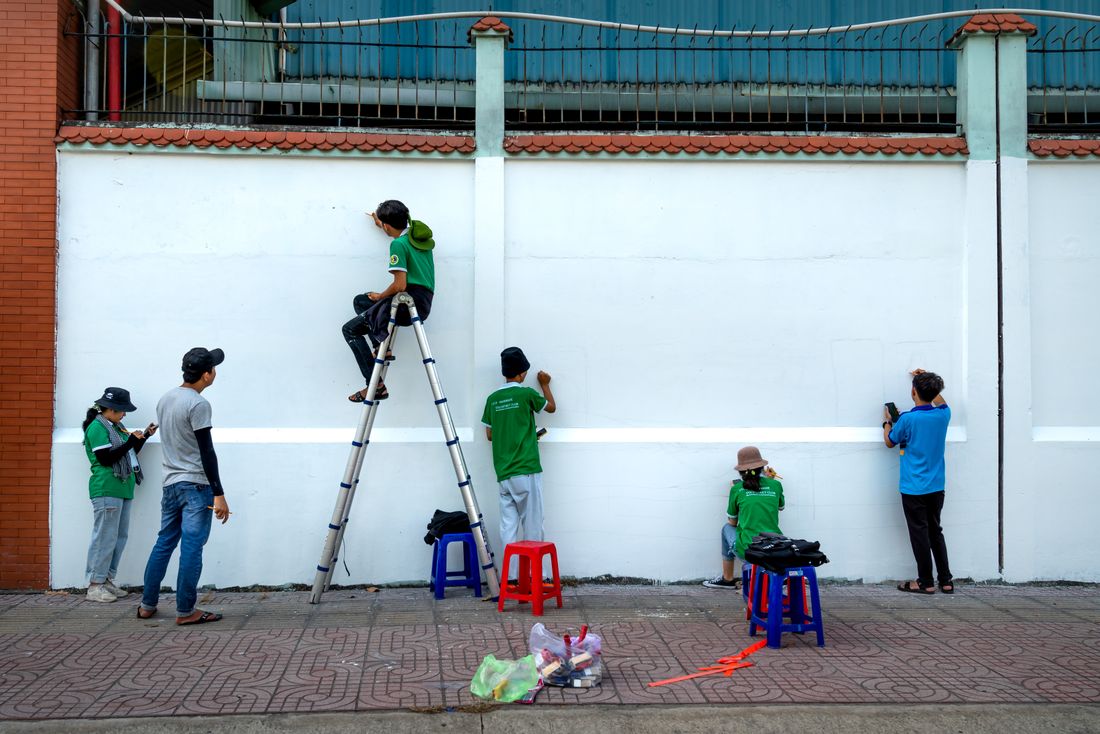
Photo by Quang Nguyen Vinh via Pexels.
People, Partners, and Who Consented to Be in Frame
Volunteer days usually involve a partner organization and often involve the people that organization serves. Photographing employees is straightforward; photographing beneficiaries, clients, students, or residents is not, and it needs to be settled with the partner before the day rather than negotiated in the moment.
In practice that means asking the nonprofit or site partner what their own policy is, who on their side can answer questions during the day, and whether there are specific people or areas that should not appear. Their rules govern their space and their community — a corporate client's marketing needs do not override that, and a photographer who assumes otherwise creates a problem for everyone.
There is a practical framing consequence too. When consent status is unclear, wider frames that show the activity without identifiable faces still document the day perfectly well for a report. Those frames are usable regardless of how the consent question lands, which makes them the safe default when the answer is not confirmed on site.
Branding in Frame Without Turning It Into an Ad
Company logos on shirts, banners, and signage are legitimately useful in this coverage — a report and a careers page both benefit from images that identify the participating company without a caption. The failure mode is treating branding as the subject, which produces a set that reads as advertising and undercuts the credibility the day was meant to build.
The workable ratio is branding present and incidental: a logo on a sleeve while someone is working, a banner soft in the background of a wide frame, a partner sign visible at the entrance. It identifies the day without staging it, and it survives being reused by both the company and the partner organization.
The partner's own branding deserves the same treatment. Many nonprofits need documentation of the day as much as the corporate client does, and a shot list that quietly includes their signage and their staff makes the images useful to them too. That tends to matter for whether the partnership continues, which is generally the point.
Signage placement is worth a two-minute conversation before the day starts, since a banner positioned behind the main work area gives every candid frame a quiet identifier, while one stuck by the entrance appears in almost nothing.
When Video Is Worth Adding, and When It Isn't
Video earns its place at a volunteer day when someone is going to speak on camera — a partner explaining what the work supports, an employee saying why they came — or when the activity itself only reads in motion. A build, a cook, a cleanup at scale all look more substantial moving than still.
It does not earn its place when the plan is a general highlight reel with music over it. Those get made, watched once internally, and never used again, and they consume shoot attention that would have produced better stills. If nobody has named where the video will be published and who will introduce it, that is usually a sign to skip it.
The middle option worth considering is a small set of short clips rather than an edited film: ten to fifteen seconds each, no music, no narrative, usable in a social post or dropped into a report presentation. They cost very little to capture alongside stills and they age better than a produced recap that is visibly tied to one year.
Yes, Still Take the Group Photo — Just Not Only That
The matching-t-shirt group photo is not a mistake. It is the image that goes in the internal recap email, and it is genuinely the one most participants want. The mistake is letting it be the day's only planned frame, which is what happens when coverage is booked as a one-hour visit around the kickoff.
The practical timing is to take it once everyone has arrived and once more before people start leaving, because volunteer days lose people steadily through the afternoon and the later attempt frequently has half the group missing. Two attempts cost ten minutes and remove the risk entirely.
Everything else in this piece is what makes the rest of the day usable. A report cannot cite a group photo as evidence of activity, and a careers page built entirely on posed lineups reads as staged. The group shot is the souvenir; the working frames are the asset.
It is also worth checking whether the partner organization wants a version of the group shot including their own staff. That image tends to matter to them more than any other frame from the day, and offering it costs one extra minute.
Frequently Asked Questions
What photos does an ESG or CSR report actually need from a volunteer day?
Evidence that the described activity happened: people mid-task, the scale of what was accomplished, and where possible a matched before-and-after pair from the same angle. Reports are read for accountability, so legible working frames matter more than polish. A posed group photo proves attendance but cannot demonstrate the activity itself, which is usually what the report narrative is claiming.
How long should a photographer stay at a corporate volunteer day?
Long enough to cover the working middle of the day, not just the kickoff. The first stretch of any volunteer task looks tentative and self-conscious; an hour in, people have settled and stopped noticing the camera, and that later material is usually stronger. Booking a short window around the opening remarks reliably produces coverage that is missing the work itself.
Can you photograph the people a nonprofit partner serves?
Only on the partner organization's terms, settled before the day. Ask what their policy is, who on their side can answer questions on site, and whether specific people or areas are off limits. Their rules govern their community regardless of a corporate client's marketing needs. Where consent status is unclear, wider frames that show activity without identifiable faces still document the day fully.
Should company logos be visible in CSR photography?
Present and incidental works; branding as the subject does not. A logo on a sleeve while someone works or a banner soft in a background identifies the company without making the images read as advertising, which would undercut the credibility the day was meant to build. Including the partner organization's branding matters too, since they usually need documentation of the day as well.
What is the most commonly missed shot at a volunteer day?
The before frame. Any day with a visible result — a cleaned lot, a painted room, a built garden bed — is far stronger with a matched pair shot from the same angle before and after. It takes minutes, but the before frame has to happen before anyone touches anything, so it requires the photographer on site early and briefed on which angle to hold.
Related Reading
Have a volunteer day on the calendar?
Tell us where the photos need to land — a report, a careers page, or the partner's own files — and we'll build the shot list backward from that.
See Event Coverage