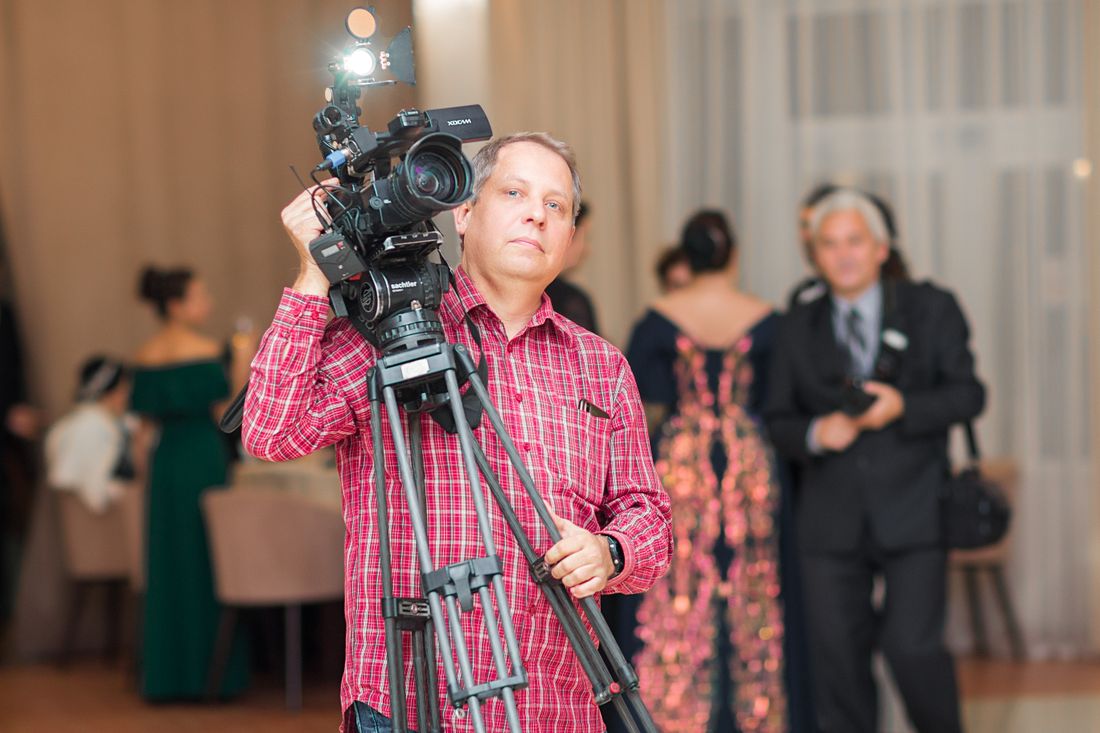
Photo by korso 0007 via Pexels.
Put a CEO, a board chair, or a public figure in the room and the camera work barely changes. The lens, the light, the instinct for a real moment over a posed one — none of that gets harder. What changes is everything around the camera: who has to say yes before a frame goes anywhere, who can physically stop a photographer mid-shot, and which five seconds of the day are simply not available no matter how good the angle is. That's the layer most event photography briefs never mention, and it's the one that decides whether the coverage actually works.
Photographing executives and VIPs doesn't demand different photography — it demands a different permission structure. A crew needs to know before doors open who can approve a photo, who can stop one, which moments are off-limits by default, and how images move through approval before they're ever posted. Get that layer wrong and the shoot goes fine; the aftermath doesn't.
Table of Contents
- What actually gets harder when a principal or VIP is in the room
- What a comms lead, a chief of staff, and a personal handler each actually control
- Which moments are routinely off-limits around a principal or VIP
- Why "no photos of X" has to be a named list, not a verbal aside
- What image approval before publication does to a same-day delivery promise
- How a photographer stays out of a security sightline without losing the shot
- How a crew moves when a handler is steering the principal on a schedule
- Why the best coverage of a protocol-heavy event isn't more posed photos
What actually gets harder when a principal or VIP is in the room
The photography itself stays the same — the same read on light, the same instinct for a real exchange over a staged one. What gets harder is the permission structure on top of it: who can approve an image, who can stop one mid-shot, and which moments are off the table before a camera comes out.
Most event briefs describe the run of show, the shot list, and the deliverables timeline, and stop there. That layer, not the shoot, is where VIP coverage actually lives or dies, and a principal in the room adds one most briefs never cover: an approval chain, a restricted list, and a handler who can end a shot with a look. A crew that treats this like any other corporate event — walk in, shoot the program, deliver the gallery — usually gets fine photos and a frustrated communications team, because the friction was never about image quality. It was about who never got asked. The fix isn't more caution on set; it's a short conversation before the event, mapping out who signs off on what, so the crew isn't guessing in the room.
What a comms lead, a chief of staff, and a personal handler each actually control
A communications lead usually controls messaging and what gets published — the caption, the channel, the timing. A chief of staff controls the principal's schedule and access to them in the room. A personal handler controls the immediate physical space around the principal moment to moment, and can end a shot on the spot.
Three different people, three different vetoes, and confusing them is the most common protocol mistake a crew makes, because all three can look like "the person in charge" from across a room. In practice, image approval usually sits with comms, schedule access sits with the chief of staff, and in-the-moment physical positioning sits with the handler — and a request routed to the wrong one either gets ignored or escalates unnecessarily. Asking who owns which decision, by name, before the event starts is a five-minute conversation that prevents most on-site friction later. It also matters for pacing: a photographer who knows the handler controls the moment, not the final photo, doesn't waste time asking comms for something only the handler can grant on the spot.
Which moments are routinely off-limits around a principal or VIP
A handful of moments are treated as off-limits by default at most protocol-heavy events, without anyone needing to say so out loud: a principal eating, a private conversation between two people, an unscripted aside or visible frustration, and anything happening backstage or in a green room.
A crew that assumes those moments are fair game because no one explicitly forbade them is usually wrong. The logic behind each is straightforward once it's named. Eating and private asides are unguarded in a way a public remark never is — caught candidly, they read as an intrusion rather than coverage. Backstage access is where a principal is deliberately off-duty between public moments, and shooting through that door without being told it's open reads as a boundary violation even when the photo itself is harmless. The safer default across all four is treating them as closed unless a named person has opened them, not assuming access because nobody physically blocked the frame. None of this needs to be adversarial — a quick check with a handler before a candid moment usually gets a fast yes or no, and either answer is more useful than a guess.
Why "no photos of X" has to be a named list, not a verbal aside
A restriction mentioned once in passing — "just don't shoot the board members near the bar" — rarely survives contact with an actual event. A crew moving fast, working multiple angles, and coordinating with a handler needs the restriction written down: names, roles, or physical descriptions, handed over before doors open, not recalled from a conversation an hour earlier.
This matters more than it sounds like it should, because a verbal aside gets lost the moment the room fills up and the crew splits to cover different angles. A named list — even a short one, three or four names with a one-line reason if it's not obvious — travels with every shooter on the team and survives a shift change, a second photographer stepping in, or a handler asking a crew member directly who's on it. In practice, the organizations that handle this well treat the list as a standing document updated before every event, not a fresh conversation each time.
Photo by cottonbro studio via Pexels.
What image approval before publication does to a same-day delivery promise
Same-day delivery assumes images move from the camera to the client with minimal friction. Add a required approval step — comms or a principal's office reviewing every image before it's cleared to post — and that promise has to shift from "same-day publish" to "same-day delivery of a reviewed gallery," because the approval step sits outside the crew's control entirely.
This isn't a knock on fast turnaround; it's just a different deliverable. A crew can still cull, edit, and hand over a finished gallery within hours of the event ending. What it can't do is guarantee those images go live on a timeline, because a comms team reviewing photos of a principal is checking things a photographer isn't positioned to judge — an off-message expression, a background detail, a person who shouldn't be identifiable. Setting that expectation before the event, not after a gallery sits in review for two days, keeps a fast turnaround from reading as a broken promise. It also changes how a crew talks about timelines up front: "delivered same-day, published on your team's schedule" is a promise a crew can actually keep, where "same-day publish" isn't fully theirs to make.
How a photographer stays out of a security sightline without losing the shot
Security teams around a principal work off clear, unobstructed sightlines to entrances, the principal, and the crowd — and a photographer standing in one of those lines, even briefly, is a problem regardless of how good the resulting photo is. The fix is positioning from an angle security has already cleared, not asking permission mid-shot.
In practice that means scouting the room before doors open with security's actual lines in mind, not just the best light or angle: where the principal enters, where they exit, and where a security lead is likely to be standing. A photographer working from the side or slightly behind a security position, rather than directly in front of it, usually gets a comparable shot without ever becoming an obstruction. Coordinating this with the security lead directly — a two-minute conversation before the room fills — is far more reliable than guessing and adjusting after being waved off in front of a client. Getting moved mid-shot rarely costs a photographer the image; it costs the crew's credibility with everyone else in the room watching it happen.
How a crew moves when a handler is steering the principal on a schedule
A handler moving a principal through a tight schedule is working against a clock a photographer doesn't control, so the crew's job shifts from directing the moment to anticipating it — positioned ahead of the next stop, ready before the principal arrives, rather than asking the handler to pause for a shot.
This is a different rhythm than most event coverage, where a photographer can ask a subject to hold for a second or reset a frame. Around a handler-managed schedule, that request usually isn't available, so the more reliable approach is reading the run of show closely enough to know the next transition before it happens — the walk from the greenroom to the stage, the handoff between two conversations — and being in position for it rather than reacting to it. A crew that treats the handler as an obstacle to work around usually loses the shot; a crew that treats the handler's timing as the actual schedule usually gets it.
Why the best coverage of a protocol-heavy event isn't more posed photos
Heavy protocol pushes coverage toward stiff by default — approved angles, cleared moments, a handler nearby — and the instinct to compensate is often more posed shots: another handshake, another grip-and-grin at the step-and-repeat. That instinct usually makes the gallery feel more controlled, not less, which is the opposite of what a client actually wants.
The better fix is looking for the moments protocol doesn't fully script — the walk between two cleared stops, a genuine reaction during an unscripted question from the audience, the transition before a principal is fully back in public mode. Those moments are still within bounds; they're not backstage, not private, not on the off-limits list. They're simply less guarded than a photo op, and a crew that's scouted the schedule closely enough to be positioned for them gets coverage that reads as real instead of managed, without needing a single restriction lifted. It's a quieter approach than chasing every photo op, and it usually produces the frame a client actually uses.
Frequently Asked Questions
What's the actual difference between a comms lead, a chief of staff, and a personal handler at a VIP event?
A comms lead typically controls what gets published and when — the caption, channel, and release timing. A chief of staff controls the principal's schedule and who gets access during the event. A personal handler controls the immediate physical space around the principal in real time and can end a shot on the spot. A crew needs to know which one to ask for which decision, since routing a request to the wrong one usually stalls it.
Do photos of an executive or VIP need approval before they're published?
Often, yes — many organizations with a principal in the room require comms or the principal's office to review images before anything goes live. That step sits outside a photography crew's control and can add a day or more between delivery and publication. It's a separate question from delivery speed: a crew can still hand over a finished, edited gallery same-day even when publishing is gated behind a review the crew doesn't own.
What moments are typically off-limits when photographing a principal or public figure?
Four moments are treated as closed by default at most protocol-heavy events: a principal eating, a private one-on-one conversation, an unscripted aside or visible frustration, and anything happening backstage or in a green room. None of these are usually stated outright — a crew that assumes they're fair game because nobody explicitly forbade them is making the wrong call. Treating them as closed unless a named person opens them is the safer default.
How does an event photographer avoid getting in security's way around a VIP?
By scouting the room before doors open with security's actual sightlines in mind, not just the best light or angle — where the principal enters, exits, and where security is likely stationed. Working from the side or slightly behind a security position, rather than directly in front of it, usually gets a comparable shot without becoming an obstruction. A short conversation with the security lead before the room fills prevents most conflicts before they happen.
Why does a restriction like "no photos of certain people" need to be a written list instead of just mentioned once?
Because a verbal aside doesn't survive a fast-moving event — a crew splitting across angles, a shift change, or a second shooter stepping in won't have heard it. A short written list, even three or four names with a one-line reason, travels with every shooter and holds up when a handler asks who's covered. Treating it as a standing document updated before each event, rather than a one-time conversation, is what actually makes the restriction stick.
Related Reading
Not sure if hourly or a package makes more sense for your event?
Tell us the expected length, and we'll run the actual numbers before you book.
See Event Coverage Packages