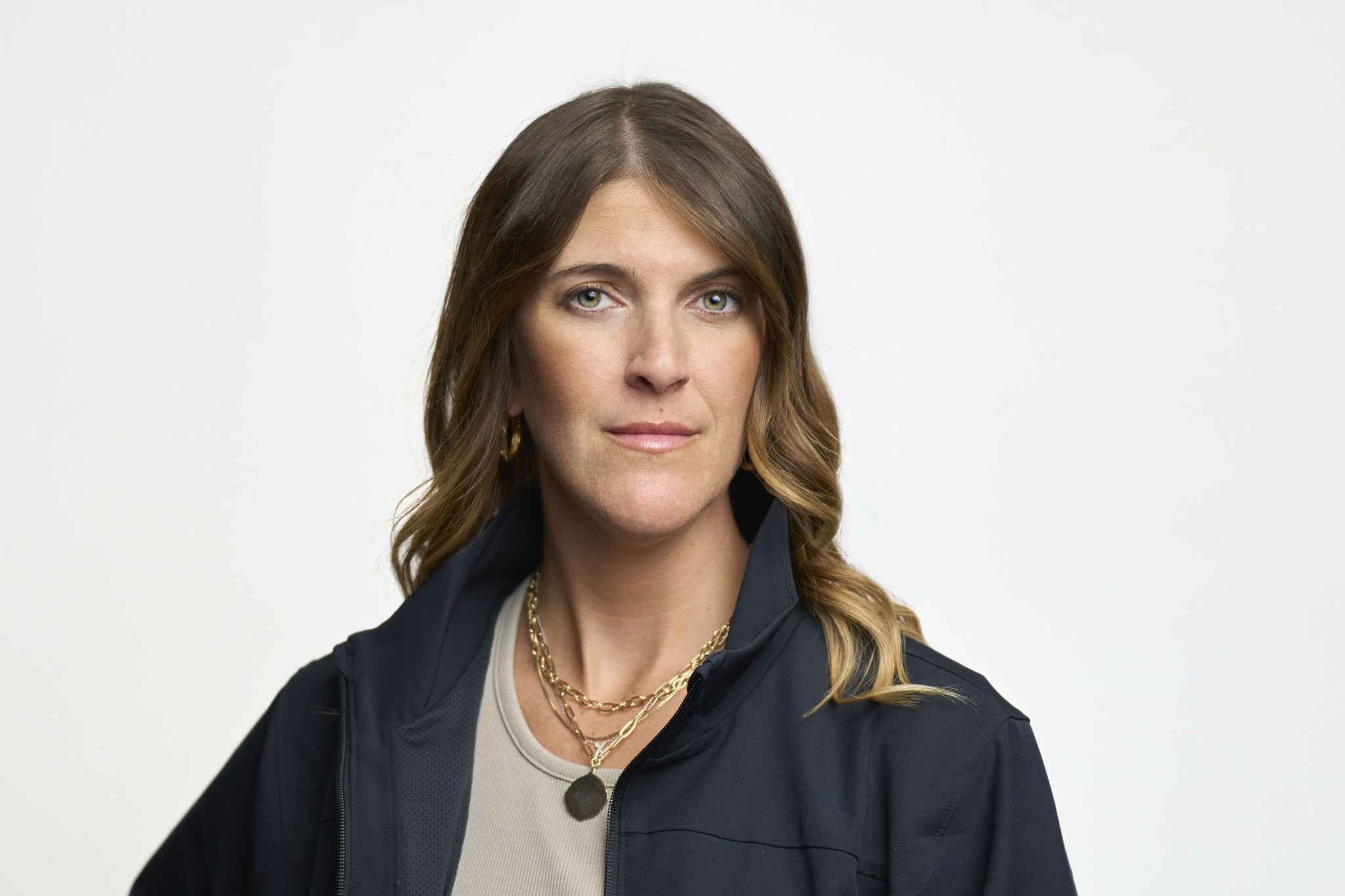
Photo: Core Visuals NYC
A university's faculty headshot program and its administration portraits often get commissioned as the same job, shot by the same photographer on the same afternoon, and it isn't until a strategic plan needs a dean's portrait next to a signed statement that anyone notices the two aren't the same photograph at all.
University administration headshots, for deans, provosts, and vice presidents, are institutional officeholder portraits that run next to signed statements, strategic plans, and press quotes, not directory entries. They call for smaller sessions, more time per person, and a register calibrated for trustees and donors rather than students, distinct from a faculty headshot program.
Table of Contents
- This Isn't the Same Job as a Faculty Headshot
- Where an Administrator's Portrait Actually Runs
- The Audience Is Institutional, Not Academic
- A Handful of People, Not a Directory
- The Replacement Clock Runs on Turnover, Not the Semester
- Consistency Still Matters, Just Differently
- Scheduling Around a Provost's Actual Calendar
- Why This Gets Commissioned Separately From the Faculty Program
This Isn't the Same Job as a Faculty Headshot
A faculty headshot sells teaching and research credibility to students and peers across a directory of dozens of similar entries; an administration headshot represents a single institutional officeholder whose portrait runs next to a signed statement, a strategic plan, or a press quote. Same campus, different job, and treating them as one shoot flattens both.
Faculty photography is built for volume: dozens of people, a repeatable setup, a directory grid where consistency across the whole set matters more than any single frame. A dean or provost's portrait works alone. It sits at the top of a president's cabinet page, next to a signature on a policy memo, or beside a headline quote in a trustee newsletter. It has to hold up under close, sustained attention from people who don't know the person yet and are forming a first impression from that single image.
A communications office that books one photographer for both jobs on the same afternoon, using the same lighting setup and the same five-minute slot per person, usually finds out later that the leadership portraits don't hold up where they actually get used.
Where an Administrator's Portrait Actually Runs
An administration portrait runs in places a faculty photo never does: next to a signed statement in a strategic plan, above a quote in a press release, on a search-committee page, or inside a trustee-facing annual report. Each context asks the image to carry authority entirely on its own.
A faculty directory photo sits among a hundred others and gets scanned quickly, one of many equivalent entries. An administrator's portrait usually appears solo, often full-size, often paired with text the reader is expected to take seriously. That changes what the frame needs to do. It has to read as confident and calm at a glance, without props or context that anchor it to campus in a way that dates the material the moment leadership changes.
A provost's portrait accompanying a strategic plan will still be circulating years after the plan itself is finished, reused in board decks, cited in follow-up reporting, and reprinted alongside promotions or transitions. The image is doing institutional work, not directory work, and it needs to be shot with that lifespan in mind.
The Audience Is Institutional, Not Academic
Faculty portraits are read by students choosing a class and peers evaluating scholarship; administration portraits are read by trustees, donors, journalists, and search committees evaluating institutional leadership. That's a different kind of scrutiny, and it calls for a different register.
A student looking at a professor's directory photo is asking a narrow question: does this person seem approachable and credible in a classroom? A donor or trustee looking at a provost's portrait is asking a broader one: does this institution look well led? The image gets weighed alongside the person's title, their public statements, and the institution's own reputation, often by readers who have never set foot on campus.
That's why administration portraits tend toward a more formal, more composed register, not stiffer for its own sake, but calibrated for an audience judging institutional credibility rather than classroom rapport. The same warmth that works well for a professor's directory photo can read as insufficiently authoritative in a strategic plan or a press kit, where the expectation is closer to an executive portrait than a faculty one.
A Handful of People, Not a Directory
A faculty program photographs dozens of people to build a directory; an administration set typically covers a handful, deans, vice presidents, the provost, sometimes the president's direct reports. That smaller number changes the production model, not just the subject list.
With a directory shoot, the goal is a repeatable setup that treats every subject identically so the grid feels uniform. With five or ten senior officeholders, there's room to spend more time per person, vary the composition slightly by how the portrait will actually be used, and produce a couple of options instead of one locked frame.
It also means the shoot doesn't need to be scheduled as a single high-volume day. A communications office can bring administrators in individually or in small clusters over a week or two, working around each person's calendar instead of asking a provost to show up in a hallway line with junior faculty. The smaller scope is a planning advantage when it's treated as its own project, and a scheduling headache when it gets bolted onto the faculty day as an afterthought.
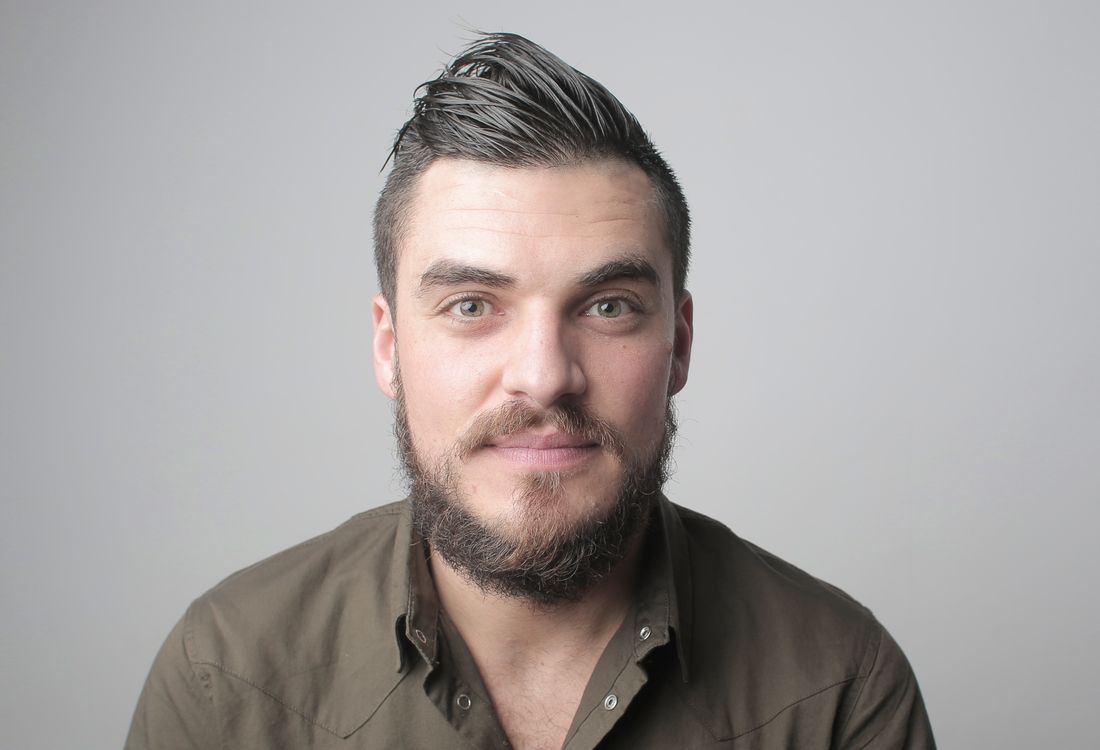
Photo by Andrea Piacquadio via Pexels.
The Replacement Clock Runs on Turnover, Not the Semester
Faculty directories get refreshed on an academic-year rhythm, new hires, annual updates, a batch each fall. Administration portraits get replaced on a leadership-turnover clock instead: when a dean is promoted, a provost departs, or a new vice president is announced.
That means the portrait has a longer, less predictable shelf life. A dean's headshot taken at the start of a five-year term might still be the image the institution is using in year four, appearing in board materials, press mentions, and internal communications the entire time. There's no annual refresh cycle forcing an update the way there is for faculty.
Practically, that argues for treating the sitting as a bigger investment per person than a faculty headshot gets, more time, more attention to how the portrait will read years out. It also means a communications office should keep administration portraits on a watch list tied to appointments and departures, not to the calendar, so a stale photo doesn't linger for years after someone has left the role.
Consistency Still Matters, Just Differently
A faculty directory needs uniform lighting and framing across a hundred entries so the grid reads as one system. An administration set is small enough that strict uniformity matters less than making sure each portrait fits wherever it will actually be reused, website, annual report, press kit.
That doesn't mean anything goes. A president's cabinet page still benefits from a shared visual language, similar background tone, similar framing distance, so the leadership team reads as one group rather than five unrelated photos assembled from different years. But the priority shifts from matching every subject exactly to making sure each individual portrait works across multiple formats: a tight crop for a directory tile, a wider frame for a printed report, a version that survives being reproduced in black and white for a newsletter.
Consistency, for this set, means the images share a sensibility and hold up across the same range of contexts, not that every frame is interchangeable with the next. A communications office reviewing proofs should be checking for that shared sensibility, not measuring the distance between shoulders.
Scheduling Around a Provost's Actual Calendar
Deans and vice presidents don't have open blocks the way a faculty member between classes might. Scheduling a session for senior administrators means working around board meetings, travel, and back-to-back commitments, usually one person at a time, not a batch line.
That logistics reality shapes how the shoot has to be planned. Rather than one long day with a fixed setup and a sign-up sheet, a workable approach is a flexible window, a week or two where the photographer can slot in fifteen or twenty minutes whenever an administrator's calendar opens up, with the setup staying consistent across those separate visits.
Some institutions handle this by embedding a short session inside an existing meeting day, catching a vice president between two commitments rather than asking them to carve out separate time. It takes more coordination with an executive assistant or chief of staff than a faculty shoot does, but it respects how differently these calendars actually work. Forcing administrators into the same single-day, line-up structure that works for faculty usually means part of the leadership team gets rescheduled or skipped.
Why This Gets Commissioned Separately From the Faculty Program
The moment a communications director notices the faculty program's output doesn't work on the leadership page is usually the moment to commission administration portraits as their own project, with their own brief, timeline, and budget line, not an add-on to the faculty shoot.
Bundling the two together tends to produce a compromise: the administration portraits get the faculty program's volume-oriented setup and time budget, and the faculty program gets interrupted by a handful of subjects who need more time and more flexible scheduling than the rest of the group. Separating them lets each project be planned for what it actually needs, a repeatable, efficient setup for the directory, and a slower, more considered process for a small group of officeholders whose portraits will circulate for years.
It also makes it easier to time the administration set around actual leadership changes rather than an academic calendar, so a new provost or dean gets photographed close to their start date. Treating it as a separate line item is a planning decision, not an upsell.
Frequently Asked Questions
What makes a university administration headshot different from a faculty headshot?
A faculty headshot supports a directory and needs to read as approachable and credible to students and peers across dozens of similar entries. An administration headshot represents a single institutional officeholder, a dean, provost, or vice president, whose portrait usually appears alone, next to a signed statement, a strategic plan, or a press quote. It has to carry authority on its own, for an audience judging institutional leadership rather than classroom rapport.
How many administrators typically get photographed in one of these sessions?
Most institutions cover a small group, deans, vice presidents, the provost, and sometimes the president's direct reports, often somewhere between five and fifteen people. That's a fraction of a faculty directory's headcount, which is exactly why the production model differs: there's room to spend more time per person, work around individual calendars, and produce portraits built to hold up on their own rather than as one entry in a uniform grid.
How often should a university update administration portraits?
Not on the academic-year schedule faculty directories use. Administration portraits should be refreshed when leadership actually changes, a new dean, a departing provost, a newly announced vice president, rather than on a fixed annual cycle. Because these images circulate for years in board materials, press mentions, and reports, the more useful habit is tracking them against appointments and departures so a stale photo doesn't linger long after someone has left the role.
Can the same photographer and style work for both faculty and administration portraits?
The same photographer can shoot both, but treating them identically usually shortchanges one or the other. Faculty photography is built for volume and consistency across a large group; administration portraits need more time per person, more flexible scheduling around senior calendars, and a register calibrated for trustees, donors, and press rather than students. Booking them as two separate projects, even with the same photographer, tends to produce better results than one combined session.
How long does a session for a dean or vice president usually take?
Longer than a single faculty directory slot, but it doesn't require a whole afternoon. A focused fifteen- to twenty-minute session per person is usually enough once travel and setup are accounted for, especially when the photographer works around an administrator's existing schedule rather than asking them to wait in line. The time goes toward getting a couple of usable options and a composed, unhurried result, not an elaborate production.
Related Reading
Booking headshots or a brand video for your team?
Tell us how many people and whether you need photo, video, or both, and we'll send back a fixed price with the volume discount already applied.
See Headshots & Brand Videos