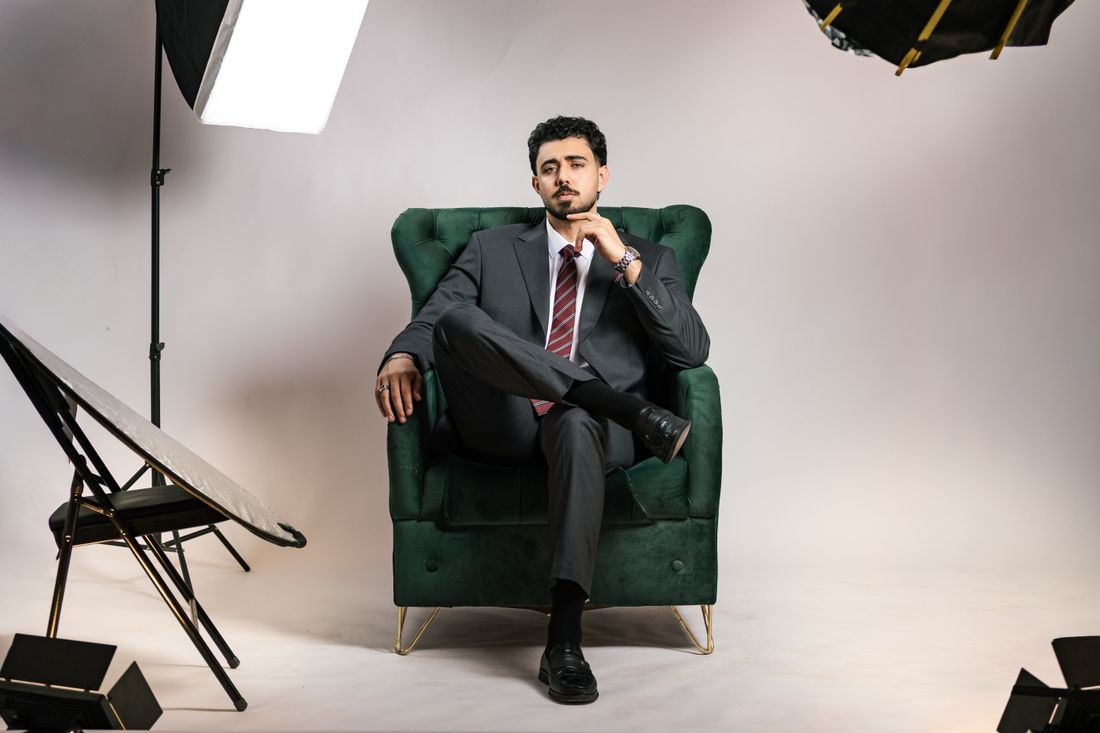
Photo by Layth Mushreq via Pexels.
A team headshot day is built for speed and consistency — a large group moving through one setup, everyone matched, minutes each. An executive portrait session is built for something else: a small number of images that get cropped, printed, and reused for years by people outside the company. The mistake runs both ways — running the CEO through the team-day line produces a photo that can't carry a press release, and giving forty people an executive-style sitting turns a headshot day into a budget problem.
A team headshot day optimizes for consistency at speed — everyone matched, quick per person. An executive portrait session optimizes for a small set of images built to be cropped, printed, and reused for years outside the company. Running leadership through the team-day line, or giving everyone an executive sitting, both create the wrong session.
Table of Contents
- Why a Team Headshot Day and an Executive Portrait Session Solve Different Problems
- What Happens When a CEO Gets Run Through the Team-Day Line
- What an Executive Portrait Session Needs That a Team Day Doesn't Give
- The Other Mistake: Giving Everyone an Executive-Style Session
- Who Actually Needs a Separate Executive Sitting
- How to Book Both Without Compromising Either
- What Leadership Actually Needs in the Final Delivery
- How This Splits the Budget and the Calendar
Why a Team Headshot Day and an Executive Portrait Session Solve Different Problems
A team headshot day is built to move a large group through one setup fast, with everyone matched and processed in minutes each. An executive portrait session is built for the opposite outcome: a small number of images, chosen and lit with more care, that get cropped, printed, and reused for years by people outside the company.
That difference in product is what should decide how each session gets scheduled, not the org chart alone. A team day optimizes for throughput — one background, one light setup, one photographer moving through a list, because the deliverable per person is a single, interchangeable headshot for a directory grid or a company page. An executive sitting optimizes for range: a few angles, a couple of crops, enough variation that whoever designs next year's annual report, writes a press release, or builds a speaker bio slide has something that actually fits without asking for a reshoot. Treating both sessions as the same job on the calendar is where the trouble starts — not because leadership deserves special treatment, but because the two photos are headed to completely different places.
What Happens When a CEO Gets Run Through the Team-Day Line
Running the CEO through the same line as everyone else on team headshot day usually produces a fine photo for the website's leadership grid and a weak one for anything outside it. The image was shot for consistency with forty other headshots, not for standing alone on a press release, a keynote slide, or an investor deck.
The mismatch shows up later, not on the day itself. A team-day headshot is framed tight and lit flat on purpose, so it sits evenly next to every other face in a grid — that's correct for the grid and wrong for almost everything a CEO's photo gets used for afterward. A press release needs room to crop wide for a header image. A speaker bio needs a vertical crop that doesn't clip the shoulders. An investor deck slide might need the background swapped or extended. None of that is available from a headshot shot for a matched set, and the fix isn't better retouching — it's a different photo, taken with those uses already in mind.
What an Executive Portrait Session Needs That a Team Day Doesn't Give
An executive portrait session needs more time per person, more than one background or setup, and images composed loosely enough to crop several different ways later — none of which a team headshot day is built to provide across dozens of people. That's not a quality gap in the team-day photographer's work; it's a different brief entirely.
A team day succeeds by keeping every setup identical and every sitting short, because the goal is sameness at volume. An executive sitting succeeds by doing the opposite in miniature: a few minutes spent adjusting posture and expression across several frames instead of one, a plain and a slightly warmer background so there's a choice later, and framing loose enough that a designer can pull a square crop for LinkedIn and a vertical crop for a printed program from the same capture. None of this requires an elaborate production. It requires the photographer knowing, before the shutter fires, that this image is going to be reused in places the team-day photo never will be — and shooting with that reuse in mind from the first frame.
The Other Mistake: Giving Everyone an Executive-Style Session
The mistake runs the other direction too: giving an executive-style sitting to forty people turns a headshot day into a budget problem, not a quality upgrade. Most of a company's staff genuinely doesn't need multiple backgrounds, several crops, and extended per-person time — a clean, consistent headshot does the job a directory page or a LinkedIn profile actually needs.
This is easy to get wrong in the opposite way once a company has seen how much better an executive portrait looks next to a flat team-day shot. The instinct is to extend that treatment to everyone, but the economics don't hold — the time per person that makes an executive sitting worth it is exactly what a large team day can't afford to spend forty times over. A company with real leadership-photo needs and a large staff usually gets more value from two separate, correctly scoped sessions than from one expensive session trying to do both jobs at an executive's pace for a team's headcount.
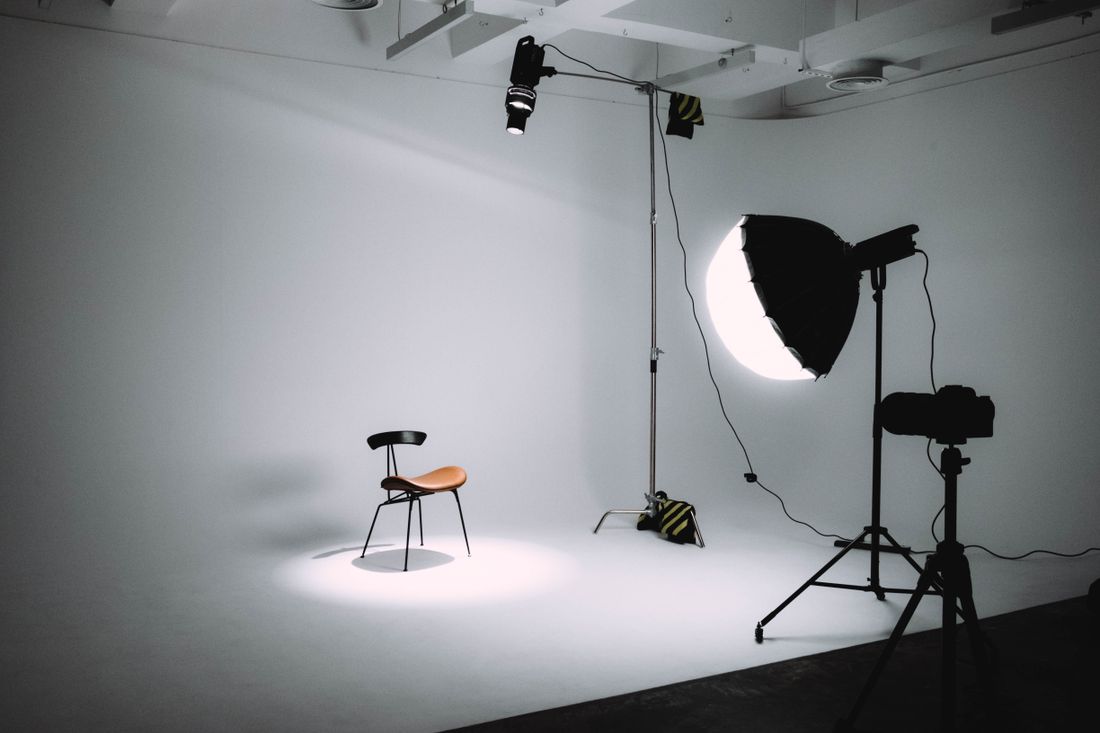
Photo by saad alawi via Pexels.
Who Actually Needs a Separate Executive Sitting
The people who need a separate executive sitting are the ones whose photo represents the company to an audience outside it — a CEO, other C-suite executives who appear in press coverage or investor materials, and a board chair whose portrait runs in an annual report. Everyone else is usually fine in the regular team-day line.
The test isn't seniority by itself, it's where the photo travels. A VP who appears only on the internal team page and an internal directory doesn't need a separate sitting just because of the title — the team-day headshot already covers that use fully. A CEO quoted in trade press, a CFO presenting at an investor day, or a founder doing interview rounds needs a portrait built to survive being cropped and reused in contexts the company doesn't control. When in doubt, the honest question to ask is simple: will this photo ever leave the company's own pages and show up somewhere the company didn't design.
How to Book Both Without Compromising Either
Both sessions can usually happen on the same visit without compromising either one, as long as the schedule treats them as two separate blocks instead of blending them into a single line. Team headshots run first as one continuous pass, then leadership gets dedicated time afterward for the slower, more deliberate work an executive portrait requires.
The order matters more than it seems like it should. Starting with the team-day pass keeps that line moving at its own pace without an executive sitting stalling everyone behind it, and it lets the same background and lighting setup get broken down and rebuilt for the executive block once the group work is done. Trying to interleave the two — a few team headshots, then a longer executive sitting, then back to the line — is what actually drags a shoot day out, because neither setup gets to run at the pace it's suited to. One visit, two clearly separated blocks, is usually simpler to plan and easier to execute than it sounds.
What Leadership Actually Needs in the Final Delivery
Leadership photos need a wider delivery set than a team headshot: a square crop for a directory or LinkedIn, a vertical crop for print and program use, and one looser image a designer can crop further later. A single finished crop — all a team headshot delivery usually includes — isn't enough for how an executive's photo gets used.
This is a delivery decision, not a shooting one — it's about what gets handed off after the sitting, not extra time on the day itself. A team headshot delivery of one crop per person works because every use case is the same: the directory grid, the team page, done. An executive's photo shows up in a press release header, a speaker bio, an investor deck, and a printed annual report, each with different aspect ratios and different amounts of background needed. Delivering a slightly looser original alongside the finished crop means whoever needs the photo next — marketing, PR, a designer — can make it fit without going back to ask for a reshoot months later.
How This Splits the Budget and the Calendar
Budgeting for both sessions separately, rather than folding leadership into the per-person team-day rate, keeps the math honest on both sides. A team headshot day prices by headcount and throughput; an executive sitting prices by the time and attention a handful of images actually take, which is a different line item, not a markup on the same one.
Planning for this ahead of the shoot avoids the scramble that happens when someone realizes mid-schedule that the CEO's photo needs to do more work than everyone else's. Building the executive block into the day's run of show from the start — after the team line, with its own time allotted — means the photographer, the schedule, and the budget all reflect what the leadership photo is actually for, instead of treating it as an afterthought squeezed into the same slot as everyone else. Once that split is planned for, redoing either set later follows its own logic too: the team refreshes on staff turnover, leadership refreshes on a role change or a role that's outgrown its old portrait.
Frequently Asked Questions
How is an executive portrait session different from a team headshot day?
A team headshot day runs a large group through one setup quickly, producing a single matched crop per person for a directory or team page. An executive portrait session spends more time per person across a few angles and backgrounds, producing images loose enough to crop for a press release, a speaker bio, or an annual report. The team day optimizes for consistency at speed; the executive session optimizes for a small number of images that get reused for years.
Does every executive need their own separate photo session?
Not necessarily. What matters is where the photo travels, not the title. Someone whose photo only appears on an internal team page is usually well served by the regular team headshot line. A CEO, other C-suite leaders quoted in press or investor materials, and a board chair whose portrait runs in an annual report are the ones who benefit from a dedicated sitting, because their photo gets reused outside the company in places the team-day crop wasn't built for.
Can team headshots and executive portraits be scheduled on the same day?
Yes, and it usually works better as one visit split into two clearly separate blocks. Run the team headshot line first as a single continuous pass, then move into a dedicated executive block once that's finished, using the extra time to adjust background, posture, and crops for each leader. Interleaving the two — a few team shots, then an executive, then back — is what actually slows the day down.
What should an executive portrait include that a team headshot doesn't?
An executive portrait should come with more than one usable crop: a square version for a directory or LinkedIn, a vertical crop for print or a program, and at least one looser frame with room around the subject. A team headshot delivery is usually just one tight crop per person, which works fine for a matched directory grid but doesn't leave enough room for the wider header images, program layouts, or slide formats an executive's photo eventually needs to fill.
How often should executive portraits be redone?
Less often than most people assume, and on its own schedule rather than the team's. A leadership portrait is worth redoing when someone new takes the role, when their appearance has changed enough that the photo no longer looks like them, or after several years even without a change. Team headshots refresh on staff turnover; executive portraits refresh on role changes or a portrait that's simply outgrown the person it represents — the two schedules don't need to match.
Related Reading
Planning headshots for a finance or wealth management team?
Tell us your team size and the tone you're going for, and we'll build a session that fits the credibility bar this industry actually needs.
See Headshots & Brand Videos