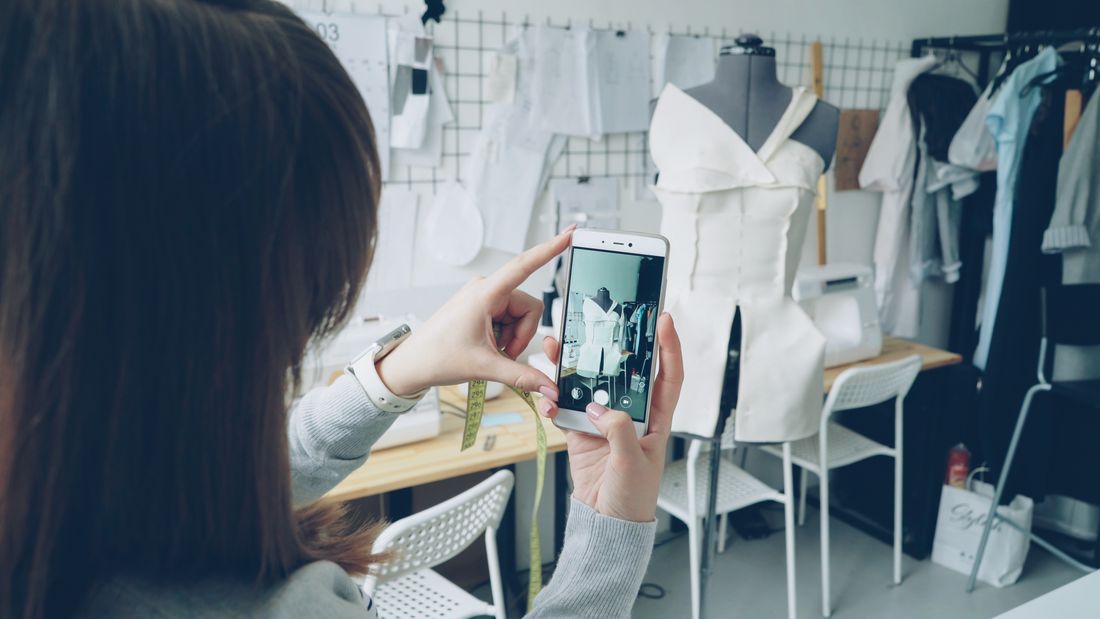
Photo by Vitaly Gariev via Pexels.
The build phase is the one part of a launch nobody books a camera for. It's also the only part that can't be reshot once the thing is finished — the finished object stays around, but the version of it that wasn't finished yet doesn't.
Teaser content is the material shot during the build phase, before an announcement — materials, process, workspace, hands, partial angles — that proves real work is happening without revealing the finished thing. It only works pointed at an audience already paying attention, and it has to be shot weeks before anyone feels ready to talk about the launch out loud.
Table of Contents
- Why the Build Phase Is the Only Window That Can't Be Recreated
- What's Actually Worth Shooting While the Work Is Still in Progress
- How to Show Real Progress Without Giving Away the Reveal
- The Deliberate Obstruction: Shallow Focus, Frame Edges, and Covered Forms
- Materials and Process Are More Interesting Than the Finished Object, Right Now
- Teasers Only Work on an Audience That's Already Paying Attention
- How Long a Build Window Can Hold Attention Before It Curdles
- The Scheduling Problem: Teaser Footage Has to Be Shot Before Anyone Feels Ready
Why the Build Phase Is the Only Window That Can't Be Recreated
The build phase is the only part of a launch that can't be reshot after the fact. Once something ships, all that's left is the finished object and a secondhand account of how it got made — the half-assembled version, the material before it was cut, the real problem-solving mid-process, none of it still exists to point a camera at.
Most launch planning works backward from the announcement date: what goes out the week of, what press gets, what the landing page needs. The build phase gets treated as something to get through, not something worth documenting, so by the time anyone thinks to capture it, the early prototype's been thrown out and the workbench has already been cleaned up for the reveal photos.
That's the actual reason teaser footage is rare — not a lack of interest in the process once it exists, but the fact that nobody's thinking about content while they're still trying to finish the thing. A launch plan that starts at the announcement is missing the one stretch of material a competitor with a slower launch and the same finished product can't go back and shoot.
What's Actually Worth Shooting While the Work Is Still in Progress
Worth shooting during the build phase: raw materials before assembly, the workspace mid-process, an early draft next to a revised one, hands actually doing the work, and a real fix or decision as it happens. The goal is proof that ongoing work exists — not a polished preview of the finished thing wearing a work-in-progress label.
Materials are the easiest starting point because they're available early and they're inherently visual — fabric before it's cut, raw stock on a shelf, a whiteboard mid-fill rather than wiped clean for a photo. Early drafts are the second easiest, especially set next to a later revision, because the contrast itself is the interesting part, not either version alone.
Hands doing the actual work outlast almost everything else as usable footage, because a hand mid-task reads as authentic in a way a posed shot of the same person never quite does. None of this requires the final thing to be shown, which is exactly what makes it safe to shoot early and bank for later, instead of scrambling for it once the announcement date is set.
How to Show Real Progress Without Giving Away the Reveal
Showing progress without spoiling the reveal means picking a fragment that proves the work is real and moving forward, while leaving out whatever detail actually defines the finished thing — a texture without the shape, a sound without the visual, a name without a face.
The fragment has to be specific enough to feel true, not so complete it answers the question the launch is supposed to answer. The test worth applying to any piece of build-phase footage: if someone saw only this clip, would they know what's actually launching? If the answer is yes, it's not a teaser, it's an early release. If the answer is genuinely no, but they'd still believe something specific and real is underway, that's the range teaser content is supposed to live in.
This is a narrower target than it sounds, and it's worth erring toward showing less rather than more. An audience forgives a teaser that reveals too little far more easily than it forgives one that accidentally gives away the thing it was supposed to protect.
The Deliberate Obstruction: Shallow Focus, Frame Edges, and Covered Forms
A deliberate obstruction — a blurred subject behind a sharp foreground, a shape that exits the edge of the frame, a form draped or covered on purpose — reads as intent rather than coyness, because it's shot with the same confidence and technical polish as any other finished frame.
What makes withholding read as a choice instead of an excuse is the same thing that makes any photo or video read as intentional: it's composed, lit, and steady, not a blurry phone snap with a caption doing all the explaining. Coyness is what happens when the footage itself is thin and a caption like "can't show you yet" is doing the actual work of building anticipation. Obstruction is what happens when the frame itself is doing that work — the covered form is lit properly, the shallow-focus foreground is chosen for a reason, the crop at the frame's edge is deliberate rather than accidental.
The difference matters because an audience can tell which one they're looking at, even if they can't name why. A confidently obstructed shot says something is being protected on purpose. A weak one just says there's nothing else to show yet.
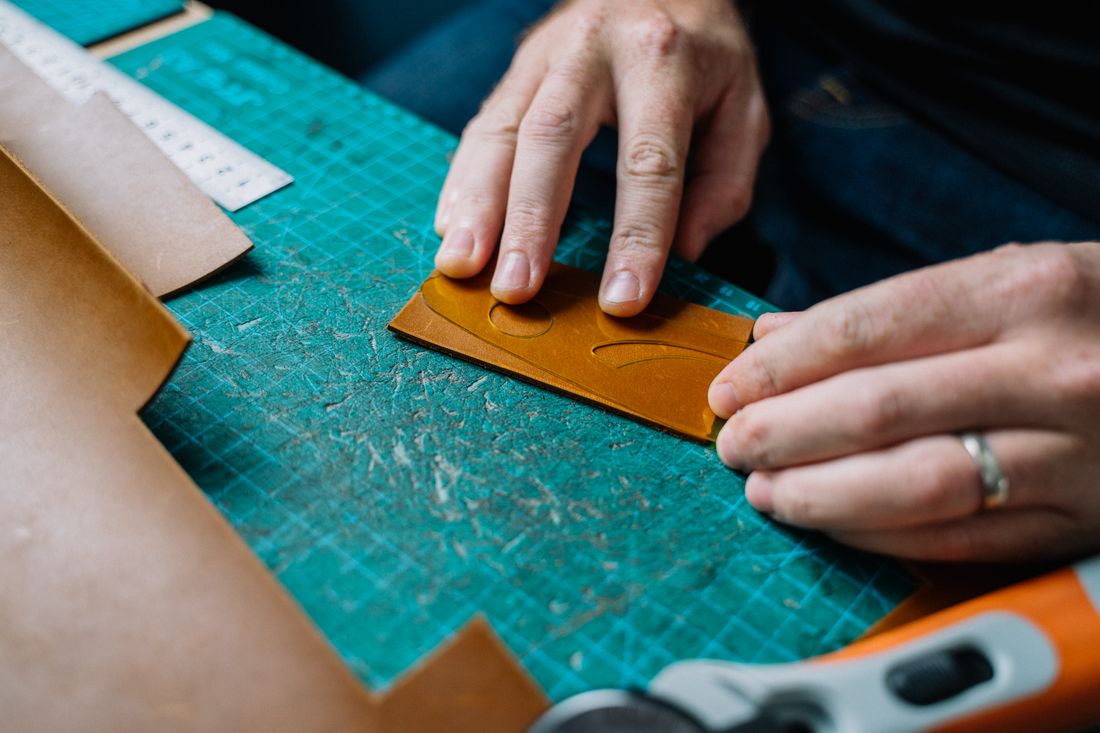
Photo by Anna Tarazevich via Pexels.
Materials and Process Are More Interesting Than the Finished Object, Right Now
During the build phase, materials, tools, texture, and hands in motion are genuinely interesting content on their own — not filler standing in for a reveal that isn't ready yet. A close crop of raw material, a detail shot of a tool mid-use, or hands doing real work carries its own visual interest, separate from whatever it's eventually going to become.
This matters because it removes the pressure to show the object at all. A lot of teaser content struggles because it's trying to hint at the finished thing indirectly — a shadow of it, a corner of it — which usually ends up either giving too much away or feeling thin. Shooting the process instead sidesteps that problem entirely: it has nothing to spoil, because it was never the reveal in the first place.
It also happens to be the most honest version of behind-the-scenes content, since it shows what actually occupies most of a build phase — not a dramatic breakthrough moment, but material, tools, and hands, repeated, over weeks.
Teasers Only Work on an Audience That's Already Paying Attention
A teaser posted to an account with no existing audience isn't a teaser — it's noise nobody sees, no matter how well it's shot. Teaser content works by redirecting attention that's already there toward a specific date; it doesn't generate that attention out of nothing on its own.
Posting a series of moody work-in-progress clips into an empty room builds anticipation in exactly no one, no matter how well the individual clips are shot. This is worth saying plainly because it's the step most often skipped. Teaser strategy gets treated as a production problem — what to shoot, how to obstruct it, when to post it — when the actual prerequisite is an audience problem: does anyone check this account or inbox regularly enough for a countdown to register as a countdown?
If the honest answer is no, the actual pre-launch task is audience-building content, not teaser content, and the two shouldn't be confused. Teasers assume attention and spend it deliberately. Audience-building content exists to create the attention a teaser campaign would later spend.
How Long a Build Window Can Hold Attention Before It Curdles
A teaser window tends to hold genuine attention for a few weeks of real new material, and it starts curdling into annoyance once posts keep repeating the same "something's coming" energy without adding any new information for the audience along the way — the campaign itself starts to feel like the whole point instead of a lead-up.
The signal that keeps people interested is new detail, not repetition — a different material, a different angle, a different fragment each time, not the same tease worded slightly differently. Longer windows aren't wrong on principle, but they need enough distinct build-phase material to justify the length, and most projects don't actually have that much genuinely new footage sitting around. Stretching four good clips across ten weeks reads as stalling, even if each individual clip was shot honestly.
The safer default is a shorter, denser window with real variety in it, rather than a long one padded with repetition. If the footage runs out before the calendar does, that's the sign to compress the timeline, not to keep posting the same three shots recaptioned until launch day finally arrives.
The Scheduling Problem: Teaser Footage Has to Be Shot Before Anyone Feels Ready
Teaser footage has to be shot weeks before the team feels ready to talk about the launch publicly, because it needs to happen while the work is genuinely still in progress — not once the announcement date is close enough to feel real.
That timing mismatch is the actual reason so much teaser content gets skipped, not a lack of interest in shooting it. By the point a launch date feels solid enough to plan content around, the build phase is usually mostly over. The prototype's been finalized, the messy version has been cleared out, and what's left to shoot is closer to behind-the-scenes-of-the-finished-thing than genuine in-progress material. The window for honest build-phase footage closes earlier than it feels like it should.
The practical fix is booking the build-phase shoot on the production calendar, not the announcement calendar — treating it as a scheduled part of the project itself, alongside materials arriving or the first working version, rather than something to arrange once the team is emotionally ready to discuss the launch out loud.
Frequently Asked Questions
What is teaser content, exactly?
Teaser content is footage or photos shot during the build phase, before a launch is announced, that shows real work in progress — materials, process, workspace, hands — without revealing the finished thing. It's meant to prove something specific and real is underway, not to explain what it is. It only works as one part of a larger plan that also covers announcement day and what happens after, since a teaser alone doesn't carry a launch on its own.
How do you shoot work-in-progress content without spoiling the actual reveal?
Pick a fragment that proves work is happening without answering what's launching — a texture, a partial angle, a sound without the visual. Use it deliberately: shallow focus with a blurred subject, a frame that crops the object at its edge, or a form covered on purpose, shot with the same confidence as any finished frame. If a single clip alone would tell someone what's launching, it's showing too much.
How far out from launch should teaser content start, and how long should it run?
A few weeks of genuinely new material tends to hold attention; stretching the same handful of clips across a much longer window usually reads as stalling rather than building anticipation. Let the amount of real build-phase footage set the length, not the calendar. A short, dense window with real variety in it works better than a long one padded out with repeated "something's coming" posts that add no new information each time.
Does teaser content work if there's no existing audience yet?
No — a teaser posted to an account nobody checks regularly isn't building anticipation, it's just going unseen. Teasers work by redirecting attention that already exists toward a specific date; they don't create that attention from scratch. Without a baseline audience, the honest pre-launch task is audience-building content first, then a teaser campaign later, once there's actually someone around to notice the countdown and care where it's headed.
When should teaser footage actually get shot, relative to the announcement?
Weeks before anyone feels ready to talk about the launch out loud, because it needs to happen while the work is genuinely still in progress. By the time a launch date feels solid enough to plan content around, the messy build-phase material is usually already gone. Booking the shoot on the production calendar, alongside milestones like materials arriving or the first working version, keeps it from getting missed entirely while everyone's focused on finishing the actual work.
Related Reading
Have a launch or brand project where scale is actually the story?
Tell us what the aerial shot needs to show, and we'll scope it alongside the ground coverage from the start, permits included.
See Personal Branding & Launches