Photo by Cihan Yüce via Pexels.
Most restaurants that call for photography are thinking about one dish, or one dining room, or one team photo they need for the website. A full shoot covers all four at once, and the difference between a set that actually works and one that leaves gaps usually comes down to planning it that way from the start.
A full restaurant photography shoot in NYC covers four asset types in one visit: food, drinks, interior and ambiance, and the team. Building the shot list around where each image will run — website, delivery platforms, social, press, third-party listings — before the shoot day is what turns one visit into a set that actually covers what the business needs.
Table of Contents
- The Four Kinds of Photos a Restaurant Shoot Actually Needs
- Building the Shot List From Where the Photos Will Run
- Why One Full Shoot Beats Four Small Ones
- How a Dish Gets Staged for the Camera
- What the Kitchen Needs to Prep Before the Shoot
- Shooting the Room: Interior and Ambiance
- Photographing the People Who Run the Place
- What a Finished, Usable Set Looks Like
The Four Kinds of Photos a Restaurant Shoot Actually Needs
A full restaurant photography shoot covers four distinct categories: the food itself, the drinks program, the room and ambiance, and the people who run the place. Skip one and you're usually back for a second shoot later, paying for a second setup instead of one.
Food is the obvious anchor — plated dishes shot to represent the menu, not every item on it. Drinks get their own treatment because glassware, ice, and foam behave differently under a lens than a seared piece of fish does; a full shoot can cover the basics on that front while treating the deeper bar-program work as a separate conversation. Interior shots capture the room empty or lightly dressed: the bar, the dining room, a corner booth, the details that tell a guest what kind of place this is before they walk in.
Then there's the team — the chef at the pass, a server setting a table, the GM in the doorway. Restaurants sell food, but they also sell a feeling of being run by real people, and that category gets skipped more than any other because nobody thinks to ask for it until an About page needs a photo and there isn't one.
Building the Shot List From Where the Photos Will Run
A shot list works better when it starts with destinations, not dishes: the website wants wide, styled images; delivery platforms want tight square crops; social wants vertical crops; press wants clean high-resolution horizontals; third-party listings need something that reads at thumbnail size. Working backward from placement keeps the set from serving only one channel.
Most restaurants think about the shot list as a list of dishes. It works better as a list of destinations, because each one wants something different from the same plate. A website hero wants a wide frame with room to breathe. A delivery platform wants a tight crop of the actual portion. A press kit wants a clean horizontal, without a hand or napkin edge in it.
We build the list by asking where each image needs to live before deciding how to shoot it — website, social, delivery platforms, press, and any third-party directory the business appears on. A frame composed for one destination often fails at another: a beautifully lit landscape shot crops badly into a square, and a phone-first vertical looks thin blown up elsewhere. That's a conversation worth having before the shoot day, not during it.
Why One Full Shoot Beats Four Small Ones
Combining food, drinks, interior, and team photography into one visit is more efficient than booking four separate shoots over time, because setup, lighting, and coordination happen once instead of four times, and the kitchen only has to adjust its rhythm around a camera crew for a single day instead of repeatedly.
Every shoot carries fixed costs that have nothing to do with what's in frame: setting up lights, coordinating with the kitchen, scouting where natural light falls through the dining room at different hours. Pay that cost once for a full shoot and it's spread across four asset types. Pay it four separate times and the same overhead gets covered repeatedly for less material each time.
There's a consistency argument too. Food, drinks, interior, and team photos shot months apart under different light and different menu seasons rarely match — a guest scrolling through a restaurant's feed can tell when a set was assembled from three different eras. None of this means every category needs equal time on the day. It means the categories get planned as one job instead of four separate bookings, sequenced around what the kitchen and the light can actually support in one visit.
How a Dish Gets Staged for the Camera
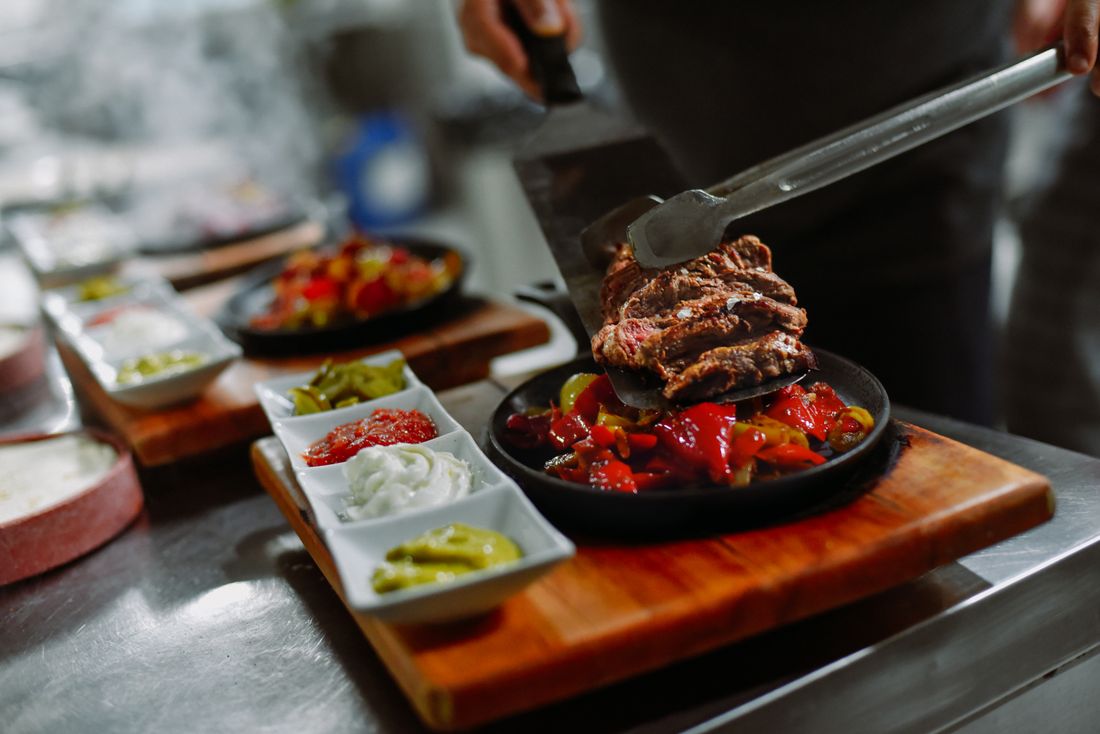
Staging a dish for camera means plating it the way the kitchen already plates it for a guest, then adjusting for what a lens sees that an eye doesn't: sauce placement, garnish height, steam timing, and an angle a fork never approaches. A single plate realistically takes several minutes once the kitchen, the stylist, and the light are all ready.
The best food photography starts with the kitchen's real plating, not a redesigned version of it. We ask the kitchen to plate the dish the way it goes out, then make small adjustments a camera needs that a guest never would — a sauce swipe angled toward the light, a garnish set slightly higher so it doesn't vanish into the depth of field, a ramekin pulled out of frame.
Timing matters more than people expect. A cold plate holds its shape; a hot dish starts wilting or losing steam the moment it leaves the kitchen, so those go last and get shot fast. The setup, not the shot itself, takes time — which is why a list with too many dishes for the day is the most common planning mistake. Fewer plates, done properly, beats a long list rushed.
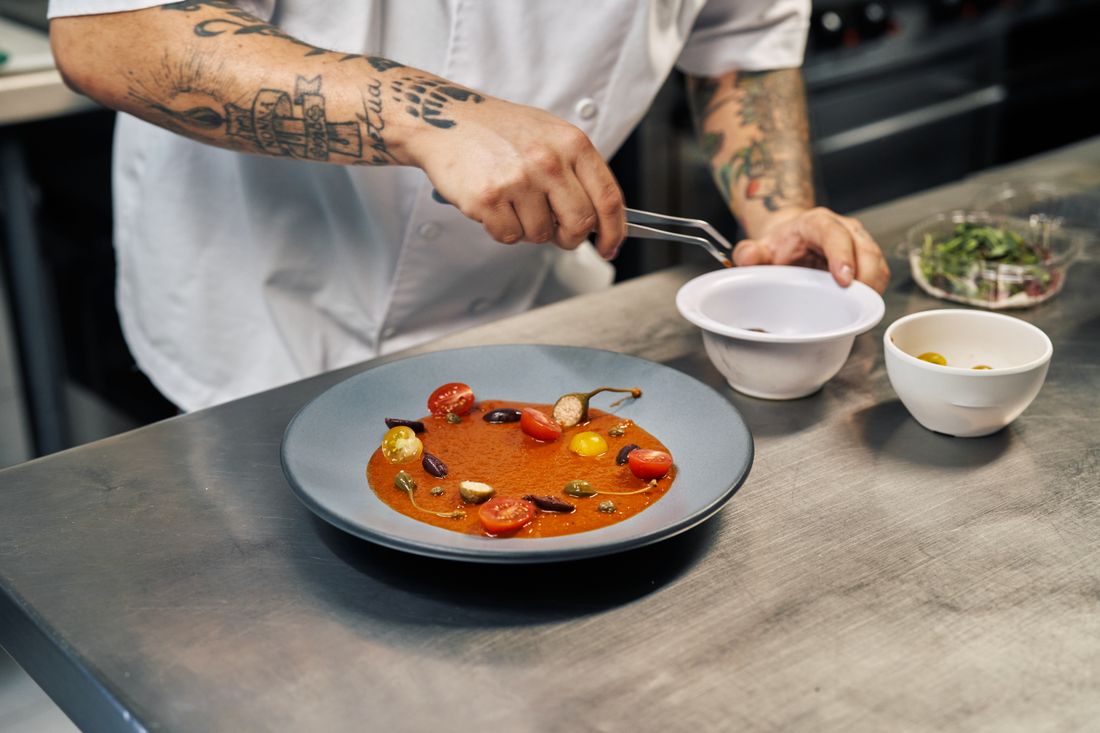
Photo by Willians Huerta via Pexels.
What the Kitchen Needs to Prep Before the Shoot
A kitchen preparing for a photo shoot needs backup portions of every dish on the list and components made ahead where timing allows, since a camera-ready plate takes longer to compose than a service plate and the kitchen still has to run normal prep around it.
Treating the shot list like an extra ticket line, not an afterthought squeezed between real service, makes the day go faster. Backup portions matter because a torn garnish or a sauce that pools wrong isn't worth reshooting from scratch when a second portion is already prepped and waiting.
Components that can be made ahead — sauces, garnishes, anything that doesn't have to be assembled à la minute — should be ready before the crew arrives, so the kitchen isn't building a dish from raw ingredients under a light that's already set and waiting. For dishes that genuinely need to be plated fresh, it helps to know in advance which cook is doing the plating, since a shoot moves faster with one steady hand than several people taking turns. None of this requires shutting down normal prep — it requires walking the shot list with the kitchen beforehand so nobody is guessing on the day.
Shooting the Room: Interior and Ambiance
Interior photography covers the dining room, bar, and design details that tell a guest what kind of place this is — usually shot empty or lightly set, using the restaurant's own natural and fixture light rather than added strobes, so the room photographs the way a guest actually experiences it.
Interior shots do a different job than food shots. They're not selling a dish, they're selling a feeling — what it's like to walk in, where the light falls in the afternoon, what the bar looks like from a seat at the far end. We usually shoot the room empty or lightly set with a few props, since an empty room gives more flexibility on angles than one full of moving people.
Natural light is almost always the better starting point than anything a crew brings in, because a restaurant's own fixtures and window light are part of its actual design. The close-up details matter as much as the wide shots — a stack of plates, the way the bar catches light at golden hour, a design element the owner spent real thought on. Those close-ups often do more work on a website than another wide dining-room shot ever will.
Photographing the People Who Run the Place
Team photography covers the chef, kitchen staff, and front-of-house team in motion — working, not posed against a wall — because restaurants run on people as much as plates, and a website or press kit with no human face reads as generic no matter how good the food photos are.
Food carries a restaurant's marketing most of the time, and the people who make it get photographed least. That's backwards for how guests actually decide where to eat — a chef's face on an About page, a GM greeting someone at the host stand, a server's hands setting a table all do work that another plated dish can't.
The best results come from photographing people doing their actual jobs rather than posing them against a wall. A chef plating during real prep, a bartender mid-pour, a server moving through the room — candid framing reads as more credible than a lineup portrait, and it gives a restaurant images it can use for hiring pages and press requests. This category gets skipped most often simply because nobody puts it on the shot list until a journalist asks for a photo of the chef and the only ones on file are years old.
What a Finished, Usable Set Looks Like
A usable delivered set covers all four categories in multiple crops and orientations — wide and tight, landscape and vertical — so the same shoot serves the website, social, delivery platforms, and press without a second booking. If a delivered set only fits one channel, the shot list left something out.
The test of a good restaurant shoot isn't how the images look individually — it's whether the finished set covers what the business needs to run for the next several months without another booking. Each of the four categories should show up in more than one crop: a dish framed wide for the website and tight for a delivery platform, a room shot as a landscape for the homepage and a vertical for a story.
A set that only serves one channel usually means the shot list was built around dishes instead of destinations from the start, and reshooting to fix that gap costs more than planning for it up front. The goal stays the same across any project: a set an owner or marketing lead can hand off to a web developer, a delivery platform's team, or a press contact without a follow-up email asking for a different crop.
Frequently Asked Questions
How long does a full restaurant photography shoot take?
A full shoot covering food, drinks, interior, and team photos typically runs a half day to a full day, depending on how many dishes are on the list and how many categories are included. Food takes the most setup time per shot; interiors move faster once the light is scouted. The real constraint is usually the kitchen's capacity to keep prepping backup plates, not the photographer's pace, so the schedule gets built around that.
Do we need to close the restaurant for a shoot?
No — most restaurant shoots happen during natural downtime like before opening, between lunch and dinner, or on a slower day, without closing the dining room. Scheduling around live service is its own planning question with real tradeoffs around light and kitchen availability, but the short version is that a shoot fits into existing gaps in most restaurants' schedules rather than requiring the business to shut its doors for a day.
How many dishes should be on the shot list?
Fewer than the full menu, chosen for what each image needs to do rather than covering every item. A realistic list prioritizes bestsellers, seasonal or signature dishes, and anything a delivery platform or press outlet is likely to request. Padding the list with every menu item usually means each dish gets less careful staging time, and that shows in the final images more than an incomplete list would.
Can drinks and cocktails be included in a full restaurant shoot?
Yes, though drinks are worth planning as their own segment of the day rather than folding them in casually. Ice, foam, and condensation change fast, so beverage shots typically happen in a dedicated block with their own setup rather than squeezed between food shots. A full shoot can cover both — it just needs the drinks portion scheduled deliberately instead of treated as an afterthought at the end.
What does a restaurant actually receive after the shoot?
A usable set covering food, drinks, interior, and team images in enough crops and orientations that the restaurant isn't stuck asking for a different size later — wide and tight, landscape and vertical, across all four categories. Exact file formats and specifics depend on the project, so that's worth confirming directly rather than assuming a default. What matters more than the format is whether the coverage is actually complete.
Related Reading
Planning a shoot for your restaurant, bar, or drink brand?
Tell us what's on the menu and where the images need to run — site, delivery listings, social, or press — and we'll build the shot list around that before anyone fires up the kitchen.
Ask About Restaurant Photography