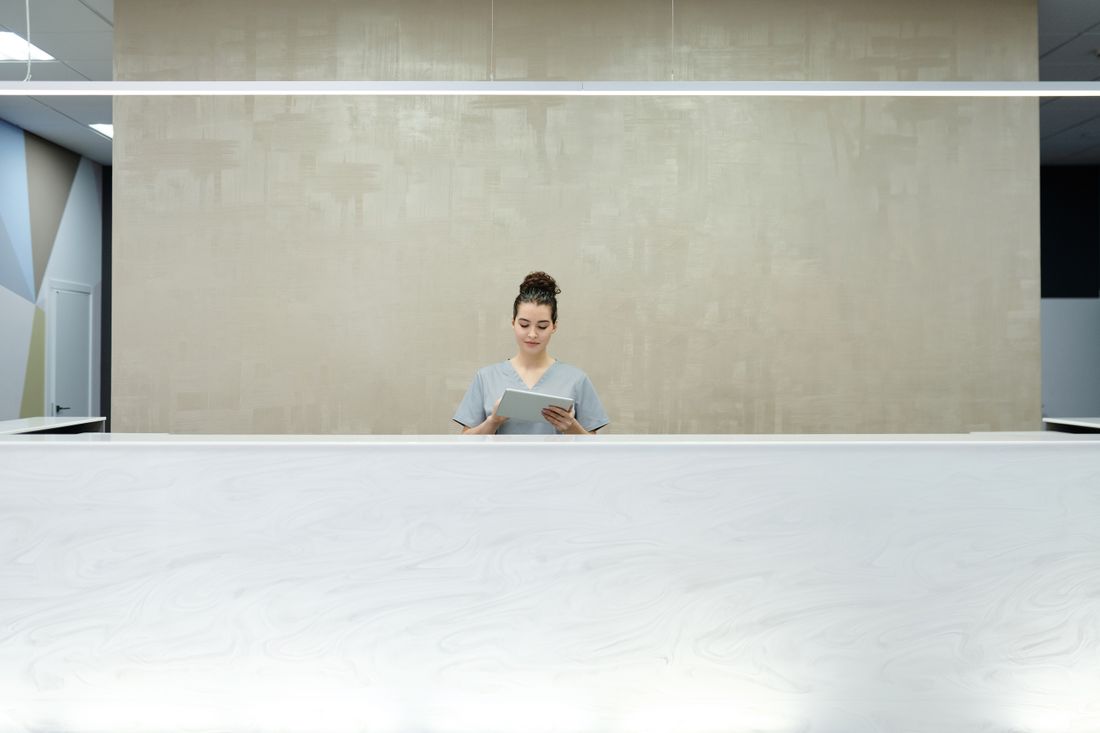
Photo by Cedric Fauntleroy via Pexels.
Property management and building operations headshots do a narrower job than most corporate photography: they exist to reassure a broker, a board, or a tenant who is judging a team they can't watch work day to day. That's a landlord-facing trust register, distinct from a hotel's guest-facing warmth or a design firm's creative register, and it changes who gets photographed, where, and how often the library needs updating.
The trust register that works for property management and building-ops headshots is accountable and practical, not warm or creative: it should look like a team that answers when something goes wrong. The lobby is usually the strongest background, since it's the room brokers and tenants actually see, and the library needs regular upkeep as staff turns over.
Table of Contents
- Why Property Management Headshots Are Their Own Trust Register
- Who Actually Belongs in the Headshot Library
- Where to Shoot: The Lobby, the Office, or Neither
- Wardrobe That Reads as Accountable, Not Corporate-Formal
- Using the Building Itself as a Backdrop, and Its Limits
- When a Short Building-Ops Video Earns Its Place Next to the Headshots
- Scheduling a Headshot Day Inside a Live, Occupied Building
- Keeping the Library Current as Building Staff Turns Over
Why Property Management Headshots Are Their Own Trust Register
Property management and building operations headshots exist to reassure people who are evaluating a company without ever getting to watch it work: a broker comparing management firms for a client, a board reviewing a proposal, a tenant checking who they'll actually be dealing with day to day. The job is to look organized, present, and accountable, not warm or creative.
That's a different register from the two closest neighbors. A hotel or hospitality headshot sells a guest experience — the person in the photo is there to make a stranger feel welcome for a weekend. An architecture firm headshot sells design judgment, and the studio around the subject is doing half the persuading. Neither of those is the actual job here.
A property management team is judged on a narrower, more practical question: if something goes wrong in this building at 11pm, does this look like the kind of team that answers? The photos aren't selling hospitality or creativity. They're selling operational competence to an audience that has every reason to check, and usually already keeps a checklist for exactly that.
Who Actually Belongs in the Headshot Library
A property management or building-ops headshot library usually needs three groups: the management-office staff who face brokers and boards directly (property managers, leasing agents, accounting or ops leads), on-site building staff who face tenants (supers, engineers, doormen), and anyone named on a leasing package or proposal cover page.
Companies often default to photographing only the office-facing roster and skip the on-site staff entirely, treating supers and engineers as internal-only. That undersells the actual pitch. A tenant deciding between two buildings is often more reassured by a photo of the engineer who fixes things than by another portrait of someone in the leasing office they'll rarely meet face to face.
We generally recommend building the list role by role, not department by department: who appears on the management company's own page, who appears on a specific building's page, and who shows up in a leasing deck sent to a prospective tenant. That list changes the shot count and the schedule more than most companies expect going in, and it's worth settling before the first camera comes out of the bag.
Where to Shoot: The Lobby, the Office, or Neither
The lobby is usually the strongest location for a property management headshot, because it's the one room a broker or prospective tenant will actually stand in and compare against the photo later on. A management office or conference room reads as generic corporate space that could belong to any industry, in any city, on any street.
The tradeoff is control. A working lobby has foot traffic, elevator chimes, and a front desk that can't be shut down for a shoot the way an office can. We typically work in short blocks near the lobby's edges — a seating area, a side wall, the space just past the security desk — instead of occupying the center of the room for a long, disruptive setup.
A neutral backdrop still has a place, especially for a portfolio spanning many buildings where consistency matters more than any one lobby's particular character. The choice isn't right or wrong so much as which problem the company would rather manage: uneven backgrounds across properties, or a plainer photo that ages well everywhere it gets used later.
Wardrobe That Reads as Accountable, Not Corporate-Formal
Business casual is the safest default for management-office staff: it reads as organized and professional without implying a formality the building itself doesn't have. Full suits can look slightly out of place against a lobby or hallway background, the same way a suit looks out of place standing next to a maintenance cart parked in a service hallway.
On-site staff are a different case. A super or engineer photographed in a company polo or a real work uniform reads as more credible than the same person in a borrowed blazer, because the uniform is the actual evidence that this is their real job on an ordinary day, not a costume assembled specifically for the camera.
The one wardrobe note that applies to everyone: avoid anything that fights the camera technically, fine patterns, heavy logos, reflective safety gear catching a light source at the wrong angle. Past that, the safer instruction for this register is closer to "wear what you'd wear on an ordinary Tuesday" than "wear what you'd wear to a hearing downtown."

Photo by KATRIN BOLOVTSOVA via Pexels.
Using the Building Itself as a Backdrop, and Its Limits
A building's own lobby, hallway, or mechanical room can work as a background because it signals a specific, real property instead of a generic office anywhere in town. That specificity is useful for a management company juggling several buildings, where a photo tied visibly to one address helps a tenant recognize their own building's actual team.
The limit is privacy and clutter, not aesthetics. Tenant names on mailboxes, unit numbers, packages addressed to real people, and visible security monitors all need to stay out of frame or get occluded before a shot is usable anywhere public-facing. A mechanical room adds credibility for an engineer's portrait; it also tends to carry equipment labels and signage that need a second look before publishing.
In practice, that means scouting the specific background before shoot day, not choosing it on the spot once everyone's already gathered. A hallway that looks fine to the eye can still have a resident's name plate or a delivery cart sitting in frame that only shows up once someone actually reviews the photo afterward.
When a Short Building-Ops Video Earns Its Place Next to the Headshots
A short building-operations video earns its place when it can show something a headshot structurally can't: a work order actually getting closed out, a super checking a boiler room, a leasing agent walking a hallway with a prospective tenant. That's a different job than the stills, which only need to answer who's on the team, not what an ordinary day there actually looks like.
This isn't a default add-on for every headshot day. It belongs on a management company's own site, a leasing package, or a board presentation, where the audience is deciding whether to trust this specific team with an actual building, not just recognize a face on a directory page somewhere.
The failure mode is the same one every industry runs into with this format: staged walk-and-talks and generic office b-roll that could belong to any company anywhere. The stronger version stays close to real, ordinary building operations, a hallway check, a service call, a front-desk handoff, and lets that carry the credibility instead of a director's note.
Scheduling a Headshot Day Inside a Live, Occupied Building
A property management headshot day works best scheduled in short blocks around the building's actual traffic, not treated as an event that takes over the lobby for an afternoon. Tenants are still moving through the space, elevators are still running, and a front desk usually can't go unstaffed just because a camera happens to be set up nearby.
Staggering staff by shift matters more here than at a typical office shoot. Supers and engineers often work different hours than leasing staff, and pulling everyone into one block can mean the building goes short-staffed at exactly the wrong moment. We generally schedule around whoever is already on-site that day instead of asking the whole roster to show up at once for a single production window.
The upside of working this way is that the finished photos look like an actual working building instead of one staged to look that way for a few borrowed hours, which is closer to the point of the whole exercise in the first place, for the people who'll actually rely on the result.
Keeping the Library Current as Building Staff Turns Over
Building-operations roles turn over more often than a law firm's partner roster or a consulting firm's practice leads, which means a property management headshot library needs a maintenance plan, not a one-time shoot that gets filed away. A super, engineer, or leasing agent leaving mid-year is routine, and an outdated photo next to their old title is a small but real credibility gap for anyone checking closely.
The practical fix is locking the technical setup, light, distance, background treatment, once, so a single new hire can be added later without reassembling the whole production from scratch. A one-person addition should take a fraction of the time the original shoot did, not require booking a full day again for one new portrait.
We generally recommend a light annual check instead of waiting for a full company-wide refresh: confirm who's current, replace who isn't, and leave everyone else's photo exactly alone. That keeps the library accurate without turning every ordinary staffing change into its own separate photo shoot and scheduling headache.
Frequently Asked Questions
How is a property management headshot different from a hotel or hospitality headshot?
A hotel or hospitality headshot sells a guest experience, warm and welcoming, built to reassure someone about a short stay at the property itself. A property management or building-ops headshot sells operational trust instead, to brokers, boards, and tenants deciding whether this team runs a building responsibly over years, not days. The register stays calmer and more practical, closer to competence than hospitality-style warmth, on purpose.
Who should actually be included in a building operations headshot set?
Start with anyone named on a leasing package, a management proposal, or a specific building's own page: property managers, leasing agents, and on-site staff like supers and engineers. Companies often photograph only the management office and skip on-site staff entirely, which undersells the actual pitch being made to a broker or tenant. A tenant deciding between two buildings is often more reassured by a photo of the engineer than another office portrait.
Should property management headshots be shot in the lobby or in an office?
The lobby is usually the stronger choice, because it's the space a broker or prospective tenant actually stands in and compares against the photo later on. A conference room, by contrast, reads as generic corporate space that could belong to any industry. The tradeoff is control: a working lobby has foot traffic and a front desk that can't fully pause, which short blocks near the edges usually solve well.
What should building engineers and supers wear compared to leasing staff?
On-site staff generally read as more credible in their actual work uniform or company polo than in a borrowed blazer, because the uniform is real evidence of the job itself, not a costume. Leasing and management-office staff usually read best in business casual, professional without a full suit's formality. Across both groups, avoid fine patterns or reflective gear that fights studio lighting technically during the actual session.
How often should a management company update its headshot library?
Building-operations roles turn over more than most office teams, so a light annual check works better than waiting for a full company-wide refresh. Locking the technical setup once, light, distance, background, means a single new hire can be added later without rebooking a full production for just one person. Confirm who's current, replace who isn't, and leave the rest of the library exactly alone until next year.
Related Reading
Planning headshots for a finance or wealth management team?
Tell us your team size and the tone you're going for, and we'll build a session that fits the credibility bar this industry actually needs.
See Headshots & Brand Videos