Photo by cottonbro studio via Pexels.
A President's Club dinner looks like an awards show from the doorway: a stage, a microphone, a list of names about to be called. It isn't one. The audience for the photos is the company itself, not an industry crowd, and that single difference changes almost everything about how the night should be covered.
A President's Club dinner is internal sales recognition, not a public awards show, so the photography should serve the company's own later use: a recruiting deck, a kickoff opener, an internal announcement. The handshake and the table's reaction matter more than the podium frame, with real discretion about who ends up in a private room's photos.
Table of Contents
- What Makes a President's Club Dinner Different From an Awards Show
- Who the Photos Are Actually For
- Why a Warmer, Less Staged Register Works Better Here
- Why the Handshake and the Table Reaction Matter More Than the Podium Frame
- Covering a Room Where the Honorees Are Colleagues, Not Strangers
- Discretion: Who Is and Isn't in Frame at a Private Event
- Working a Hotel Ballroom or Private Dining Room Lit for Dinner, Not Cameras
- How This Fits Into Planning Coverage for a President's Club Dinner
What Makes a President's Club Dinner Different From an Awards Show
A President's Club dinner recognizes salespeople in front of their own company, not an industry audience, so the photography has a different job than an awards show does: the pictures aren't proof for outsiders, they're memory for insiders, and that changes the pacing, the framing, and what counts as the shot.
An industry awards show is built to be seen by people who weren't there: a wide stage shot, a clean handoff, a name on a screen. A President's Club dinner is built to be remembered by people who were there. The honorees already know they won. Their manager already told them. What the room wants back isn't proof of the win, it's the feel of the night: the table that stood up, the friend who grabbed a shoulder on the way to the front, the moment the room got loud. That distinction is small on paper and it shapes every choice on the floor: where we stand, how tight we get, and whether we're chasing the podium or the table next to it. Treat the night like an awards show and the photos will be accurate and still feel wrong to the people in them.
Who the Photos Are Actually For
The audience for a President's Club dinner is the company itself, next year: the images end up in the next recruiting deck, the sales kickoff opener, and an internal announcement, not in a press release or a trade publication, so they need to work as culture proof, not media coverage.
That single fact changes the shot list more than any lighting choice does. A recruiting deck needs faces that look like a place someone would want to work: genuine, a little loose, not posed in a line. A kickoff opener needs energy that plays on a screen behind a stage, so wide room shots and reaction shots matter as much as any individual portrait. An internal announcement needs a handful of images that read clearly at thumbnail size, before anyone clicks in. None of that overlaps much with what an awards show needs, which is one clean hero image of a winner holding something. We plan the coverage around those three later uses from the start, not as an afterthought once the dinner is over and someone in marketing asks what we actually got.
Why a Warmer, Less Staged Register Works Better Here
A warmer, less staged register works better at a President's Club dinner because the room already trusts itself: these are colleagues, not strangers being introduced to a brand for the first time, so photography that feels too produced reads as corporate rather than celebratory, and it undercuts the exact feeling the dinner exists to create.
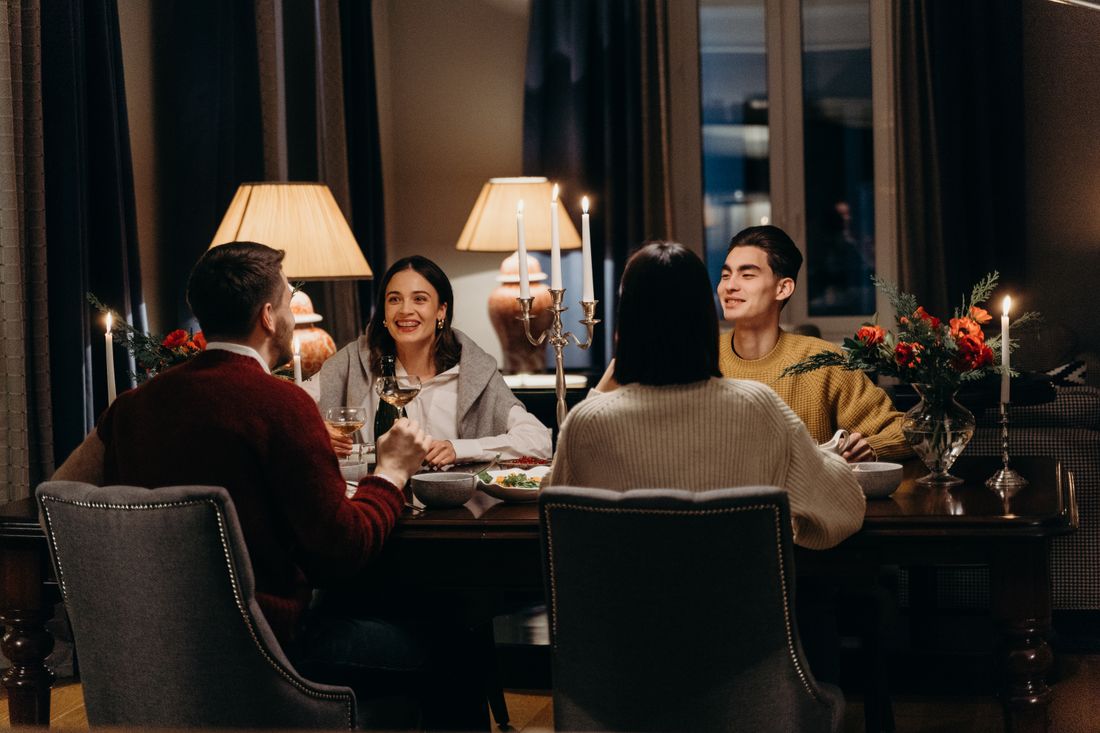
In practice that means fewer formal lineups and more coverage from inside the conversation. We work close to the tables during dinner instead of only from a fixed position near the stage, because the honest moments, someone laughing at their own toast, a hand on a colleague's back, happen at eye level, not from a riser. Flash gets used carefully so it doesn't announce itself across the room; a lot of the strongest frames from a dinner like this come from available light plus a fast lens rather than a hard strobe pop that makes everyone briefly aware a camera is there. The goal is coverage that looks like it was barely noticed, because a recognition dinner where people stop being themselves for the camera has lost the thing it was trying to capture in the first place.
Why the Handshake and the Table Reaction Matter More Than the Podium Frame
The podium frame proves someone won; the handshake and the table reaction prove the room cared, and for an internal audience the second thing matters more, because everyone watching already knows who won before the photo is taken, so the useful image is how their own people responded to it.
That's a different job for the photographer than working an awards show floor. It means positioning to catch the walk from the table to the front, not just the moment at the front, because that walk is where the applause actually happens and where a colleague reaches out to touch an arm or stand up early. It means staying on the table after the honoree has already stepped away, since the reaction often outlasts the moment that triggered it: someone still smiling, someone refilling a glass to toast, someone leaning over to say something to the person next to them. A single strong podium shot tells the story once. A handshake, a stood-up table, and a genuine laugh across three different frames tell it in a way that still means something a year later in a deck nobody in the room that night will ever see get built.
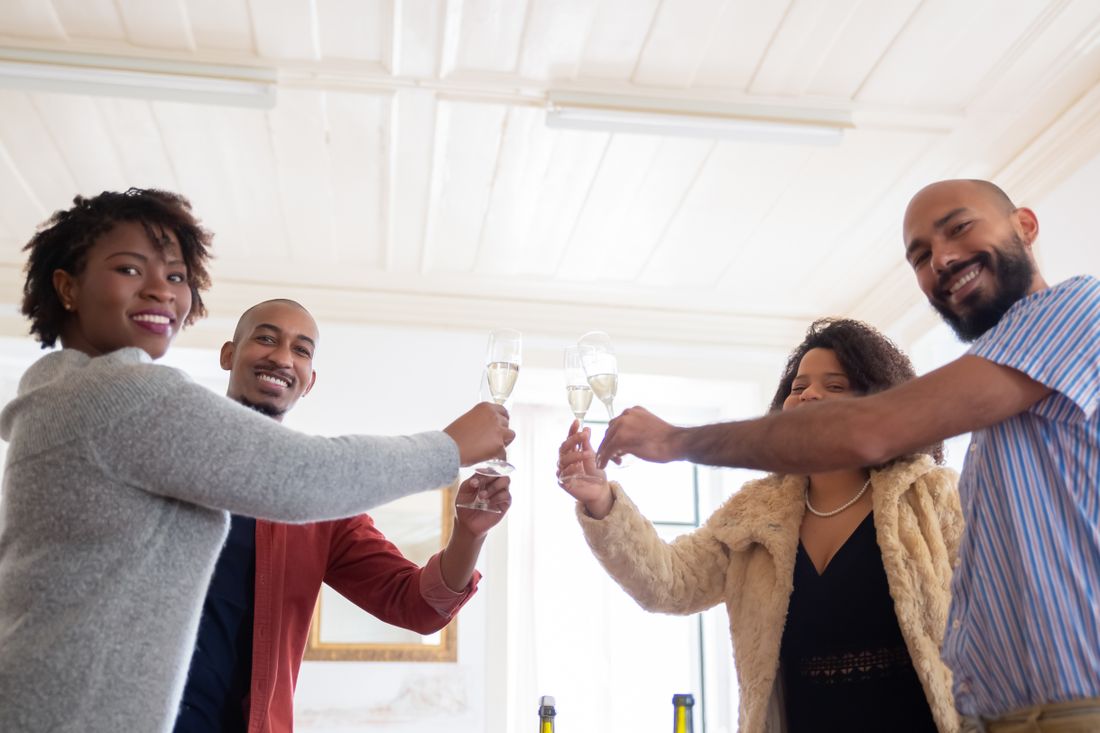
Photo by Kampus Production via Pexels.
Covering a Room Where the Honorees Are Colleagues, Not Strangers
Every person photographed at a President's Club dinner will see the photo, most likely from their own manager or their own team, so the coverage has to hold up to a level of scrutiny an outside audience would never apply: nobody wants to be the unflattering frame their coworkers pass around.
That reality shapes how we shoot and how we edit. We favor angles and moments that read as confident rather than caught off guard: mid-laugh over mid-chew, a genuine smile over the split second between expressions that looks strange frozen. We take more frames of each key moment than we would for a public event, specifically so there's a flattering option of the person receiving the recognition and of the people around them, since a stiff or unflattering image of a colleague creates real friction inside a company in a way it never would for an outside audience. We also stay aware of hierarchy in the room, giving proportional coverage to who the night is actually for rather than defaulting to whoever is easiest to shoot, since an internal audience will notice an imbalance that an external one never would.
Discretion: Who Is and Isn't in Frame at a Private Event
A President's Club dinner is a private event, not an open door, and discretion means checking in with the organizer beforehand on who should and shouldn't appear in wide shots: a guest attending as a plus-one, someone who asked not to be photographed, or a competitor's former employee still under a non-compete.
In practice, we ask the organizer for that list before the first course, not after someone spots themselves in a shared album. It also means being deliberate about candid coverage of the room as a whole: a wide shot of the ballroom is useful for the recruiting deck, but it still needs the same care as a close portrait, since a face buried in the background of a group photo is still identifiable to the people who work with that person. We keep a light touch about who ends up in the final selects, favor moments over headcounts, and treat any request to leave someone out as final, not as a suggestion to negotiate around once the images come back from editing. A private dinner earns private handling, all the way through delivery.
Working a Hotel Ballroom or Private Dining Room Lit for Dinner, Not Cameras
A hotel ballroom or private dining room is lit to make dinner feel intimate, with low, warm, uneven light from centerpieces and sconces rather than an even wash a camera prefers, so the practical constraint on a President's Club dinner is working within that mood, not fighting it with hard light.
We shoot most of the room on available light and a fast lens built for exactly this situation, because the warmth is part of what the photos are supposed to communicate; flattening it with an on-camera flash trades the actual atmosphere of the night for a harsher, flatter one that looks like it was shot anywhere. Where flash is necessary, for the podium moment or a formal handshake where sharpness matters more than mood, we bounce or diffuse it so it doesn't read as an obvious camera flash from three tables away. We also scout the room in advance where possible, so we know which tables sit in the dimmest corner and can plan to spend more time there rather than discovering it mid-dinner when the honoree from that table is already walking to the front.
How This Fits Into Planning Coverage for a President's Club Dinner
Planning coverage for a President's Club dinner starts with naming its three real audiences before the event, not after: the recruiting deck, the kickoff opener, and the internal announcement, and then building a shot list around what each of those actually needs instead of defaulting to an awards-show format by habit.
That means agreeing in advance on the honoree list, any discretion requests, and roughly how the room is arranged, so coverage isn't improvised from a doorway. It means treating the walk to the podium and the table reaction as real shots on the list, not incidental frames grabbed between the ones that were planned. It means bringing gear suited to low, warm room light instead of a lighting setup built for a stage. None of this requires the dinner to be bigger or more elaborate than it is; a single-night internal recognition dinner is a straightforward brief once the audience and the constraints are named up front. It's coverage for a company night, planned like one, which is the part that gets missed when a private dinner gets treated as a smaller version of a public show.
Frequently Asked Questions
Is a President's Club dinner photographed differently than an awards ceremony?
Yes. An awards ceremony is built for an outside audience, so it leans on wide stage shots and a clean trophy handoff that reads clearly to people who weren't in the room. A President's Club dinner is internal recognition, so the useful images are the handshake, the table reaction, and the room's genuine energy, since everyone in the photos already knows who won and wants to see how their own colleagues actually responded to it that night.
Where do President's Club dinner photos actually get used afterward?
Mostly inside the company, not in public. They tend to show up in the next year's recruiting deck as culture proof, as an opener for the sales kickoff presentation months later, and in an internal announcement or newsletter recognizing the honorees to people who weren't there. Planning the shot list around those three later uses in advance matters more for the outcome than chasing one polished hero image from the night itself.
How does a photographer handle discretion at a private recognition dinner?
By checking with the event organizer beforehand about anyone who shouldn't appear in wide or candid shots, a plus-one, someone who asked to be left out of photography entirely, or anyone else with a reason to stay off camera that night. That list gets treated as final rather than something to negotiate around once the selects come back from editing, since a private dinner earns the same handling as any other private gathering, not a public one.
Can a hotel ballroom's dinner lighting actually work for good photography?
Yes, with the right approach. Ballroom and private dining room lighting is warm, low, and uneven by design, built to make dinner feel intimate rather than to make a camera's job easy. The practical fix is shooting most of the room on available light with a fast lens suited to low light, and reserving flash, bounced or diffused rather than direct, for the handful of moments where sharpness matters more than mood.
What makes coverage of a single dinner different from a multi-day sales trip?
Scale and format, mainly. A single President's Club dinner is one room, one evening, and a clear, narrow set of later uses to plan around: a recruiting deck, a kickoff opener, an internal announcement. A multi-day incentive trip spans multiple venues, activities, and days of footage with a different planning problem entirely. The dinner's coverage plan stays simple: name the audiences, the honoree list, and the room's real constraints, then shoot to that.
Related Reading
Not sure if hourly or a package makes more sense for your event?
Tell us the expected length, and we'll run the actual numbers before you book.
See Event Coverage Packages