Photo: Core Visuals NYC
An awards ceremony doesn't give you a second take. Most events have slack built in. A candid moment you miss becomes a different candid moment ten minutes later. A ceremony hands you a printed program with every winner's name in order, and once that name is called and the room claps, the photo either exists or it doesn't.
Photographing an awards ceremony means treating the winner list as a shot list: know the order, the presenter, and whether there's a stage handshake or a step-and-repeat before doors open, hold a position that doesn't block sightlines or the AV cameras, and verify every name got covered before the room empties.
Table of Contents
- Why an Award Ceremony Photographer in NYC Can't Get a Second Take
- The Coordination That Happens Before Doors Open
- Stage-Side Positioning Is a Negotiation, Not a Choice
- The Lighting Problem: Hard Stage Wash, Dark Room, Bright Screens
- Getting the Handshake-and-Hold Without Becoming Part of the Show
- The Every-Winner-Must-Exist Problem
- Group and Sponsor Photos After the Ceremony
- How Deliverables Get Named So Every Winner Can Find Their Photo
Why an Award Ceremony Photographer in NYC Can't Get a Second Take
An award ceremony photographer in NYC walks into a guaranteed shot list before the first guest arrives. Every winner's name is printed in the program and called out loud in front of the room. Miss the moment on stage and there's no walking it back. The winner already sat down.
That's different from a conference keynote or a networking reception, where a missed frame just becomes a different frame a few minutes later. A gala has open room to work with between the formal moments. A ceremony doesn't. The structure is rigid by design, because the room is there to see specific names called in a specific order. Most event coverage treats a shot list as a guideline. Here it works closer to a contract. The client hands over a run of show with names attached, and the job is to produce a usable photo against each one. That's the frame for everything else below. Positioning, lighting, timing, and delivery all get built around the fact that the list is fixed and the moment doesn't repeat.
The Coordination That Happens Before Doors Open
The real work on an awards ceremony happens before a single guest walks in: getting the winner list in the actual reading order, confirming who's handing out each award, and finding out whether winners come to a step-and-repeat afterward or just shake hands and exit stage. Skip this and the shot list becomes a guess.
The winner list rarely arrives clean. Categories get reordered the morning of, a presenter drops out and gets swapped, a tie gets added late. Whoever runs the show, the event planner, the emcee, or the AV lead, is the one source of truth, and it's worth pinning down before the room fills. At a union venue, that same conversation usually loops in the house electrician and stage manager too, since a camera position or an extra cable run often needs their sign-off. The step-and-repeat question matters more than it sounds. A ceremony with a designated photo backdrop after stage means winners can be caught calmly, in order, with a clean background. A ceremony with just a stage handshake means the only usable frame is the three or four seconds during the handoff, and there's no backup plan if that frame doesn't land.
Stage-Side Positioning Is a Negotiation, Not a Choice
Where a photographer stands during an awards ceremony isn't a free decision. It's a negotiation with whoever runs AV and lighting, because the same aisle a photographer wants for a clean angle is often the same sightline a stage camera or a follow spot needs. Position gets settled before the show starts, not during it.
A house photographer walking into a venue cold has to find the AV lead or lighting operator early and ask three things: where the fixed cameras are aimed, where the follow spot travels, and whether there's a riser or a reserved aisle spot available. Stand in the wrong place and a photographer either blocks a shot the client is paying for elsewhere, or ends up in the recorded livestream themselves, which is its own kind of failure on a night where the goal is to be invisible. The upside of doing this early is real: a position confirmed before doors open means no mid-ceremony repositioning, which is the fastest way to miss a name being called.
The Lighting Problem: Hard Stage Wash, Dark Room, Bright Screens
Awards ceremony lighting is built for the audience's eyes, not a camera's sensor: a hard, often colored wash on stage, a room dropped to near black for the screen, and a presentation screen behind the presenter throwing its own bright, shifting light into the frame. All three fight the same shot at once.
The wash forces a choice. Expose for the stage and the room goes to solid black, or expose for the room and the stage blows out. The screen makes it worse: a bright slide behind a presenter's head reads as a light source the camera has to account for, and it changes brightness every time the slide changes. None of this gets solved with more flash. Flash from the audience during a stage moment is often not allowed, and even when it is, it flattens the exact drama the lighting designer built on purpose. The practical answer is a fast lens, high ISO tolerance, and exposing for the presenter's face first, letting the background do what it does. It's a technical constraint that has to be planned for, not fixed live.
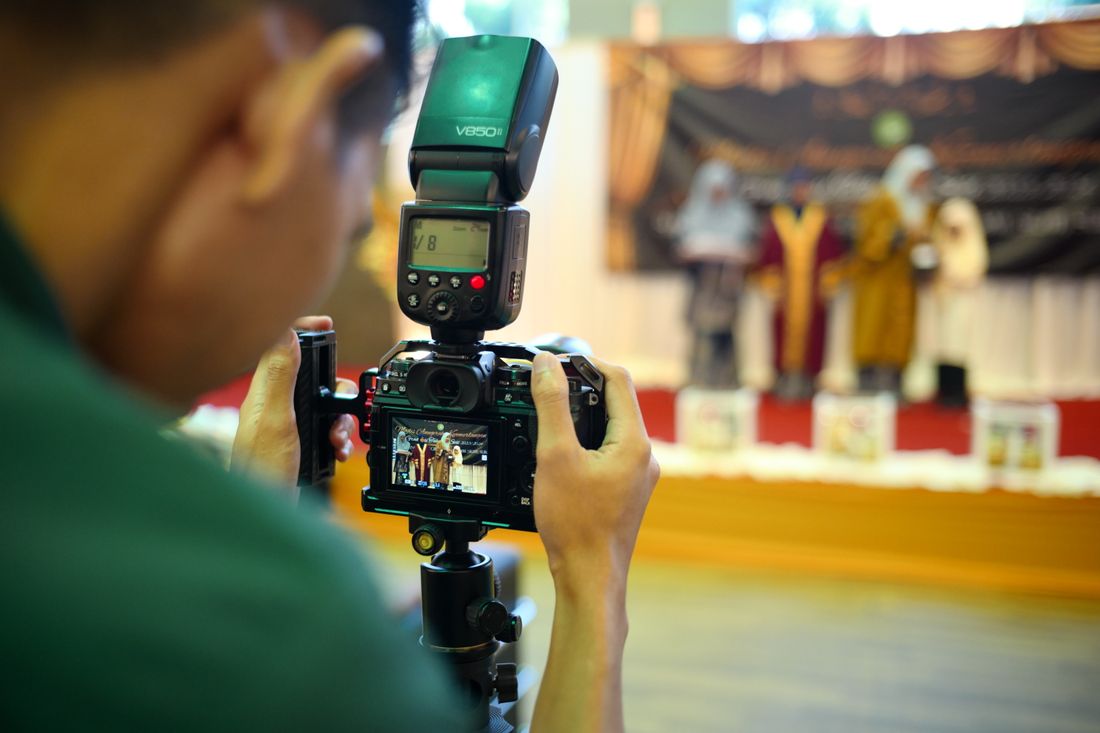
Photo: Core Visuals NYC
Getting the Handshake-and-Hold Without Becoming Part of the Show
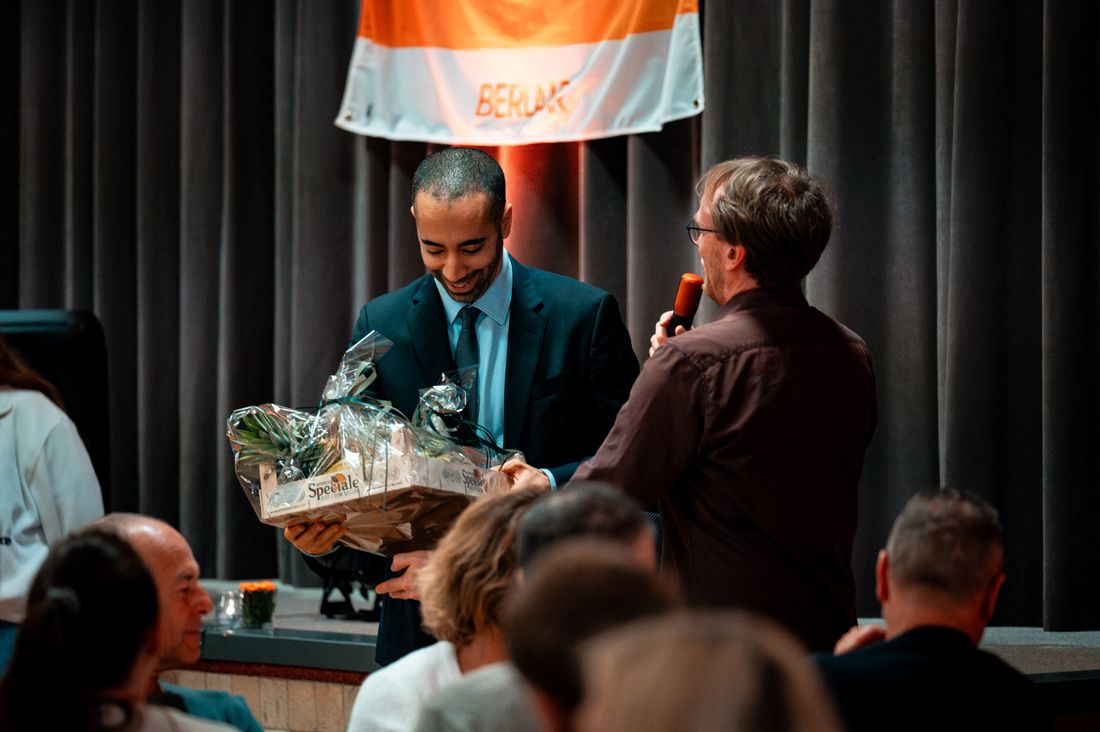
The handshake-and-hold, presenter and winner posed together for a beat before they exit, is the one frame every winner actually wants, and it only exists if someone signals for it without stopping the ceremony to get it. That signal is usually a quiet cue to the emcee, arranged in advance.
Left alone, most handoffs move fast: award passed, hand shaken, both people already turning to leave. A two-second hold changes that into a usable photo instead of a blur of a handoff. Getting it without slowing the show down means asking the emcee ahead of time to build in a natural beat, a line like “hold there for a photo” is a normal, expected part of a ceremony run of show, not an interruption. What doesn't work is a photographer calling out from the floor to ask for a pose; that reads as the photographer becoming part of the event instead of documenting it, and it's the kind of moment that gets noticed by everyone in the room, including whoever's filming the livestream.
The Every-Winner-Must-Exist Problem
An awards ceremony has one coverage requirement that doesn't apply to most other events: every single winner has to have a usable photo, with no exceptions for the ones who left early or slipped past while attention was on someone else. That means checking the list against actual coverage before the room empties.
The failure mode is quiet. Nobody announces a missed winner in the moment, the gap only shows up later when someone's asking where their photo is. The fix is a physical or digital checklist that gets a mark next to each name as the photo is confirmed, checked against the program in real time rather than assumed. If a name gets missed, whether from a fast handoff, a bad angle, or a person who bolted for a table before the frame landed, the window to fix it is while the room is still full: catching that person at their table or near the exit works, catching them after they've left doesn't. This is the one piece of ceremony coverage that has to be verified, not just shot and hoped for.
Group and Sponsor Photos After the Ceremony
Once the last award is handed out, the ceremony photo list isn't finished. Sponsors, board members, and honorees usually want a formal group frame, and that request is easiest to handle when it's built into the schedule ahead of time instead of assembled from scratch as the room starts thinning out.
These photos work better planned than improvised: knowing in advance which sponsor logos need to be visible in frame, which board members are expected, and where the step-and-repeat or a clean wall is located means the group can be gathered once, shot efficiently, and released. On a ceremony booked as an Essential-tier coverage window (up to five hours), that closing block is usually the last stretch of the booked time, so a five-minute heads-up to the event planner earlier in the night keeps it from eating into everyone's departure. Without that plan, this becomes the part of the night that drags: chasing people table by table while the room is already breaking up and half the honorees have started heading for coats.
How Deliverables Get Named So Every Winner Can Find Their Photo
A finished gallery of hundreds of ceremony photos is only useful to a winner if they can find their own name in it, so the file naming and sorting has to map back to the winner list, by category, by name, or both, not just to a chronological shoot order.
Chronological order alone is useless to a winner searching for one photo among four hundred, because they have no idea what time their category was called. Tagging or naming files against the same winner list used for coverage, the one confirmed before doors opened, solves that: a gallery organized by award category, or a folder per honoree, means the client or the ceremony organizer distributing photos afterward can hand someone a direct link instead of a whole gallery to scroll. Delivery on an Essential-tier booking runs five to ten business days for the full edited set, which is another reason the sorting has to be right the first time. This is the step that makes the earlier coordination pay off twice. It gets the shot once, and it makes that shot findable by the person it's actually for.
Frequently Asked Questions
How far in advance should the winner list be finalized for photo coverage?
The winner list, presenter names, and award order should be confirmed before doors open, not during the ceremony. Categories and presenters change up until the last minute in practice, so the useful habit is getting the most current version directly from whoever runs the show, the planner or the emcee, right before the room fills, and treating that as the working shot list for the night.
What happens if flash photography isn't allowed on stage?
Many ceremonies restrict flash from the audience during stage moments because it disrupts the lighting design and can be visible on a livestream or broadcast recording. The workaround is a fast lens, a higher ISO tolerance, and exposing for the presenter's face against the stage wash rather than trying to fix the available light artificially. It's a technical adjustment that gets planned into the coverage before the show starts, not improvised in the middle of a ceremony.
Is a step-and-repeat necessary for awards ceremony photography?
It's not required, but it changes the coverage plan significantly. With a step-and-repeat, winners can be gathered and photographed calmly after their stage moment against a clean, consistent background, in whatever order works. Without one, the only usable frame of that person is the few seconds of the handshake on stage itself, which raises the stakes on getting that single moment right and makes checking coverage against the winner list afterward that much more important.
How do sponsor and group photos get organized after the ceremony ends?
They work best when planned ahead rather than assembled once the ceremony ends: knowing in advance which sponsor logos need to be visible in frame, which board members are expected to attend, and where the group will gather, whether that's a step-and-repeat or just a clean wall. A brief confirmation with the event planner earlier in the evening turns this into an efficient close instead of chasing people table by table as the room empties and guests head for coats.
How should award ceremony photos be delivered so winners can find their own?
Files should be organized against the same winner list used for coverage, by award category, by honoree name, or both, rather than by chronological shoot order. A winner has no idea what time their category was called during the show, so a category-based or per-honoree gallery lets an organizer hand someone a direct link to their own photo instead of a full gallery to scroll and search through on their own.
Related Reading
Trying to lock down coverage for an event that's still taking shape?
Give us the rough schedule and we'll tell you whether hourly or a package actually saves you money.
See Event Coverage Packages