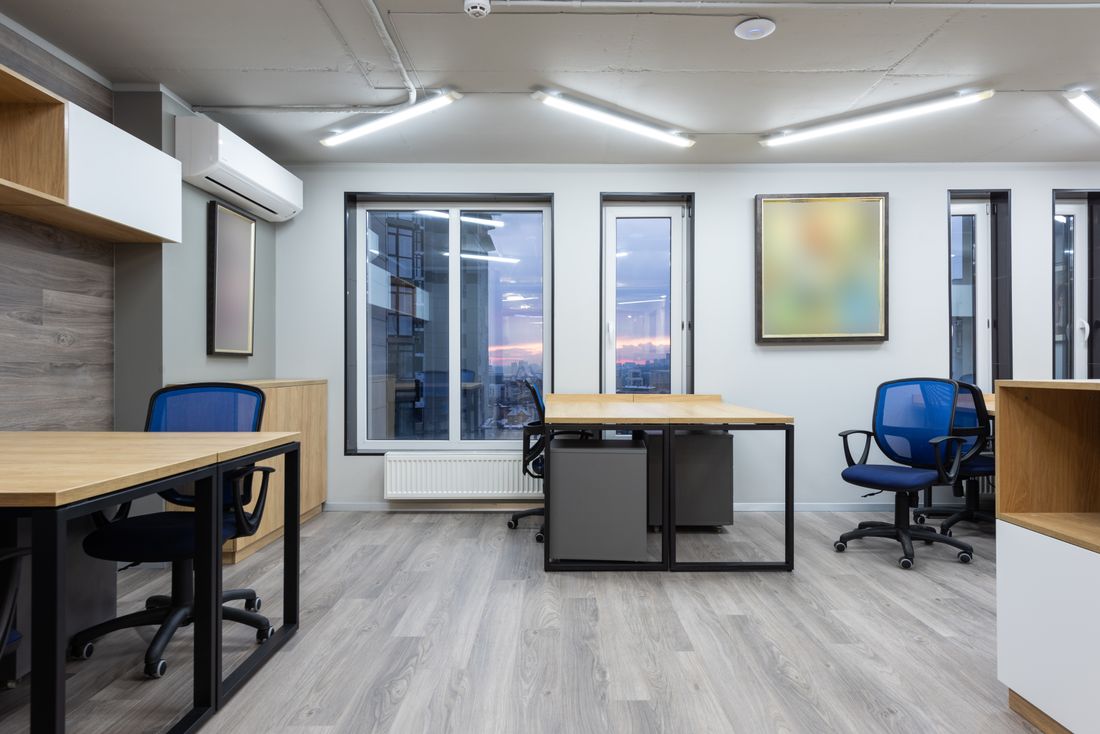
Photo by Max Vakhtbovych via Pexels.
Most companies moving offices book one shoot: the ribbon-cutting at the new address, with the tour and the first all-hands in the new space. The last day in the old office gets nothing, not even a photographer standing in the doorway before the desks come out. That's the half of the move nobody documents, and it's the half that actually holds the company's history.
Office relocation coverage should include the old space in its final working state, not only the new one on opening day. Departure coverage means shooting the space as people actually used it before it empties: the desks, the wall details, the informal goodbye, and the packing-day candids that pair naturally with arrival footage later.
Table of Contents
- Why the Old Office Deserves Its Own Shoot
- What the Space Looked Like Before It Emptied
- The Details That Carry Ten Years of Real History
- Capturing the Informal Goodbye, Not a Staged One
- Packing Day Is Its Own Scene
- When to Shoot Relative to Moving Day
- Who Actually Needs to Be in the Frame
- How Departure Footage Pairs With the Arrival Celebration
Why the Old Office Deserves Its Own Shoot
A relocation usually gets photography booked for one moment: the new office's opening, with the tour and the first all-hands in the new space. The last day in the old office is a separate story that deserves its own coverage, not an afterthought squeezed between packing and the move truck.
The opening is a beginning. The departure is an ending, and endings carry a different weight. A company that's occupied a space for years has worn it in: the corner where deals got celebrated, the desk configuration that shifted three times as the team grew, the layout everyone stopped noticing because it was just where they worked. None of that survives the move. Once the furniture is out and a new tenant's contractor walks through, that version of the company is gone for good, and no amount of photography at the new address can retroactively capture it. Treating the departure as its own shoot, not a footnote to the opening, is what actually preserves the bookend. The two shoots only tell one continuous story if both halves of it exist.
What the Space Looked Like Before It Emptied
The useful version of departure coverage is the office as people actually worked in it, not a staged walkthrough after everyone's gone home. That means shooting while desks still have some life in them, while a jacket's still on a chair back, while the space still looks lived in rather than already vacated.
A fully packed, fully empty office reads as generic the moment the personal touches are gone; it could be any office anywhere. The version worth capturing sits somewhere between full workday and moving-day chaos, a space clearly mid-transition but still recognizably itself. That window is short and it closes fast once serious packing starts, which is exactly why it has to be scheduled deliberately rather than assumed it'll happen naturally. Waiting for a quiet afternoon to send someone in with a camera almost always means waiting past the point where the space still looks like the company's space. The candid, in-between state is the one that reads as real later, not the tidy version and not the stripped one.
The Details That Carry Ten Years of Real History
The images that actually matter later are rarely the wide establishing shots. They're the close details: a well-worn desk corner, a favorite chair, the light through a window everyone complained about and will somehow miss. Those small, specific frames carry more of a company's real history than any hallway shot of an empty conference room.
A decade in one space accumulates a texture that's hard to describe and easy to photograph: the wear pattern on a stair rail, the particular clutter of a shared kitchen counter, the desk someone's occupied since the company was a fraction of its current size. None of it needs to be dramatic. The value is in specificity, the sense that this exact spot belonged to this exact company for this exact stretch of time. A shot list built only around wide interior shots misses that entirely. Planning a few minutes for close, detail-level frames, alongside the wider room shots, is what gives the final set something to actually hold onto once the space itself is someone else's problem.
Capturing the Informal Goodbye, Not a Staged One
The goodbye worth photographing is the one that happens on its own, in a hallway or over a shared box of donuts, not a posed group shot lined up against a wall. Candid coverage of people actually talking to each other reads as genuine later in a way a staged farewell photo never quite manages.
Most offices mark a last day with something informal: a lunch, a round of drinks after hours, a few people lingering by the elevator longer than usual because nobody wants to be the one who leaves first. That's the material. It doesn't need choreography, it needs a photographer already in the room, moving quietly enough that people forget the camera's there after the first few minutes. A shot list that only calls for a group photo will get a group photo and nothing else, which flattens what's actually an emotional day into one stock image. Leaving room in the plan for the unplanned moments, rather than filling the whole window with posed setups, is what makes this coverage worth having at all.

Photo by Vitaly Gariev via Pexels.
Packing Day Is Its Own Scene
Packing day has its own visual story: half-cleared desks, stacked chairs, boxes accumulating by the door, a room that looks less like an office with every hour that passes. It's messier and more human than either the tidy working office or the empty one, and it's worth shooting as its own scene rather than skipping to the aftermath.
The instinct is to wait until the packing settles down before bringing in a camera, but the settled-down version is just an empty room. The in-progress version, someone taping a box shut, a stack of monitors waiting for the movers, a coat rack down to its last hanger, is the one that actually shows the process of a company leaving a place. It doesn't need to be scheduled as a separate session from the departure coverage; an hour or two overlapping with the actual packing usually covers it. The goal isn't a highlight reel of moving-day chaos, it's a handful of honest frames that show the space changing hands in real time.
When to Shoot Relative to Moving Day
Departure coverage has to happen before the desks empty out, not after, which means scheduling it days ahead of the actual move rather than treating it as something to fit in whenever there's a gap. The working window is short, usually the final week the space still looks and functions like the company's office.
Shooting too early misses the packing and the goodbye entirely; shooting too late gets an empty shell with nothing left to photograph. The workable stretch sits in that last week, ideally split across two visits: one earlier for the space still in daily use and the details worth catching, and one closer to move day for the packing and the informal send-off. Trying to compress both into a single visit usually means missing one or the other, since a still-full office and a mid-pack office look and feel different. Confirming the actual move date early, and working backward from it, is what keeps this from becoming a same-week scramble once someone remembers the old office is about to be gone for good.
Who Actually Needs to Be in the Frame
The people worth photographing on the last day are the ones who've actually been there the longest, not necessarily the ones with the most senior titles. A leadership portrait belongs in the new-office opening coverage; the departure is about the staff who've worked in this specific space long enough to have a real reaction to leaving it.
That usually means longtime employees, team leads who've watched the space change, and whoever ends up organically at the center of the goodbye, not a curated list assembled by title. Asking a few people ahead of time whether they're comfortable being photographed on a day that can carry real emotion is worth doing before the shoot, not during it. The point isn't to document every employee individually, it's to capture enough real faces and real interactions that the final set feels like it belongs to actual people who worked there, rather than a generic stock sequence of an empty room. A short heads-up to the team beforehand, so a camera in the room doesn't feel like a surprise, makes the candid material easier to get.
How Departure Footage Pairs With the Arrival Celebration
The departure coverage earns its value once it sits next to the new-office opening: together they make a before-and-after that either half alone can't tell. That pairing is what makes the material useful well past the week of the move, in places like internal comms, the careers page, and later anniversary content.
An internal announcement about the move lands differently with a real image of the old space next to the new one, rather than just the new address and a floor plan. A careers page telling the growth story, the we-outgrew-our-old-space version, needs an actual old space to point to, not a generic stock photo standing in for it. Even a year or two later, an anniversary post about how far the company's come reads stronger with a real before image than with nothing at all. None of that value exists if the departure was never photographed in the first place, which is the actual case for planning it as its own shoot instead of an afterthought.
Frequently Asked Questions
When should the last-day shoot happen relative to the actual move?
In the final week the space still looks and functions like the company's office, ideally across two visits rather than one. An earlier visit catches the space still in daily use and the detail shots worth having, and a later one closer to move day catches the packing and the informal goodbye. Waiting until moving day itself usually means arriving after the desks are already empty.
Does departure coverage need a different photographer than the new-office opening?
Not necessarily, but it does need its own booking rather than being folded into the opening shoot as an afterthought. The two shoots happen weeks apart in different spaces with different emotional registers, one quieter and reflective, one celebratory, so planning them as two distinct sessions with the same photographer usually works better than trying to compress both into a single visit around one moving date.
What if the office is already mostly packed up by the time someone thinks of this?
A partially packed office is still worth photographing; the boxes and half-cleared desks are their own honest scene rather than a failure to catch the space in time. What's harder to recover is the fully staffed, fully working version, so if any of that window remains, prioritizing it over the packing shots first is usually the better call for whoever's scheduling the shoot, since an empty room can be photographed anytime later.
How is this different from just photographing the new office opening?
The opening documents a beginning: the new space, the celebration, the first day in it. Departure coverage documents an ending: the old space as people actually used it, the informal goodbye, and the process of packing it up. Together they form a before-and-after story that neither half tells on its own, which is the actual point of booking both instead of just the one celebration everyone remembers to schedule.
What do companies actually do with the departure photos afterward?
They tend to resurface in internal communications about the move, on a careers page telling a growth story, or in anniversary content well after the fact, usually paired with images of the new space. A real photo of the old office does more work in that context than a generic stock image or no image at all, especially once nobody at the company remembers what the old space actually looked like.
Related Reading
Not sure if hourly or a package makes more sense for your event?
Tell us the expected length, and we'll run the actual numbers before you book.
See Event Coverage Packages