Photo by fish socks via Pexels.
Companies planning anniversary content usually start from the number — five years, ten, twenty-five — and work backward to find a reason it matters. That's the wrong order. An anniversary is a deadline, not a story anyone outside the company asked to hear. The material worth making comes from somewhere else: whatever archive footage survives, the people who were there at the start, and the work itself. The honest test is simple — would a stranger care about this number on its own?
An anniversary is a deadline, not a story. The usable material is whatever the company can actually show for that stretch of time — real archive footage where it exists, real people who were there at the start, and the finished work itself — measured against one honest test: would anyone outside the company care about the number alone.
Table of Contents
- Why a company anniversary is a deadline, not a story
- The honest test: would anyone outside the company care about the number
- What to do when the archive footage doesn't exist
- Why the people who were there at the start are the real material
- Why the work itself outperforms a highlight reel of the number
- What format actually fits an anniversary — video, stills, or both
- Internal audience or external audience — two different pieces, not one
- How far ahead to plan anniversary content so it isn't rushed
Why a company anniversary is a deadline, not a story
A company anniversary is a deadline, not a story anyone asked to hear. The number itself — five years, ten, twenty-five — doesn't do creative work on its own. What actually earns attention is whatever the company can genuinely show for that stretch of time: real footage, real people, real projects, not a badge graphic with a year printed on it.
Treating the date as a deadline instead of a narrative changes the whole approach. A deadline means: here's a fixed point on the calendar, what do we actually have that's worth showing by then? A story means starting from the number and working backward to invent a reason it matters. The second approach is where anniversary content goes generic — a founder statement about the journey, a stock-photo timeline, a post that could belong to any company turning any number. The number is the excuse to make the content, not the content itself. Once that's clear, the planning question stops being how do we celebrate five years and becomes what do we actually have from these five years worth showing, which is a far more answerable question.
The honest test: would anyone outside the company care about the number
The honest test for anniversary content is simple: would someone with no stake in the company — a prospective client, a candidate weighing an offer, a stranger scrolling past — actually care about the number by itself? Almost always the answer is no. What they might care about is what the number represents: work that held up, people who stuck around, a body of projects that got better over time.
This test matters because it separates content built for the team from content built for an audience, and an anniversary tends to blur the two. Internally, the number is genuinely meaningful — worth marking, worth a real celebration, worth telling the team they got here. Externally, nobody outside the building is moved by a round number by itself. What holds an outside viewer is specific: a project they recognize, a person they've worked with, footage of actual work rather than a highlight reel of the milestone. If the content can't pass that outside test, it's probably better scoped as an internal moment — an all-hands, a team dinner — rather than a public release that reads as an ad for the company's own existence.
What to do when the archive footage doesn't exist
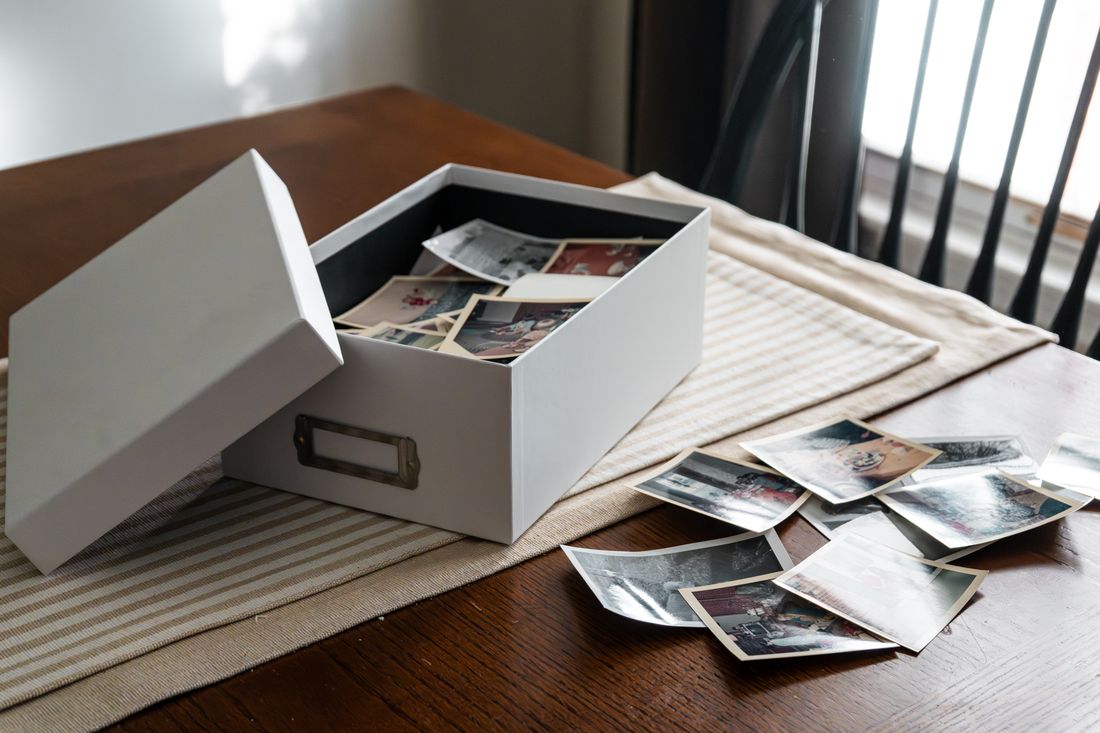
Most companies planning anniversary content hit the same problem: footage from the early years either doesn't exist, is unusable quality, or was never organized in a way anyone can find now. That gap is normal, not a failure of planning — companies rarely shoot with an eventual anniversary piece in mind. The honest move is to build around what actually survives, not to fake what doesn't.
A gap in the archive changes what the piece can honestly claim to be. If there's no usable footage from year one, it can't be a visual then-and-now — it has to lean on something else real: people describing what it was like, whatever photos do exist even if sparse, documents or objects from the early days. Stretching thin or blurry old footage to cover a gap it can't cover, or recreating early-days scenes with actors and calling it history, undercuts the credibility the anniversary is supposed to build. A shorter, honest piece upfront about what survived holds up better than a polished one quietly papering over a hole in the record.
Why the people who were there at the start are the real material
The strongest material for an anniversary piece is usually the people who were actually there when the company started, not the footage. A short, honest interview with an early employee or founder about what the first year actually felt like — the uncertainty, the small wins, what almost didn't work — carries more weight than any highlight reel, because it's the one thing a competitor can't copy or fabricate.
This works because it shifts the content from a claim, we've grown for ten years, to evidence: an actual person describing what that growth looked like from inside it. It also answers the archive-footage problem from a different angle — even without old video, the people who lived through the early days are a living archive, and their memory of specific, small details, the first client, the first office, the first thing that broke, is exactly the kind of texture a viewer believes because nobody would invent something that oddly specific. The tradeoff is honesty about who's still around to interview. If the people who were there have mostly moved on, that's a real constraint worth planning around rather than working past with a generic team segment instead.
Photo by Magda Ehlers via Pexels.
Why the work itself outperforms a highlight reel of the number
A reel of actual projects — before-and-after comparisons, finished work across the years, real clients if they'll agree to be shown — does more for an anniversary piece than any segment built around the number itself. The number is abstract; the work is not. A viewer can judge quality and range from seeing the work directly in a way a stat or milestone graphic can't provide.
This is the same logic that applies to any portfolio: show, don't summarize. An anniversary is a natural occasion to pull together work normally scattered across separate case studies or a scrolling portfolio page into one coherent piece, and that consolidation is valuable on its own, independent of the milestone framing. The risk is treating the work montage as filler around the real anniversary message rather than as the actual content. If the work is strong enough to carry the piece, it should be the majority of the runtime, with the anniversary framing as a light wrapper — an opening line and a closing line — rather than narration interrupting the work every few seconds to remind the viewer what year it is.
What format actually fits an anniversary — video, stills, or both
Video suits an anniversary when there's someone worth hearing from on camera — an early employee, a founder, a client describing years of work together. Stills suit it when the material is mostly finished work or archive photos with no one available or willing to be interviewed. Most anniversary content ends up needing both: a short video anchored by real voices, plus a still gallery or timeline that can live on a website or in a deck longer than a video gets watched.
The format choice should follow what actually exists, not a default assumption that an anniversary needs a video. A company with strong photo documentation but no comfortable on-camera talent is better served leaning into stills and letting the work speak, rather than forcing an interview that reads as stiff. A company with articulate early employees but thin visual archives is better served by an audio-forward piece with photos as support, not fighting to manufacture footage that doesn't exist. Matching format to material, instead of the reverse, is what keeps the piece from feeling like it's performing an anniversary rather than actually documenting one.
Internal audience or external audience — two different pieces, not one
An anniversary piece for the team internally and one for clients or prospects externally are two different pieces with different honest content, not one video repurposed for both. Internally, inside jokes, specific names, and small operational details are exactly what makes it land. Externally, most of that same detail is noise a stranger has no context for.
Trying to make one piece serve both audiences usually means cutting the specific, meaningful details out of the internal version to make it generic enough for outsiders, which leaves the internal audience with a flatter piece than they deserve and still doesn't give the external audience anything they'll watch past the first few seconds. The more useful split is a longer, specific internal piece for the all-hands or team event, and a shorter, work-forward external piece built around the outside test — what would an outsider actually care about. Planning for two pieces from the start, even if the external one ends up short, is more efficient than building one piece and discovering afterward it doesn't work for either audience.
How far ahead to plan anniversary content so it isn't rushed
Anniversary content needs real lead time because the two hardest parts — finding and reviewing archive material, and scheduling interviews with people who were there at the start — both take longer than expected and can't be rushed in the final weeks. A reasonable minimum is two to three months before the actual date, longer if the archive situation is genuinely uncertain.
The date itself is fixed and non-negotiable, which is exactly what makes this a planning problem rather than a creative one. Waiting until a few weeks out to start pulling old footage or asking early employees for interview time usually means discovering the archive gap or the scheduling conflict too late to plan around it honestly, and rushing tends to produce the padded, generic anniversary content the outside test is meant to catch. Starting early also leaves room for the harder, better call: if the material genuinely doesn't support an external piece, deciding that in month one is a much better position than realizing it in week one and shipping something thin anyway just because the date arrived.
Frequently Asked Questions
Do we need to mark every year of a company anniversary, or just round numbers?
Round numbers — five, ten, twenty-five years — carry more weight externally because they're what an outside audience recognizes as an actual milestone. Odd-numbered anniversaries are usually better marked internally, a team lunch, an all-hands mention, rather than as public content, since the outside test (would a stranger care about this specific number) is a harder pass at year three or year seven than at a round number.
What if we genuinely don't have any usable footage from the early years?
That's common, not a dead end. Build the piece around what does exist — current interviews with people who were there, photos even if sparse, documents or physical objects from the early days — rather than stretching unusable old footage or recreating scenes with actors to fill the gap. A shorter, honest piece that's upfront about the early days beats a polished one quietly faking material that doesn't actually exist.
Should an anniversary piece include current clients, or focus on the company alone?
Real work, and if they're willing, real clients describing the relationship, does more than a company-only narrative — it's outside evidence, not a self-description. Only include a client with their explicit agreement to be shown and named, and never suggest a relationship or project that wasn't actually confirmed. A company-only piece is fine when client participation isn't available, but it's worth asking before assuming no.
How is anniversary content different from launch content or a founder video?
Launch content marks something new — a product, a rebrand, an opening. A founder video is usually one person's perspective or story. Anniversary content is neither: it's a retrospective across a time span, built from archive material, past team members, and finished work rather than a forward-looking announcement or a single voice. Our posts on planning launch content and founder content cover those separate cases.
Can one shoot day cover both the internal and external anniversary pieces?
Often yes, if it's planned as two separate pieces from the start rather than one video meant to quietly serve both audiences. The same interview day can produce a longer, specific cut for the internal audience and a shorter, work-forward cut for the external one, but that only works if both versions are scoped out loud before the shoot starts, not discovered as a problem once already sitting in the edit.
Related Reading
Have a launch or brand project where scale is actually the story?
Tell us what the aerial shot needs to show, and we'll scope it alongside the ground coverage from the start, permits included.
See Personal Branding & Launches