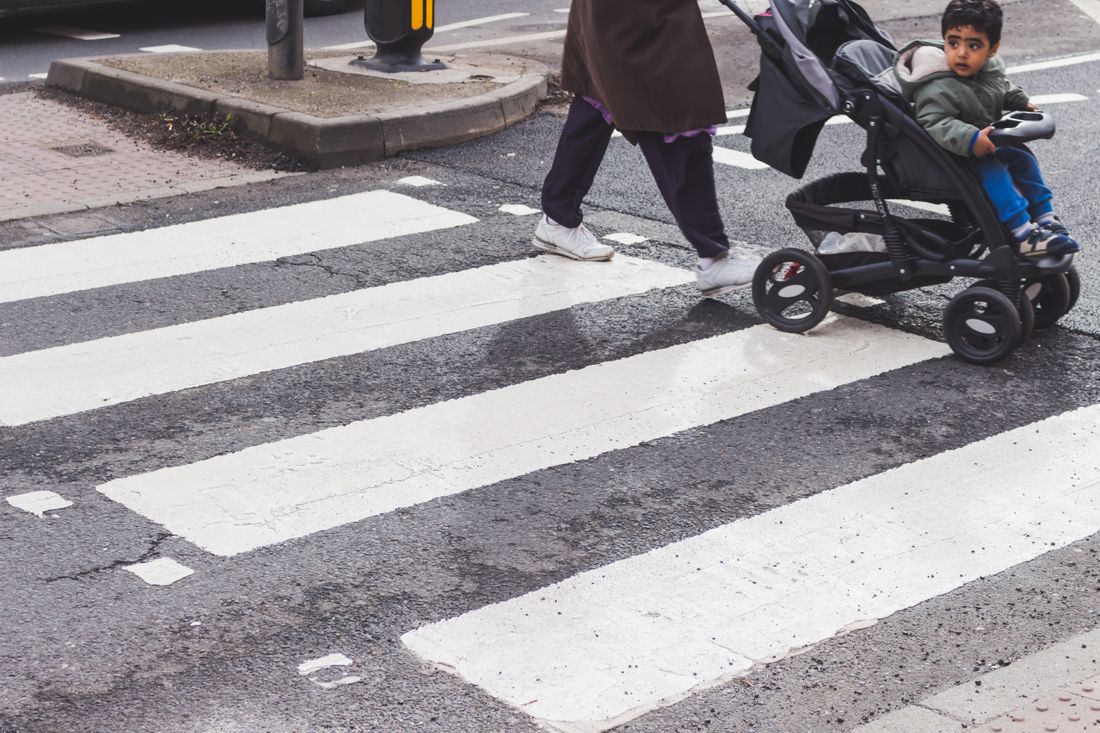
Someone planning an outdoor event in New York almost always asks the same question first: how much is the permit going to cost? The honest answer surprises most people, because the city's own film and photo permit is free. The real budget line lives somewhere else entirely, and it's worth understanding before a client assumes the number is zero across the board.
The standard MOME film and photo permit for public property in New York City is free for qualifying productions. Most small stills shoots on a public sidewalk don't need one at all. The real dollar cost, when a permit is required, comes from ancillary items like paid NYPD officer details and short-term production insurance, not the permit itself.
Table of Contents
- The MOME Permit Itself Is Free
- When a Permit Isn't Required at All
- When a Permit Actually Is Required
- The Letter in Lieu of Permit Option
- Where the Real Dollar Cost Actually Comes From
- NYPD Officer Details and Production Insurance
- Larger Setups, Street Closures, and Parks Permits
- This Isn't Legal Advice — Confirm Directly With MOME
The MOME Permit Itself Is Free
The standard film and photo permit issued by the Mayor's Office of Media and Entertainment, MOME, for shooting on city-owned public property is free for qualifying productions. That's confirmed directly on NYC.gov's MOME permit pages and corroborated by industry guides that cover production logistics in the city.
This surprises a lot of first-time clients, who assume anything involving city government and a permit application must carry a fee somewhere. It doesn't, at least not at the level of the permit document itself. The application process exists to manage who's using public space and when, not to generate revenue from small productions booking a single day.
That free-permit fact is also the most misunderstood part of budgeting for a public-space shoot. Clients hear "permit" and picture a line item on an invoice. What they should picture instead is a paperwork step that, on its own, costs nothing — the actual costs, when they exist, come from somewhere else entirely, and that's the part worth planning around.
When a Permit Isn't Required at All
A permit generally isn't required for hand-held camera or camera-on-tripod work that doesn't assert exclusive use of city property, involves no prop weapons or vehicles, no stunts, no actors in police uniform, and no request for parking privileges. Most small stills shoots on a public sidewalk fall squarely into this no-permit category, and that covers more events than people expect.
That covers a lot of the event photography Core Visuals actually gets asked about: a photographer moving through a public plaza during a launch event, documenting a small gathering on a sidewalk, or shooting candid coverage near a venue entrance. None of that typically requires a MOME permit under the standard guidance.
The distinction that matters is exclusivity and disruption, not the presence of a camera. A photographer working quietly among pedestrians isn't treated the same as a crew that wants a block to itself. Most event coverage never asks for that, which is exactly why most event coverage never needs a permit in the first place.
When a Permit Actually Is Required
A permit is required once a shoot needs exclusive use of public space, a street or lane closure, prop vehicles or prop weapons, stunts, or parking privileges for production vehicles. Any one of those triggers the requirement, not just a combination of several.
This is where an event planner's instinct can be wrong in either direction. Some assume any outdoor photography needs paperwork; others assume a big event with lots of guests is automatically fine without one. The actual trigger has nothing to do with event size and everything to do with whether the shoot is asking for something exclusive from the city — closing a lane, blocking a sidewalk for equipment, reserving parking for a production van.
A rooftop reception with photography confined to private property, for instance, is a different situation than the same event's photographer stepping into the street to get a skyline shot with a tripod set up mid-lane. One doesn't need a permit. The other likely does.
The Letter in Lieu of Permit Option
There's an optional Letter in Lieu of Permit available for exterior public-property shoots that don't need a full permit and aren't already covered by someone else's existing permit for that location. It's documentation worth having on hand even when a permit isn't technically required for the day.
Think of it as a middle option between doing nothing and applying for a full permit. It doesn't grant exclusive use of anything, and it isn't a substitute for a permit when one is genuinely required. What it does is give a production something to show if a question comes up on location — proof the shoot was aware of and working within the no-permit guidelines rather than operating blind.
For a client nervous about a public-space shoot going smoothly, this is usually worth the small amount of extra paperwork. It costs planning time, not money, and it removes a category of on-site uncertainty before the crew ever shows up on the day.
Photo by Kindel Media via Pexels.
Where the Real Dollar Cost Actually Comes From
The real cost of a permitted city shoot comes from ancillary, third-party items, not the city permit fee itself. The two most common are paid NYPD officer details and short-term production liability insurance, both of which are vendor and industry costs rather than fees charged by the city itself.
This is the gap between what people expect to budget and what they should actually budget. A client who hears "the permit is free" and stops there is missing the line items that determine whether a permitted shoot costs a few hundred dollars or several thousand. The permit unlocks the shoot; the ancillary costs are what make it happen safely and legally.
Neither of these costs is fixed by the city, which means they vary by vendor, scope, and how many officers or how much coverage a specific shoot actually needs. Treating them as estimates to plan around, not quoted prices, is the right way to budget early, well before a date is locked in.
NYPD Officer Details and Production Insurance
Industry-reported rates put a paid NYPD officer detail around $55 to $60 per hour per officer, typically with roughly a four-hour minimum, though rates vary by precinct and vendor arrangement. Short-term production liability insurance commonly runs $500 to $1,500 depending on the scope of the shoot and what it needs to cover.
Both of these are separate transactions from the city permit itself. The officer detail is arranged and paid outside the permit application; the insurance is purchased from a provider, sometimes through a short-term policy built specifically for one-day productions. Neither shows up as a fee on the MOME paperwork, and neither is optional once a shoot's plan requires it.
For a smaller event shoot that doesn't need a street closure, it's possible to avoid both costs entirely by staying inside the no-permit category described earlier. Once a shoot crosses into needing exclusive use of public space, though, these two items are usually the actual budget conversation, not the permit application itself.
Larger Setups, Street Closures, and Parks Permits
For bigger productions needing street closures, added logistics like traffic agents, signage, and insurance riders can run into the thousands per block per day in Manhattan, on top of the still-free base permit. Scale changes the ancillary budget substantially even though the permit fee itself never does, no matter how many blocks are involved.
It's also worth knowing that NYC Parks Department permits are a separate system from MOME entirely, with their own fee structure for productions shooting inside parks. A shoot planned for Central Park or a smaller borough park isn't operating under the same free-permit rule as a standard public street or plaza shoot — it's a different permitting body with its own process.
We don't have a verified specific Parks fee to quote here, and won't invent one. What's worth knowing going in is simply that public space isn't one system in New York — a sidewalk shoot and a park shoot can land under entirely different rules from the start.
This Isn't Legal Advice — Confirm Directly With MOME
None of this is legal advice on whether a specific planned shoot requires a permit. Requirements should be confirmed directly with MOME before relying on any general rule, since the exact circumstances of a shoot — location, equipment, crew size, whether streets are involved — determine the actual answer for that day.
What we can help with is the production side of an event once the permitting question is settled: planning coverage that works within whatever rules apply, coordinating with a client's permit timeline, and building a realistic budget that accounts for ancillary costs like officer details or insurance when a shoot needs them.
For event coverage generally, this is where we point clients: settle the permit question with MOME first, then bring the actual shoot plan to us so coverage gets built around a confirmed, legal footing instead of an assumption. That order avoids the most expensive kind of surprise — a shoot that has to stop mid-event because of a paperwork gap.
Frequently Asked Questions
Does it cost money to get a film or photo permit in NYC?
No. The standard MOME film and photo permit for city-owned public property is free for qualifying productions, confirmed directly on NYC.gov's MOME pages and corroborated by industry guides. What costs money, when a permit is actually needed, are separate third-party items like a paid NYPD officer detail or short-term production liability insurance, which are vendor costs rather than fees charged by the city itself for the permit.
Do I need a permit to photograph an event on a public sidewalk?
Usually not, if the shoot is hand-held or tripod work that doesn't claim exclusive use of the space, doesn't involve prop weapons or vehicles, and doesn't request parking privileges. Most small stills shoots on a public sidewalk fall into this no-permit category under the standard MOME guidance. Needing a street closure or blocking public access for the crew is what typically triggers the permit requirement instead.
What is a Letter in Lieu of Permit?
It's an optional document for exterior public-property shoots that don't need a full MOME permit and aren't already covered by someone else's permit for that spot. It doesn't grant exclusive use of anything, but it's useful proof to have on location that a shoot understood and followed the no-permit guidelines, in case a question comes up during the event from staff, security, or law enforcement on site.
How much does an NYPD officer detail cost for a shoot?
Industry-reported rates run roughly $55 to $60 per hour per officer, with about a four-hour minimum typical, though the exact rate and arrangement vary by vendor and precinct. This is a separate, third-party cost from the MOME permit itself and only applies to shoots that actually need the exclusive use or street closures that trigger a permit requirement in the first place, not to smaller sidewalk shoots.
Are NYC Parks Department permits the same as MOME permits?
No, they're a separate permitting system entirely, with their own fee structure for productions shooting inside city parks. A shoot planned for a park location doesn't automatically fall under the free MOME permit rule that applies to standard public streets and plazas. Anyone planning a park shoot should check Parks Department requirements directly rather than assuming MOME's free-permit rule applies to that location as well.
Related Reading
Trying to put a real budget on photo or video coverage?
Tell us the date, the run time, and what you need delivered, and we'll send back a quote with the line items spelled out.
Get a Quote