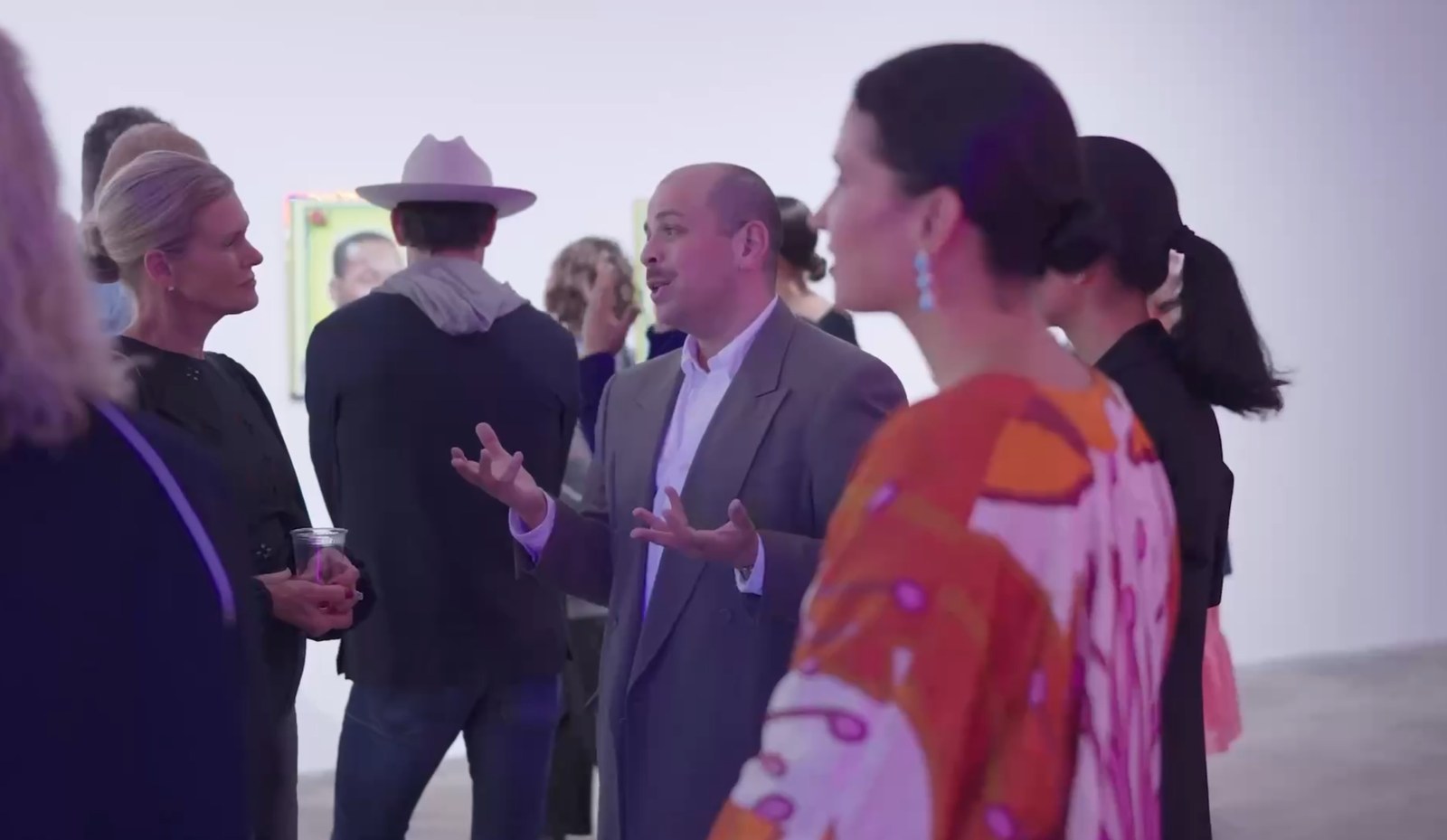
Photo: Core Visuals NYC
A visiting international delegation is not a recurring event on the calendar. It's a specific afternoon, and once it's over, whatever got documented is what the visit becomes for everyone who wasn't in the room. Companies planning to host a foreign partner, client, or government delegation in a New York office tend to think hard about seating charts and interpreters, and stop there. The photography plan needs the same level of care, because the one frame that actually travels home usually gets decided in the first ten minutes.
Coverage for a visiting international delegation splits into two registers: the formal set pieces, the arrival greeting, a signing or gift exchange, and the group photo, get planned and directed like scenes, while the working sessions call for quieter, observational documentation. The group photo is usually the single deliverable the visiting delegation's own team asks for first.
Table of Contents
- The Visit That Only Happens Once
- Who Can and Cannot Be Photographed
- The Arrival Greeting Is Its Own Set Piece
- The Signing or Gift Exchange Gets Planned Like a Scene
- The Group Photo Is the Deliverable Everyone Actually Uses
- Working Sessions Need a Different Kind of Coverage
- Language, Seniority, and Who's Actually Directing the Room
- When a Phone Is Actually Enough
The Visit That Only Happens Once
When a foreign partner, client, or government delegation visits a company's New York office, the visit itself is usually the only version of that day the company will ever get. There's no reshoot date, no second delegation flying back next month to redo a handshake that didn't land the first time.
That single-take pressure is different from a recurring event like a monthly all-hands or a weekly town hall, where a missed shot this time gets corrected next time. A delegation visit runs once, on a schedule set partly by someone else's travel itinerary, and the coverage plan has to assume nothing gets a second pass.
We treat these visits the way we'd treat any one-shot event: plan the must-have shots before the day starts, know who's arriving and when, and build in enough flexibility that a delayed flight or a shortened session doesn't unravel the whole plan. The stakes aren't really about photography quality. They're about whether the company has anything usable to send the moment the visitors' own team asks for it.
Who Can and Cannot Be Photographed
Before a delegation visit, the host company should know exactly who can be photographed and who can't, because a foreign delegation almost always brings names that are more sensitive to a camera than a typical business guest list.
Government officials, security details, and some private-sector executives travel under photography restrictions that a domestic client visit rarely raises. Someone on the visiting side may be fine appearing in a formal handshake photo but off-limits in a candid working shot, or fine in a group photo but not named in a caption.
We ask the host company to confirm this list before the day, not during it. That's a conversation for whoever on the host side is coordinating with the delegation's own staff, not something a photographer can guess correctly on site. Getting it wrong doesn't just mean a photo gets deleted later. It can create a real problem for the host company, which is exactly the kind of exposure an agreed shot list exists to avoid.
The Arrival Greeting Is Its Own Set Piece
The arrival greeting, the first handshake at the door or in the lobby, is a set piece that needs its own plan, not a photographer hoping to catch it while still setting up other equipment nearby.
It happens fast, usually inside a window of seconds, and it happens exactly once. Everyone involved, the host executive, the delegation's senior member, sometimes an interpreter standing just off to the side, needs to already be roughly in position before the actual moment starts.
That means walking the lobby or entrance beforehand, confirming where the delegation's vehicle will actually stop, and agreeing with the host company on who greets whom first. A delegation visit often has more than one senior person arriving, and getting the greeting order wrong in a photo can read as a real slight to the wrong eye later. We'd rather ask an awkward logistics question the day before than guess wrong at the door.
A short rehearsal, even a two-minute walkthrough with the host executive standing in the actual spot, is usually enough to remove the guesswork before the delegation's car is even close.
The Signing or Gift Exchange Gets Planned Like a Scene
A signing or gift exchange moment, if the visit includes one, gets planned like a scene rather than caught on the fly, because it's usually the most formal few minutes of the entire visit and the one both sides expect to see documented well.
These moments are often choreographed by the delegation's own protocol staff before a photographer ever gets involved: who signs first, who hands the gift, which side of the table each person stands on. Our job is to know that plan in advance, confirm sightlines and lighting at the actual table or podium, and stay out of the way of the staff managing the moment itself.
This is different from documentary event coverage, where the photographer often works around whatever's already happening. Here, the moment is built to be photographed, which means the photographer needs a fixed, agreed position before it starts, not room to move freely once it does.
We'd rather confirm that position with the room's own staff ahead of time than discover mid-signature that the podium blocks the shot everyone actually wants.

Photo by BOOM Photography via Pexels.
The Group Photo Is the Deliverable Everyone Actually Uses
The formal group photo, both delegations lined up together, is usually the single image the visiting delegation's own communications team asks for within hours of the visit ending, well before any other coverage gets reviewed.
That's worth planning around directly. The group photo isn't a nice-to-have add-on to the day's coverage; for the visitors, it's often the whole point of having a photographer there at all, since it's the frame that gets sent home to confirm the visit happened and went well.
That means the group shot needs a real plan: a location scouted for light and background before the day, a clear sense of how many people are actually lining up, and enough time set aside in the schedule that it doesn't get squeezed into the last two minutes before everyone leaves for the airport. We flag this to hosts early, because it's the one shot that can't slip.
If the delegation is larger than expected, that same plan needs a backup spot with more room, decided before anyone's standing around waiting for one.
Working Sessions Need a Different Kind of Coverage
Working sessions, the actual meetings once the formal greeting is done, call for a quieter kind of coverage than the set pieces, because the goal there is documentation, not staged moments.
Once the delegation moves into a conference room for the real conversation, the coverage shifts from directed shots to observational ones: people around a table, notes being taken, a whiteboard mid-use. Nobody's posing, and the photographer's job is to stay unobtrusive enough that the meeting doesn't feel like a photo shoot happening to it.
This is also where the earlier who-can-be-photographed list matters most, since working sessions often include people who weren't part of the formal greeting or the group photo. We treat this part of the day as lower-key on purpose. It's the connective tissue between the set pieces, useful for internal recap decks and follow-up communications, but not the frame anyone's going to lead with.
A photographer who treats every minute of a working session like a formal moment ends up distracting the room instead of documenting it.
Language, Seniority, and Who's Actually Directing the Room
When a delegation doesn't share a first language with the host company, direction on the day often has to run through an interpreter, and that changes how a photographer times instructions and reads the room.
A quick "look this way" that works fine with an English-speaking group needs a beat of translation lag built in with a delegation that doesn't share the host's language, or the moment passes before the instruction lands. The same is true for seniority: in some delegations, the most senior person doesn't take direction from a photographer directly at all, and instructions route through an aide or protocol officer instead.
We plan for that rather than treating it as friction. Knowing in advance who on the visiting side is actually giving cues, and whether an interpreter needs to be standing close enough to relay instructions quickly, is part of what makes a formal moment come together instead of stalling out in front of both delegations, watched by everyone in the room.
When a Phone Is Actually Enough
None of this means every visitor deserves a full crew. A small internal visit, one or two people from a partner office stopping by for an informal afternoon, usually doesn't need one.
If there's no group photo expected, no signing moment, no comms team on the other end asking for a usable frame, a phone in a colleague's pocket is genuinely fine. The honest question is whether anyone outside the room is going to want proof the visit happened, and in what form.
Where the phone stops being enough is the frame that's actually going to travel: the group photo that heads a delegation's internal recap, the handshake that goes into a release, the image that represents the relationship to people who weren't in the room. That's the shot that gets studied closely later, and a phone photo taken while someone was also trying to shake hands rarely holds up to that kind of scrutiny. Knowing which visit is which, before the day starts, is the actual decision worth making.
Frequently Asked Questions
Do we need a professional photographer for a visiting delegation, or can someone on staff just take photos?
It depends on what the visit produces. A small, informal visit with no group photo, signing moment, or outside communications need is usually fine on a phone. Once the day includes a formal group photo, a signing or gift exchange, or any moment likely to be sent to the visiting delegation's own comms team, a dedicated photographer who's planned the shot list in advance is the safer call, since none of those moments get a second take.
What's the one photo a foreign delegation visit almost always needs?
The formal group photo, both delegations lined up together, is the shot most often requested within hours of the visit by the visiting team's own communications staff. It's usually the image meant to confirm back home that the visit happened and went well. We treat it as the anchor deliverable of the day, scouting the location and setting aside real time for it instead of squeezing it in at the end.
How do we know who on a delegation visit can and can't be photographed?
That's a question for the host company to confirm with the visiting delegation's own staff before the day, not something a photographer can determine on site. Government officials, security personnel, and some executives travel under restrictions that don't show up on a typical guest list. Confirming the list in advance, and sharing it with whoever is shooting, keeps a photo problem from turning into a real diplomatic or contractual one later.
Does an interpreter change how a delegation visit gets photographed?
It can. When a delegation doesn't share a first language with the host, direction from a photographer usually has to route through an interpreter, which means building in a short lag before formal moments like the group photo or arrival greeting. Seniority matters too. In some delegations, the most senior member doesn't take cues from a photographer directly, and instructions go through an aide or protocol officer instead.
What's the difference between covering the formal moments and covering the working sessions of a delegation visit?
The formal moments, the arrival greeting, a signing or gift exchange, the group photo, are planned and directed like set pieces because they happen once and get seen the most. Working sessions, the actual meetings, call for quieter, observational coverage that documents the day without turning the room into a photo shoot. Both matter, but they're covered differently, and mixing up the approach undercuts either one.
Related Reading
Not sure if hourly or a package makes more sense for your event?
Tell us the expected length, and we'll run the actual numbers before you book.
See Event Coverage Packages