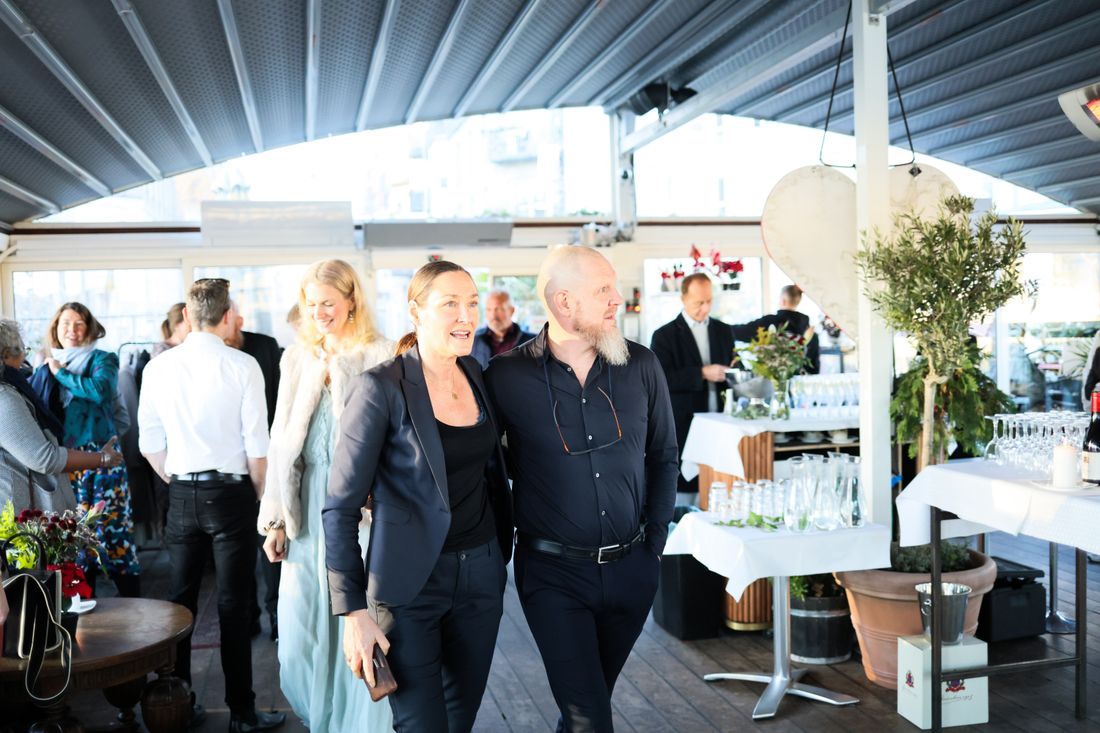
Photo by Filip Rankovic Grobgaard via Pexels.
Most nonprofit galas are built to be photographed head-on: donors want to be seen giving. A hospital or medical center donor event flips part of that logic. Some of the same guests being honored are also recognizable from the hospital's own patient materials, and some of the clinicians mingling near the bar would rather their evening off stay off camera. The photography plan for that room starts earlier and covers more ground than a standard gala shot list.
A hospital or medical center donor event carries a discretion bar a standard gala doesn't: grateful-patient donors are often recognizable, clinicians have their own visibility preferences, and the venue may sit inside a working facility. We handle it with a documented shot list, consent signage, a no-photo zone, and a runner who knows the faces in the room.
Table of Contents
- The Pre-Event Conversation a Hospital Gala Requires
- Who Sets the Rules for Who Can Be Photographed
- Grateful-Patient Donors and How the Shot List Changes
- Clinicians in the Room Have Their Own Visibility Preferences
- Consent Signage: Making the Photo Policy Visible at the Door
- The Designated No-Photo Zone, and How It Works in the Room
- The Runner Who Knows the Faces
- When the Venue Sits Inside a Working Hospital
The Pre-Event Conversation a Hospital Gala Requires
A hospital or medical center donor event carries a discretion bar a standard nonprofit gala doesn't, because some guests are recognizable as patients and some clinicians have their own visibility preferences. Before a camera enters the room, we walk the hospital's communications team through who can be photographed and who can't.
That conversation happens before the shot list or lighting plan gets locked. A standard corporate gala starts with a room diagram and a VIP list to prioritize. A hospital donor event starts with a shorter, harder list: names or seat numbers who are opted out entirely, and categories — clinicians especially — who need a check before a frame gets used at all.
We don't set these rules. The hospital's own communications and legal teams do, and our job is to follow the brief precisely, not interpret or improvise around it. What we bring is the production discipline to make that brief workable once two hundred people are moving through a ballroom with a bar in the corner and a step-and-repeat by the door.
Who Sets the Rules for Who Can Be Photographed
Nobody hires a photographer to draft privacy policy, and we don't. The hospital's communications and legal teams decide who can and can't appear in coverage; our role is production, not compliance. We ask for that guidance in writing before the event and build our coverage plan entirely around it.
In practice, that means asking for a short document, not a verbal aside at check-in: names, tables, or categories that are off-limits, a contact who can answer a question in real time, and a plan for what happens if someone changes their mind mid-event. The hospitals that run the smoothest events treat this document the way they'd treat a run-of-show — written down and distributed to everyone who needs it.
What we won't do is guess. If a guest's status is unclear and nobody on the client side can confirm it in the moment, the default is simple: we don't photograph that person, and we move on. A missed photo of one guest costs nothing. A photo that shouldn't exist costs the hospital's trust in the vendor who took it, and that's not a trade worth making on a photographer's own judgment call.
Grateful-Patient Donors and How the Shot List Changes
Grateful-patient donors are often the honorees a hospital gala exists to celebrate, which means they're also the guests most likely to be recognizable from a health system's own materials. The shot list has to separate "photograph freely" from "photograph only with sign-off," and that split usually runs straight through the honoree table itself.
A standard gala shot list is organized by moment: arrivals, program, fund-a-need, dancing. A hospital donor event shot list is organized by moment and by person, because the honoree at the podium may be approved for wide coverage while a family member at the same table is not. We build that distinction into the list, not a photographer's memory, which is what breaks down two hours into an open bar.
This isn't unique to healthcare, but the stakes read differently. A donor at a university gala being visibly identified as a donor is the point of the event. A donor at a hospital gala read as a patient is a different exposure, and the family may have agreed to be honored publicly without agreeing to every photo of the evening. The shot list is where that line gets drawn ahead of time, not improvised in the room.
Clinicians in the Room Have Their Own Visibility Preferences
Clinicians who attend a hospital gala are usually there as guests and colleagues, not as subjects, and many have their own preferences about appearing in donor-facing marketing. We treat a doctor or nurse at the bar the same way we'd treat any attendee who hasn't opted into coverage: ask first, or leave them out.
A hospital's physicians and nursing staff often have existing photo agreements tied to their clinical role — a headshot on the hospital website, a bio page, a specific set of channels their image is cleared for. A donor gala is a different context, and a photo of a well-known surgeon at the bar isn't automatically covered by the same clearance as a professional portrait. Some clinicians are glad to be photographed supporting the event. Others would rather their evening off stay off camera.
We ask the hospital's events team to flag this group the same way they flag patient guests, and we treat both lists with equal weight. The cleanest way to handle it is one combined discretion list rather than two separate ones — a single reference covering everyone who needs a check before a photo goes anywhere, whether the reason is medical or professional.
Consent Signage: Making the Photo Policy Visible at the Door
Consent signage — a small, clearly worded sign at check-in and near the bar stating that photography and video are in progress and how to opt out — turns an unwritten policy into something every guest can actually see and act on. It's a production detail, not a legal document, and it's one of the simplest tools for a compliance-conscious room.
The sign itself is plain: photo and video coverage is happening tonight, and a guest who'd rather not appear can tell staff at the entrance, or wear a marker the event team provides. We've seen this with a colored lanyard, a small pin, or a name on a list at check-in — the mechanism matters less than the fact it exists and everyone working the room knows what it means.
Signage does something a private list can't: it gives guests who weren't flagged in advance a way to speak up. Not every attendee who'd rather skip the camera said so at RSVP, and a sign at the door catches that gap. It sets an honest tone for the room — coverage isn't a surprise, it's a stated part of the evening from the moment they walk in.
The Designated No-Photo Zone, and How It Works in the Room
A designated no-photo zone is a specific, marked part of the room — a lounge area, a corridor, a section near the restrooms — where cameras simply don't point, regardless of who's standing there. It gives guests who want a break from coverage a place to go without having to ask anyone's permission first.
We map this zone during the same walkthrough where we plan lighting and camera positions, and mark it on the run sheet the way we'd mark a stage or a step-and-repeat. Every photographer and videographer on the team gets the same map. It's a boring, mechanical thing to plan, and that's exactly why it works — nobody has to make a judgment call about a specific guest in a specific moment, because the zone already removed the decision.
In a hospital donor event, this zone often does double duty: a place to step away for a guest who'd rather not be photographed, and a natural spot for a private conversation that doesn't need a camera near. We don't ask why someone's standing there. We just don't shoot it, which is the point of drawing the line in advance instead of reading the room in real time.
The Runner Who Knows the Faces
A runner is a staff member — usually from the hospital's own events or development team — who knows the flagged faces in the room and stays near the photographer for the parts of the night with the highest risk of a mistake, like the reception and the fund-a-need moment. They're a second set of eyes we rely on directly.
A written list is only as good as a photographer's ability to match a name to a face across a room of two hundred people in evening wear. That's the gap a runner closes. They've usually met the honorees, know which family members are sitting where, and can quietly flag "not that table" before a shutter clicks, instead of after a photo exists and someone decides whether to delete it.
We ask for this role explicitly when we scope a hospital gala, because it changes what we can promise. Without a runner, we're working from a static list and our own read of the room — fine for most events, not quite enough where a wrong frame carries weight. With a runner, the discretion list becomes something we're actively checking against in real time, not memorized at the pre-event call.
When the Venue Sits Inside a Working Hospital
When a gala venue sits inside or attached to a working hospital, the mechanics change even after the discretion list and shot list are set: badge and escort requirements for crew, routes through the building that avoid clinical corridors entirely, and load-in timing that respects a facility that doesn't stop running for an evening event.
This is purely a logistics conversation, and we keep it that way. Some hospital event spaces — an atrium, a conference center, a rooftop — have a dedicated entrance that never crosses a clinical floor, which makes load-in simple. Others require staging gear through a loading dock and up a service elevator that shares a building with active patient care, and that route needs sign-off from security and facilities before the truck shows up.
We also plan camera angles with the building in mind, not just the room. A wide shot from a balcony that catches a hallway sign or directory board can say more than intended, so we frame around it the way we'd frame a client's confidential whiteboard at a corporate shoot. None of this requires knowing hospital policy — it requires knowing the room, the route, and asking before assuming.
Frequently Asked Questions
How is a hospital gala's photo policy different from a regular nonprofit gala?
The core difference is who's in the room. A regular nonprofit gala mostly photographs donors who are proud to be seen supporting the cause. A hospital gala can include grateful-patient honorees and clinicians who have their own reasons to limit exposure, so the pre-event conversation covers who can and can't be photographed in far more detail before the event ever starts, not as an afterthought during the reception.
Who decides which guests can be photographed at a hospital donor event?
The hospital's own communications and legal teams set that policy, not the photographer. We ask for it in writing before the event — names, tables, or categories that are off-limits, plus a contact who can confirm status in real time. Our job is production, not policy: follow that brief precisely, and default to not photographing anyone whose status is unclear in the moment, even if that means missing a frame we'd otherwise have taken.
What is a no-photo zone at an event, and how does it work?
A no-photo zone is a specific, marked area of the venue — a lounge, a corridor, a quiet corner — where cameras simply don't point, regardless of who's standing there. We map it during the pre-event walkthrough and mark it on the crew's run sheet alongside the stage and step-and-repeat, so it removes the guesswork of deciding, guest by guest and moment by moment, whether a given frame should be taken at all.
What does a "runner" do at a hospital donor event?
A runner is a hospital staff member, usually from events or development, who knows the flagged faces in the room and stays near the photography team during higher-risk moments like the reception and the fund-a-need. They quietly confirm who's who in real time, closing the gap between a written discretion list and a room full of two hundred people a photographer has never met before that night.
Does Core Visuals give legal advice on hospital patient privacy?
No. We're a production team, not a legal or compliance advisor, and we don't interpret privacy law or tell a hospital what it's required to do. The hospital's own communications and legal teams set the rules for who can appear in coverage; our role is to follow that brief exactly and build the shot list, consent signage, and no-photo zone around whatever guidance they hand us before the event.
Related Reading
Not sure if hourly or a package makes more sense for your event?
Tell us the expected length, and we'll run the actual numbers before you book.
See Event Coverage Packages