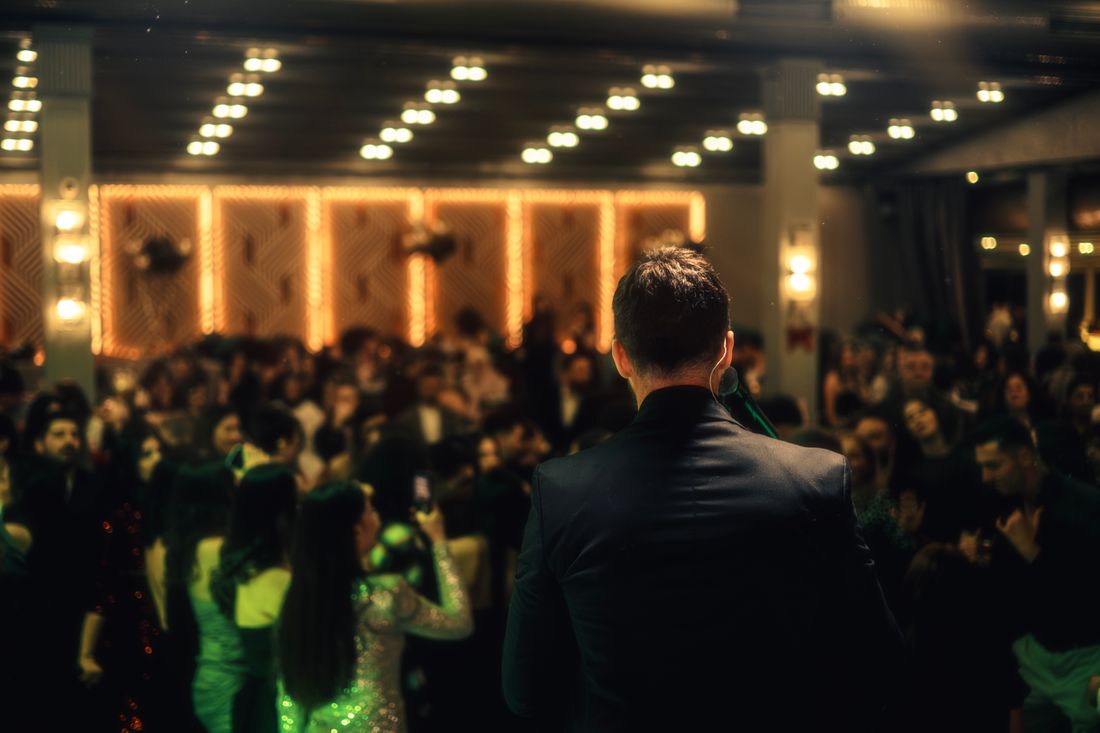
Photo by Wolrider YURTSEVEN via Pexels.
A gala runs for hours, but the fund-a-need or paddle-raise segment runs for about ten minutes, and it happens exactly once. It's also the sequence the development team pulls from all year — the annual report, the donor thank-you, and next year's sponsorship deck — which makes it the highest-stakes coverage decision of the night.
Covering the fund-a-need ask means treating it like a single unrepeatable shot: confirm positioning and a second angle before the auctioneer starts, plan flash and lighting for a dimmed room without freezing an emotional moment, capture the ask, the room's reaction, and the total reveal on video, and know beforehand which donors and board members the development team needs documented.
Table of Contents
- Why the Fund-a-Need Ask Is the Highest-Stakes Ten Minutes of the Night
- What Makes the Paddle-Raise So Hard to Shoot Cleanly
- Deciding Where the Photographer Stands Before the Ask Begins
- Is a Second Angle Worth It for This Segment?
- What the Video Needs to Capture: The Ask, the Room, the Total
- Lighting and Flash Etiquette During an Emotional Moment
- Briefing the Crew on Which Donors and Board Members Matter
- How Fund-a-Need Coverage Gets Used After the Gala
Why the Fund-a-Need Ask Is the Highest-Stakes Ten Minutes of the Night
The fund-a-need or paddle-raise segment runs five to fifteen minutes, happens once per gala, and produces the material the development team relies on for the rest of the year — the annual report, the donor thank-you package, and next year's sponsorship deck all draw from this single sequence, not from the cocktail hour or the dinner.
Every other part of a gala has slack built into it. A cocktail-hour candid missed at 7:10 gets replaced by a similar candid at 7:15, and a toast that runs long just gets covered a minute later than planned. The fund-a-need doesn't work that way — the auctioneer opens the ask, paddles go up, a total gets read, and the moment is over. Coverage either exists afterward or it doesn't, and there's no second attempt at the same room's reaction. That's the reason this segment gets planned as its own block on the shot list instead of folded into general reception and dinner coverage. The development team isn't asking for pleasant photos of a fun moment — they're asking for the proof that justifies next year's event budget to a board, built from ten minutes that won't happen again this way.
What Makes the Paddle-Raise So Hard to Shoot Cleanly
Four things make the paddle-raise the hardest segment of a gala to shoot cleanly: house lights typically drop for the ask, the auctioneer moves through pledge levels fast, a raised paddle can go up and back down in under a second, and the real emotional beats happen at the tables, not on stage where the camera is pointed by default.
A photographer set up for the earlier program — a fixed position facing the podium, exposure locked for a lit stage — is wrong the instant the room dims for the ask. Paddles don't hold like a posed photo; a donor raises one, the auctioneer calls it, and it's back down before a slow shutter or a hunting autofocus catches it. Meanwhile the auctioneer's face on stage is only half the story. The donor who just committed five figures is at a table twenty feet away, and that reaction — the look at a spouse, the nudge to a tablemate — is usually the stronger photo and the one nobody's pointed a lens at unless it was planned for in advance.
Deciding Where the Photographer Stands Before the Ask Begins
Positioning for the fund-a-need ask has to be decided before the segment starts, not improvised once the lights drop, because the two things a photographer needs to see — the auctioneer working the room and the tables reacting — usually aren't visible from the same spot, and there's no time to relocate once paddles start going up.
A stage-facing position captures the ask itself cleanly but misses table reactions almost entirely; a position angled toward the floor catches donor reactions but loses the auctioneer's cues for when a pledge lands. Walking between the two mid-segment isn't realistic in a dim room during a fast-moving ask — movement draws attention and risks blocking a sightline at the exact wrong second. The workable answer is picking one position that gives the best compromise view of both zones, confirmed with the event planner or auctioneer beforehand, ideally somewhere that reads the stage and a cross-section of tables in the same frame without walking the room mid-ask.
Is a Second Angle Worth It for This Segment?
A second angle is worth adding for the fund-a-need segment specifically, even on an event that doesn't otherwise need a second shooter, because one photographer physically cannot cover the stage and the table reactions at the same time during a ten-minute window that doesn't repeat.
Most galas run fine with a single photographer moving through the room over several hours — there's time to circle back, catch what was missed a few minutes later, and build full coverage across the night. The fund-a-need collapses that flexibility into one fixed block of time, which is exactly why it's the segment worth the added cost of a second shooter even when the rest of the night doesn't need one. One camera stays on the auctioneer and the stage; the second works the tables the development team has flagged as priority. Whether that's worth arranging depends on how much the organization weighs table-reaction photos against stage photos for its actual annual-report and thank-you use — a conversation worth having with the photographer ahead of the event, not during it.
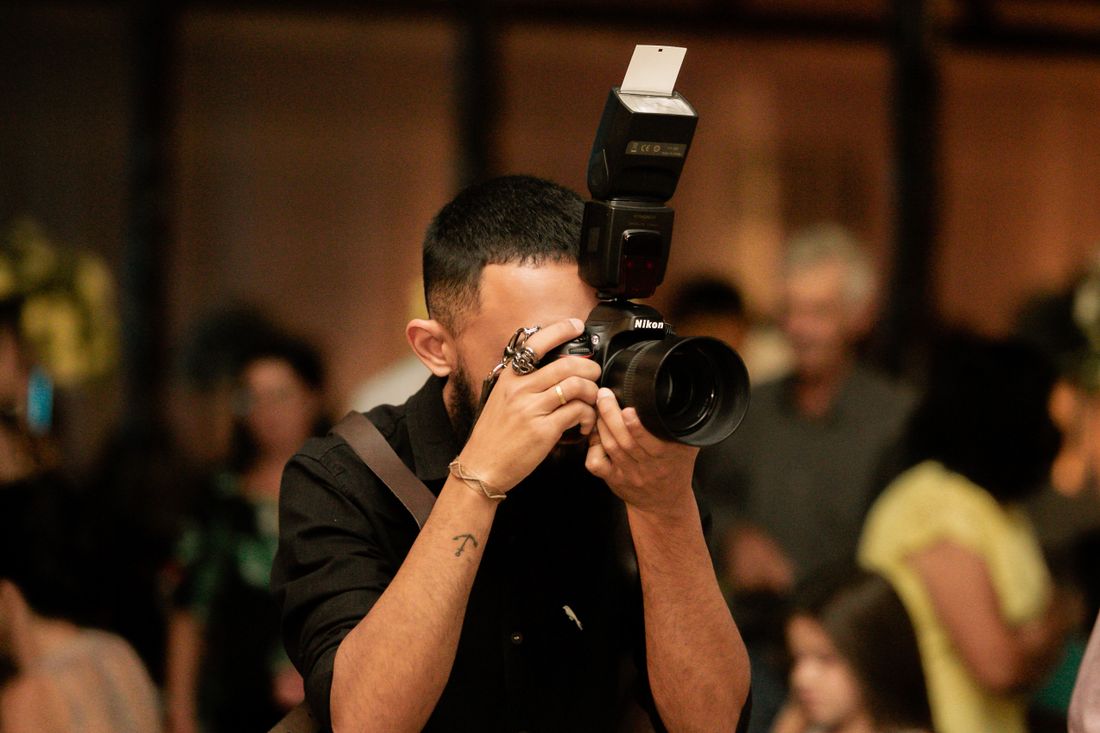
Photo by Fotografia Eles Dois via Pexels.
What the Video Needs to Capture: The Ask, the Room, the Total
Video coverage of the fund-a-need needs three distinct pieces to be useful afterward: the ask itself as the auctioneer delivers it, the room's live reaction while paddles are going up, and the total reveal at the end — and each one typically needs a different framing or angle to read clearly once it's cut together.
A single wide shot covering all three moments technically exists in the raw footage, but it rarely edits into anything usable — the ask needs to hear the auctioneer clearly, the room reaction needs to actually show paddles and faces rather than the backs of heads, and the total reveal needs the number itself to be legible, whether it's spoken, projected on a screen, or written on a board. Planning these as three separate captures, even from a single camera moved deliberately between them, gives an editor something to cut into a thirty-second video for social or a longer piece for the annual meeting — footage of just the podium doesn't give the development team a moment they can actually use.
Lighting and Flash Etiquette During an Emotional Moment
Lighting the fund-a-need ask means working in a room that's often dropped to near-dark on purpose, and flash use during that window is a judgment call — a flash that fires while a donor is mid-decision or mid-reaction can be the difference between a natural moment and one that visibly announces itself as a photo op.
Most event photographers default to available light for this segment when the room allows it: a fast lens and a higher ISO tolerance over a flash that draws attention to itself at the exact moment a donor is having a private, emotional reaction in a public room. When flash genuinely is necessary — the room is simply too dark otherwise — a bounce or diffused unit reads as far less intrusive than direct on-camera flash pointed straight at a table. This is a decision worth confirming with the event planner beforehand rather than defaulting to whatever setting worked for the cocktail hour, since a paddle-raise moment asks for a lighter touch than a step-and-repeat does.
Briefing the Crew on Which Donors and Board Members Matter
Briefing the photo and video crew on the fund-a-need ask means the development team walking through, ahead of time, which donors and board members actually matter for this segment — not a general "get candids" instruction, since the crew has no way to recognize a lead donor or a board chair on sight in a room full of strangers.
A crew that knows nothing beyond "cover the ask" will default to whatever's visually obvious — the auctioneer, the stage, a paddle raised near the front. A crew told in advance which tables hold the honorary chair, which board members need to be documented supporting the ask, and which past major donors are expected to raise a paddle again this year can actually plan positioning around those people instead of hoping they end up in frame. This briefing takes ten minutes before doors open and is usually the single highest-leverage conversation of the whole shoot, because it turns generic coverage into the specific photos the annual report and the next sponsorship deck actually need.
How Fund-a-Need Coverage Gets Used After the Gala
Fund-a-need coverage gets used three ways after the gala, and each one wants something slightly different from the same ten minutes: the annual report wants the total and a strong room shot, the donor thank-you wants recognizable faces at the moment they gave, and next year's sponsorship deck wants proof the room was full and engaged when the ask happened.
Because those three uses pull from the same short window, how the coverage gets organized afterward matters as much as how it was shot — a development team sorting through one long, unlabeled folder loses time re-finding the exact frame each document needs. Flagging or naming the strongest ask, reaction, and total-reveal images separately during editing, rather than leaving them buried in general gala coverage, means the annual report team and the person building next year's sponsorship deck can each go straight to what they need instead of scrolling the full gallery. That's the same logic that makes the earlier planning worth it — the shoot only pays off fully if the deliverables are usable the moment someone needs them.
Frequently Asked Questions
How long does the fund-a-need or paddle-raise segment usually last?
Most fund-a-need segments run five to fifteen minutes, depending on the auctioneer's pace and how many pledge levels the organization sets. That short window is exactly why it gets planned as its own coverage block rather than folded into general reception or dinner coverage — a photographer or crew improvising positioning once the segment starts has already missed the setup time that made earlier coverage decisions easier throughout the rest of the night.
Should a second photographer be added just for the fund-a-need ask?
It's worth considering even on events that don't otherwise need a second shooter. One camera can hold the stage and the auctioneer; a second can work the tables the development team flags as priority. Since one photographer can't physically cover both the ask and the room's reaction during a single fast, unrepeatable window, whether the added cost is worth it comes down to how much the organization values table-reaction photos for its own annual-report and donor materials.
Is flash photography appropriate during the fund-a-need ask?
It depends on the room and the moment, and it's worth deciding in advance rather than defaulting to whatever setting worked earlier in the night. Many photographers favor available light with a fast lens and higher ISO tolerance during this segment, since a flash firing while a donor is mid-decision can visibly announce the photo and interrupt a private moment. When a room is genuinely too dark, a diffused or bounced flash reads far less intrusive than direct on-camera flash.
What should the development team tell the photo and video crew before the ask begins?
The most useful briefing covers which donors and board members matter for this specific segment — who's expected to raise a paddle again, which tables hold the honorary chair or major past donors, and which board members should be documented visibly supporting the ask. A crew working from "get candids" alone has no way to recognize these people in a room full of strangers, so this ten-minute conversation is usually the highest-leverage part of the whole shoot.
What footage does the fund-a-need segment need to be useful in an annual report or sponsorship deck?
Three distinct pieces: the ask itself as the auctioneer delivers it, the room's live reaction while paddles are going up, and the total reveal at the end. Each usually needs different framing to read clearly once edited — a single wide shot rarely captures all three well. Organizing these as separate, labeled deliverables rather than leaving them in general gala coverage lets the annual report team and next year's sponsorship deck builder each go straight to what they need.
Related Reading
Not sure if hourly or a package makes more sense for your event?
Tell us the expected length, and we'll run the actual numbers before you book.
See Event Coverage Packages