
Photo by Ketut Subiyanto via Pexels.
A family business leadership page usually has a wider age range in it than a typical corporate team page, and that range is the point, not a problem to hide. The founder, a sibling running operations, a daughter or son stepping into the president title, sometimes a grandparent still listed as chairman. One shoot day has to make all of them read as a single, credible leadership team, in a photo set that then gets reused in an annual report, on the website, and handed to a reporter without any of it looking mismatched.
A family business leadership shoot works when the whole leadership group, across whatever generations are actively involved, is photographed against one consistent background, lighting setup, and framing choice, so the same set of images can be pulled for an annual report, a website leadership page, and a press request without looking like it came from different sessions or different eras of the company.
Table of Contents
- Why is a family business leadership shoot different from a standard executive headshot session?
- What does credibility across generations actually mean in a shared leadership photo set?
- How does a shoot handle real differences in age, energy, and generation within one leadership team?
- Why does the same photo set have to work for an annual report, a website, and the press?
- How do you balance a founder's established authority against a successor's forward looking image?
- What background and styling choices actually hold up across three generations of one family?
- How does scheduling work when a semi-retired founder and a full-time successor have very different availability?
- How does Core Visuals approach a family business leadership headshot project?
Why is a family business leadership shoot different from a standard executive headshot session?
A family business leadership shoot has to hold a real age range, a shared last name doing narrative work, and a single coherent set that will be reused across an annual report, a website, and the press, all from one day of shooting rather than several separate sessions.
A standard executive headshot session usually treats each leader as an individual sitting, a professional filling a role that could theoretically be filled by someone else next year. A family business leadership set carries something extra: the continuity story itself is part of what the photos are communicating, whether that gets said out loud or not, and whether the company means to say it or not.
That changes the brief before the shoot day even gets scheduled. The question is not just how each person looks individually, but whether a person looking at the founder's portrait next to the next generation's portrait reads them as one team with a shared standard, not two different photo shoots stitched together after the fact from whichever session happened to be convenient at the time.
What does credibility across generations actually mean in a shared leadership photo set?
Credibility across generations means a 70 year old founder and a 35 year old successor both look like they belong in the same professional set, with the same lighting quality, the same background, and the same level of polish, so neither generation reads as an afterthought next to the other.
This is where a lot of family business photo sets quietly fail. An older founder gets photographed once, years ago, in a slightly dated style, while a newer leader gets a fresh sitting in a different setup entirely. Nobody planned the mismatch. It just accumulates one photo shoot at a time, one leadership change at a time, until the leadership page looks like a timeline instead of a team.
Fixing it does not mean making everyone look the same age or the same style. It means applying one visual standard, background, light, crop, evenly across whoever is currently active in leadership, so the set reads as a deliberate choice about the company rather than a patchwork of whenever each person last had time for a photographer.
How does a shoot handle real differences in age, energy, and generation within one leadership team?
A shoot handles generational differences by keeping the technical setup, background, lighting, and framing distance, fixed across everyone, while letting posture and expression stay natural to each person rather than forcing a founder and a younger successor into an identical pose that reads as staged.
An older founder often carries authority through stillness, a settled, direct expression built from decades of being the person in charge. A newer leader stepping into a title might read more naturally with a touch more warmth or energy in expression. Both are legitimate, and both belong in the same set, without either generation being coached out of the expression that actually looks like them.
What has to match is everything underneath the expression: the same soft, even lighting, the same neutral or branded background, the same distance and crop. When those technical choices hold steady, the natural differences in how each generation carries themselves stop looking like inconsistency and start looking like an honest leadership team.
Why does the same photo set have to work for an annual report, a website, and the press?
A family business rarely commissions three separate leadership photo shoots for three separate uses, so the one set that does get made has to hold up printed at full page size in an annual report, cropped small on a website leadership grid, and handed to a reporter on short notice for a press mention.
Each use has different technical demands. Print wants higher resolution and often a formal, front-facing crop. A website leadership page wants a consistent grid, usually a tighter headshot crop that works small on a phone screen. A press request just wants something usable fast, without a scramble to find a decent recent photo of the right person.
Planning the shoot with all three uses in mind from the start, rather than optimizing only for the website, is what keeps the company from getting caught needing a fresh photo of one leader right when a reporter is on deadline. One well planned session covers all three needs at once, and it means nobody has to explain to a reporter why the only available photo of the founder is a decade old.
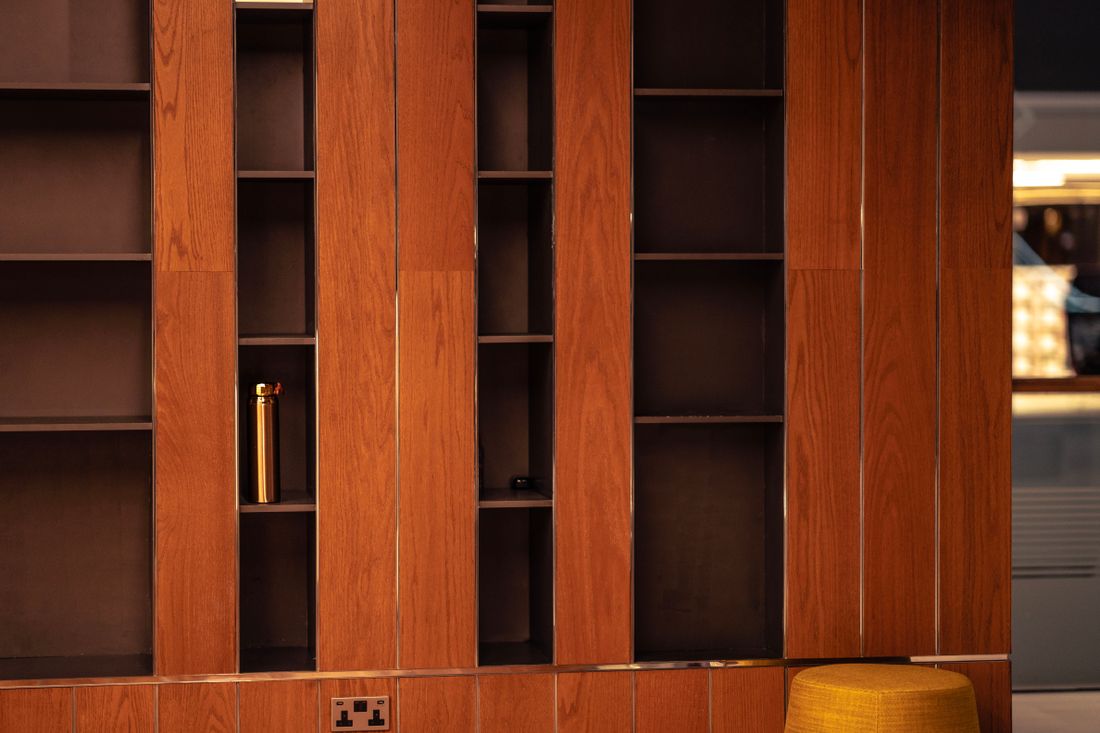
Photo by aboodi vesakaran via Pexels.
How do you balance a founder's established authority against a successor's forward looking image?
Balancing the two means giving the founder's portrait the weight their tenure has earned, without visually demoting the successor to a junior role they no longer hold, since a title change that the photos do not reflect quietly undercuts the transition the company is trying to signal.
A common mistake is treating the founder's image as the fixed standard and the successor's as a lesser variation of it, smaller in the layout, softer in lighting, less prominent in a group arrangement. That layout choice sends a message about who actually runs the company that may no longer be accurate.
The photos should reflect the actual leadership structure as it stands today, not the structure from five years ago. If a daughter or son now holds the president title, their portrait carries the same visual weight as anyone else's in the set. The photography should match the org chart, not lag behind it out of habit, and that means updating the set whenever a real change in title or responsibility happens, not waiting for the next scheduled shoot years later.
What background and styling choices actually hold up across three generations of one family?
A plain, neutral background, or a warm interior setting like a wood paneled wall or a bookshelf, tends to hold up best across generations, since it reads as established and credible without pulling attention toward any one era's idea of a trendy studio backdrop.
A background style that feels current today can look dated within a few years, which is a real risk for a leadership set meant to stay in use for a while. A more traditional, understated setting ages more slowly, and it does not clash with an older founder's more formal instincts the way a stark modern studio background sometimes does.
Wardrobe guidance works the same way. Business formal, consistent in level of formality across everyone photographed, avoids a mismatch where one generation shows up in a suit and another in something more casual. The goal is a shared visual register the whole family can sit inside comfortably, not a style statement that favors one generation's taste over another's, and it usually reads as more deliberate to a client or reporter than a set where the styling clearly drifted year to year.
How does scheduling work when a semi-retired founder and a full-time successor have very different availability?
Scheduling around a multi-generation leadership team usually means treating the shoot as several short, separate sittings against the same fixed setup rather than requiring everyone in the building at the exact same hour, since a semi-retired founder's schedule rarely matches a full-time successor's.
A founder who comes into the office two mornings a week is not going to reorganize their life around a single shoot window. Building the plan around short individual sittings, spread across the days each person is actually available, gets everyone photographed without asking anyone to bend their schedule to fit the others, and it usually takes less total time than trying to coordinate one group session across busy calendars.
The one requirement that does not flex is the setup itself. The background, lighting, and framing have to stay identical across every sitting, whether they happen on the same afternoon or two weeks apart, so the final set still reads as one coherent shoot no matter how the individual sittings actually got scheduled.
How does Core Visuals approach a family business leadership headshot project?
We start by mapping who is actually active in leadership right now, across whatever generations that includes, then lock one background, lighting, and crop standard before scheduling a single sitting, so the set holds together regardless of how spread out the actual shoot days end up being.
That planning conversation happens before any camera is involved. We talk through where the images will get used, the annual report, the website, press requests, so the framing and resolution choices cover all of it from one shoot rather than requiring a second session later when a use case gets missed.
We treat the generational range as something to plan for directly, not something to smooth over after the fact. A founder and a successor do not need to look alike. They need to look like they were photographed with the same care, on the same day, to the same standard, so the leadership page reads as one team making a considered choice about how it presents itself, generation after generation, rather than a set that just happened.
Frequently Asked Questions
Does a family business leadership shoot need everyone photographed on the same day?
No. What matters is that the background, lighting, and framing stay identical across every sitting, not that everyone shows up at the same hour. A semi-retired founder and a full-time successor can be photographed on different days, even weeks apart, against the same fixed setup. The final set will still read as one coherent shoot as long as the technical standard never changes between sittings.
How do you photograph a founder and a much younger successor so neither looks out of place?
The technical setup, background, lighting, distance, and crop, stays identical for both, while posture and expression stay natural to each person rather than forced into an identical pose. A founder's stillness and a successor's warmth are both legitimate. What has to match is everything underneath the expression, so the natural age difference reads as an honest leadership team rather than inconsistency, and neither person looks coached out of who they actually are.
What background works best for a leadership photo meant to stay in use for years?
A plain neutral background, or a warm interior setting like a wood paneled wall or bookshelf, tends to age more slowly than a trendy studio backdrop that can look dated within a few years. Since a family business leadership set often stays in circulation for a while across an annual report and a website, choosing a more traditional register up front avoids needing a reshoot when the trend passes.
Can one leadership photo set actually work for an annual report, a website, and a press request?
Yes, if the shoot is planned with all three uses in mind from the start. That means high enough resolution for print, a crop that also works small on a website grid, and enough sittings covered that a press request never requires scrambling to find a usable recent photo of a specific leader. Planning for all three at once avoids commissioning three separate shoots for the same leadership team.
Should a newer leader's portrait look different from a longtime founder's portrait in size or prominence?
It should match the current org chart, not a layout habit left over from years ago. If a successor now holds the president title, their portrait carries the same visual weight in the set as anyone else's. Visually demoting a current leader to a smaller or softer treatment because an older photo set them that way sends a message about the company that is no longer accurate.
Related Reading
Trying to get the whole team photographed without six separate sessions?
Tell us the group size and the format you need, and we'll come back with one fixed price that already has the volume discount worked in.
See Headshots & Brand Videos