
An employee recognition wall unveiling is not a gala. It is usually twenty quiet minutes in a hallway, a small group of coworkers, and a wall that has to look good for years after everyone in the room has moved on to something else.
An employee recognition wall unveiling needs coverage built around three things: a clean, evenly lit shot of the wall itself that survives years of reuse, individual frames of each named honoree at their own panel, and honest reaction shots from the small group in the room, since the wall alone is only half the story.
Table of Contents
- How a Recognition Wall Unveiling Differs From a Donor Wall Dedication
- Planning the Twenty Minutes Around a Recognition Wall Reveal
- Photographing the Wall Itself So It Holds Up Over Time
- Why Named Honorees Need Their Own Frame at the Wall
- Capturing the Room's Reaction as the Real Story
- Working With Hallway and Lobby Light That Wasn't Built for Photos
- What Happens to the Photos After the Wall Is Unveiled
- A Planning Checklist for HR and Internal Comms
How a Recognition Wall Unveiling Differs From a Donor Wall Dedication
An employee recognition wall unveiling honors people who already work at the company and will walk past that wall every day, while a donor wall dedication thanks people who gave money and may never set foot in the building again. The tone is recognition, not gratitude for a gift. The photos serve internal comms and recruiting, not donor stewardship.
That difference changes almost every choice on the shoot. A donor wall dedication usually gets a planned program, a podium, and remarks written days in advance. A recognition wall reveal is often a manager pulling a small group into a hallway on a Tuesday afternoon, a covering sheet coming off the wall, and a few unscripted words. There is no run of show to follow, so coverage has to assume the real moment will be short and easy to miss if the camera is not already in position.
We treat the two as separate jobs, not the same shoot with a different sign. A recognition wall unveiling needs individual attention on the honorees at their own panel and clean, reusable photos of the wall itself, not a stage-facing angle built for a speech nobody planned to give.
Planning the Twenty Minutes Around a Recognition Wall Reveal
Planning an employee recognition wall reveal mostly means agreeing on a fifteen to twenty minute window, confirming which honorees can actually be there, and picking a time when the hallway or lobby will not be full of unrelated foot traffic. There is rarely a rehearsal, so the plan has to hold without one.
Start with the honoree list. Some recognition walls celebrate one person, others mark a group of service-anniversary employees or a batch of new hires added to a hall of fame at once. Whoever is coordinating needs to know in advance who is confirmed to attend, because a photographer working alone cannot chase down a name that never showed up.
Next, pick the window itself. Late morning or right after lunch tends to beat end-of-day, when people are already mentally gone. Loop in whoever manages the space, too. A hallway that doubles as a walking path needs five quiet minutes, not a full lockdown, and that's a much easier ask when it's requested ahead of time instead of negotiated on the spot.
Photographing the Wall Itself So It Holds Up Over Time
The wall itself needs to be photographed straight, evenly lit, and cropped with room to spare, because these frames get reused on the intranet, in a newsletter, and in a recruiting deck years after the unveiling. A crooked, cluttered shot taken once during a busy hallway moment rarely survives that kind of reuse.
That means a few minutes dedicated purely to the wall, separate from the moment when people are standing in front of it. A straight-on frame and a slight angle both matter, since a designer pulling the photo later may need either version depending on the layout. Even, flat light beats anything dramatic. Nobody wants a hard shadow bisecting a name plaque in a slide deck.
It also means checking the wall for legibility problems before the shoot ends: reflections off glass frames, a plaque catching glare from an overhead fixture, or a panel partly blocked by a plant nobody thought to move. Fixing those in five minutes on site is easier than explaining after the fact why the reused photo looks off.
Why Named Honorees Need Their Own Frame at the Wall
Each named honoree needs at least one frame standing at their own panel on the wall, not just a group shot from across the hallway, because that individual photo is what actually gets used when their name comes up later (a farewell post, an internal profile, a recruiting story that references them by name).
A group photo of everyone gathered around the wall is worth taking too, since it captures the shared occasion. But it rarely serves any one person's purpose on its own. If five employees are honored at once, that means five separate short setups, each just long enough to get one honoree looking at the camera near their own name or plaque, ideally with the plaque itself readable in a way that still respects the wall's own graphic design.
This is the part that most benefits from knowing the honoree list ahead of time. A photographer improvising who's who in real time, while a hallway conversation is already moving on, will miss someone.
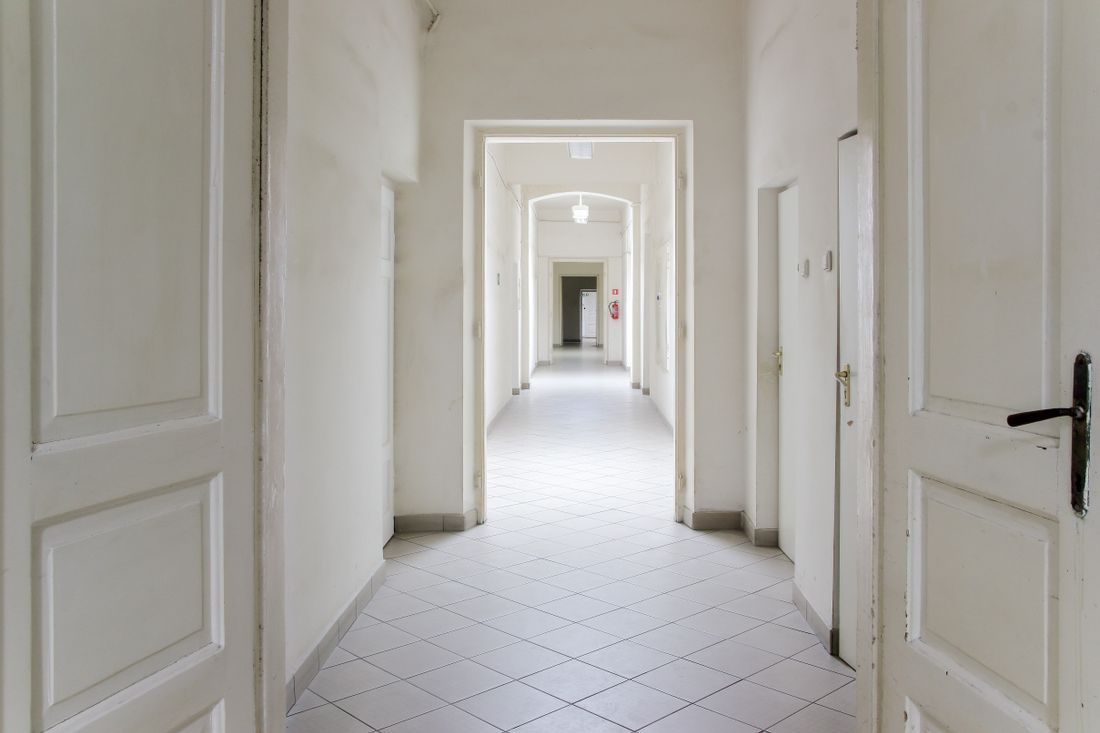
Photo by Aleksander Dumała via Pexels.
Capturing the Room's Reaction as the Real Story
The room's reaction is the real story of a recognition wall unveiling (the moment someone spots their own name, or a colleague's genuine applause) because the wall is just an object, and the honest reaction around it is what makes the photos feel like something actually happened, not a product shot with people standing nearby.
That reaction is quick and it does not repeat cleanly. A cover comes off, someone reacts, people clap or laugh or go quiet for a second, and then everyone moves back to work. There's no second take that feels the same as the first. That's exactly why the wall documentation and the individual honoree frames get handled as their own separate moments, so the one unrepeatable stretch of real reaction is not competing with setup shots for the photographer's attention.
Even a handful of usable reaction frames from that window are worth more to the internal story than a dozen more static wall shots.
Working With Hallway and Lobby Light That Wasn't Built for Photos
Hallways and lobbies are almost never built with photography in mind, so the light is usually a mix of overhead fluorescents, mismatched color temperatures, and whatever daylight leaks in from a nearby window. Working with it, rather than fighting it, is what keeps the coverage looking clean instead of obviously corrected later.
In practice that means scouting the actual space in advance when possible, or arriving early enough to walk it before the group shows up. A wall lit unevenly by a single ceiling fixture reads very differently ten feet to the left or right. Moving the honoree group a few steps, or angling them away from a harsh overhead light, usually solves more than adding equipment does.
A small portable light helps when the space is genuinely dim, but it has to stay unobtrusive. Nobody wants a stand and a softbox turning a quiet hallway moment into a production, since that changes how people behave in front of the camera.
What Happens to the Photos After the Wall Is Unveiled
After the unveiling, these photos mostly go to work internally first: an intranet post announcing the honorees, a section in the next employee newsletter, and eventually a slide or two in a recruiting deck built to show candidates what recognition actually looks like at the company. Press or public-facing use is rarely the point.
That internal-first path is exactly why the wall itself needs to be shot cleanly and separately from the event moment. A recruiting deck built two years from now needs a photo of the wall that still looks current, without a crowd of people from a specific afternoon dating it. A newsletter needs individual honoree photos it can run one at a time as different names come up over the following months.
Because none of this is one-and-done PR, it's worth asking who owns the finished folder (HR, internal comms, or whoever manages the intranet) so the images actually get used instead of sitting in an inbox after the day itself is over.
A Planning Checklist for HR and Internal Comms
Before the photographer arrives, HR or internal comms should confirm the honoree list, lock a fifteen to twenty minute window, and walk the actual wall location once to flag anything that needs fixing (a loose cover sheet, a plant blocking a panel, a light that's clearly too harsh or too dim for the space).
It also helps to know who is actually going to speak, even briefly, so the moment has a clear start rather than a vague drift into picture-taking. If the wall covers a group being honored at once, confirm which of them can attend; a wall of eight names with three people present changes how the individual frames get planned.
- Confirm the honoree list and who is confirmed to attend
- Pick a quiet fifteen to twenty minute window, not end of day
- Walk the wall location once to flag glare, clutter, or blocked panels
None of this takes long, but skipping it usually shows up later as a rushed, uneven set of photos.
Frequently Asked Questions
Do we need a full photographer for a twenty-minute reveal?
A short reveal still benefits from someone dedicated to it, mainly because the moment doesn't repeat. Someone spots their name once. A cover comes off once. If nobody is positioned and ready when that happens, the only record left is whatever people caught on their phones, which rarely holds up for a newsletter or a recruiting deck later. Twenty minutes of focused attention is enough. It just has to be planned rather than improvised.
How is this different from covering a company town hall?
A town hall is usually a stage, a speaker, and an audience seated in rows, built around a talk. A recognition wall unveiling has no stage and often no seated audience at all. It's a small group standing at a wall in a hallway. The coverage plan looks completely different: individual honoree frames instead of wide audience shots, and a documentation pass on the wall itself rather than a speaker on a podium.
What if only some of the honorees can attend the unveiling?
That's common, and it's worth planning for rather than treating as a problem on the day. Confirm attendance ahead of time so the photographer knows which panels get an individual frame during the event, and consider a short follow-up session for anyone who couldn't make it, so the finished set doesn't end up quietly missing names that belong on the wall just as much as everyone else's.
Can the same photos be used for recruiting later?
Yes, and that's often the more durable use of the set. A clean, well-lit photo of the wall itself, without a specific date visible in the frame, can hold up in a recruiting deck long after the original event has been forgotten. That's exactly why the wall gets photographed on its own, separate from the moment people are standing in front of it during the unveiling itself.
Do we need to write remarks or plan a run of show?
Not really. Most recognition wall unveilings work better loose than scripted. A few honest words from a manager land better than a formal speech read off a card in a hallway. What actually helps is knowing roughly when the cover comes off and who's speaking first, so the moment has a clear beginning instead of drifting straight into picture-taking with nobody sure it's started.
Related Reading
Not sure if hourly or a package makes more sense for your event?
Tell us the expected length, and we'll run the actual numbers before you book.
See Event Coverage Packages