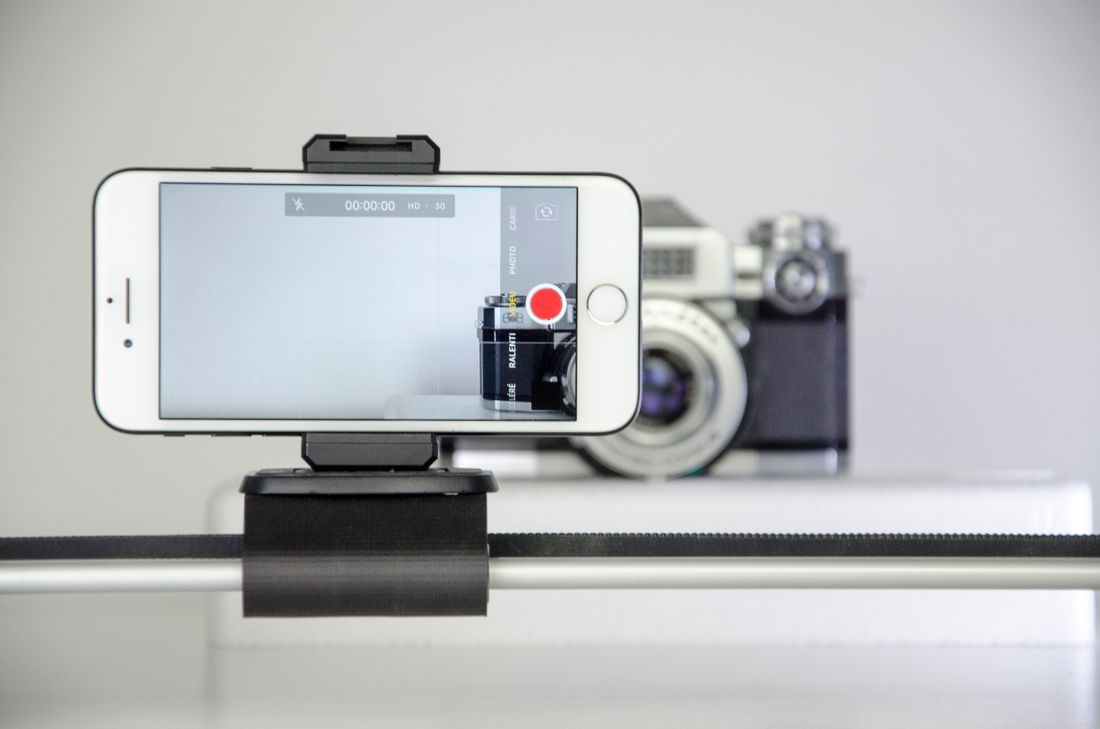
Photo by Corentin HENRY via Pexels.
Every crowdfunding platform has the same visual accent by now: a founder on a stool, soft window light, an acoustic guitar swelling under a voiceover about a dream. Backers have watched that video a thousand times, and most of it blurs together before the pledge button gets a click. The video's actual job isn't to feel like a polished ad. It's to prove, in the time it takes to scroll past, that a real product exists, does what it claims, and was made by someone worth trusting with a prepayment.
A crowdfunding video's job is proof, not mood: show the product working in the first fifteen seconds, favor a real prototype over a cinematic montage, and stop short of a polish level that reads as already-funded. Pair the hero video with campaign updates, page stills, and a short social cut — the hero alone doesn't carry a campaign.
Table of Contents
- The Crowdfunding Video Format Has a Trust Problem
- What Has to Be On Screen in the First 15 Seconds
- A Working Prototype Beats a Mood Film Every Time
- The Honest Tradeoff of Polish: When Slick Backfires
- What the Founder Should Actually Say on Camera
- Campaign Updates: The Video Job That Doesn't End at Launch
- Stills the Campaign Page Needs Beyond the Hero Video
- The Short Social Cut That Extends the Hero Video
The Crowdfunding Video Format Has a Trust Problem
Backers have already seen the founder-on-a-stool-with-acoustic-guitar version of a crowdfunding video dozens of times, and that familiarity is a problem, not a feature. When every campaign leans on the same soft-focus, string-scored montage, backers stop reading it as proof and start reading it as marketing — the exact thing a first-time backer is trying not to fall for.
That's why the format needs to change for a crowdfunding pitch specifically, not just the production value. A guest at a gala is judging warmth; a client watching a case study is judging competence. A backer watching a crowdfunding video is making a different bet — sending money toward a product that doesn't exist yet, made by someone they've never met, with the video as the only evidence before the charge goes through. It has to work more like a demo than a brand film, because a mood piece answers a question nobody backing a campaign is actually asking: does this thing work, and did this person actually build it.
What Has to Be On Screen in the First 15 Seconds
The opening seconds need to show the product doing the thing it claims to do, in real conditions, with a real hand operating it — not a logo animation, not a founder introducing themselves, not a shot of a city skyline. Backers decide whether to keep watching before the pitch even starts.
That's a hard rule to follow because it goes against most people's instinct to open with context: who they are, why they started the company, what problem they noticed. All of that is real and worth including, just not first. Open on the product in motion — the hinge folding, the fabric stretching, the app updating in response to a real tap — and let the founder's introduction land once the backer already believes the thing is real. A crowdfunding audience is scrolling past dozens of pitches in one sitting, and the ones that earn a full watch are the ones that show, don't tell, before they ask for fifteen more seconds of attention.
A Working Prototype Beats a Mood Film Every Time
A shaky clip of an actual prototype functioning does more for a campaign than a beautifully lit render or a stock-footage montage of a similar-looking product, because a prototype is verifiable and a render isn't. Backers have been burned by campaigns that shipped a rendering instead of a working thing, and they watch for the difference now.
This changes what's worth spending a shoot day on. Time is better spent capturing the prototype from multiple angles, in use, under normal light, than building a set or scripting a voiceover about the founder's journey. A slightly rough shot of a real hinge, seam, or circuit doing its job reads as more credible than a smooth shot of a look-alike model, because the roughness itself is evidence nothing was faked for the camera. If the prototype has a flaw or an early-version quirk, showing it honestly — this is what version three does, version four fixes the wobble — builds more trust than hiding it behind a cutaway.
The Honest Tradeoff of Polish: When Slick Backfires
A crowdfunding video that looks too finished sends an unintended signal: that the company already has the budget it's supposedly asking backers to provide. Too much polish reads as already-funded, and a backer's next thought is often why do you need my money if you can afford this.
That doesn't mean the video should look careless — a genuinely bad shot, muddy audio, or shaky handheld footage undercuts the pitch just as fast, for a different reason. The target is a specific middle: clean audio, decent light, steady framing, but shot in the actual workspace or kitchen table where the product was built, not a rented studio with a lighting grid. A founder talking straight to camera in a real room does more work than the same founder color-graded and lit like a commercial. The tradeoff isn't polish versus sloppiness — it's polish versus honesty about scale, and a campaign video should look like what it's actually funding: the next stage, not the finished company.
Photo by Anna Tarazevich via Pexels.
What the Founder Should Actually Say on Camera
The founder's on-camera role is to explain what the product does, why they built it, and what the money specifically funds — not to perform a personality or recite a mission statement. A backer is deciding whether to trust a specific person with a prepayment, and specifics build that trust faster than enthusiasm does.
The strongest version of this section is short and answers three plain questions in order: what does it do, why does it need to exist, and what happens to the money. A founder who can say tooling for the injection mold, then the first production run in one sentence sounds more credible than one who talks for two minutes about passion and never mentions the budget. Talking straight into the lens, unscripted but prepared, works better than reading from a teleprompter — a founder who sounds rehearsed reads as a pitch, and a founder who sounds like themselves reads as a person actually asking for help getting something made.
Campaign Updates: The Video Job That Doesn't End at Launch
A single hero video covers the launch moment, but a campaign runs for weeks, and backers who already pledged want to see progress, not just be asked for another share. Short update videos — a production milestone, a stretch goal explained, a shipping timeline confirmed — keep backers engaged and give new visitors something more current than the original pitch.
These don't need the same care as the hero video. A phone-shot update filmed in the workspace, showing the next batch of parts arriving or a stretch goal being unlocked, does the job — backers who already believe in the product are checking on it, not evaluating it from scratch. Planning two or three of these into the shoot schedule from the start, rather than scrambling once the campaign is live, means the footage exists before it's needed. A short clip explaining an actual delay does more for backer patience than a silent campaign page ever will, and a campaign that goes quiet for three weeks after launch loses momentum that a five-minute update video would have kept alive.
Stills the Campaign Page Needs Beyond the Hero Video
A crowdfunding page is read as much as it's watched, and it needs a set of still photos the video can't provide on its own: clean product shots from multiple angles, a detail shot of the specific feature being pitched, and at least one photo of the product in actual use.
These stills carry the reward tiers, the FAQ section, and every social share that links back without autoplaying video, so they matter more than most campaigns budget for. Planning stills into the same shoot as the video is far more efficient than treating them as a separate task later. A pause between video takes to grab a still of the same setup, same light, same product, covers most of what the page needs without adding a second session. Skipping this step is a common gap — a campaign with a strong video and no usable stills ends up cropping video frames for the page, which almost always looks worse than a photo taken on purpose.
The Short Social Cut That Extends the Hero Video
The full-length pitch video belongs on the campaign page, but a fifteen-to-thirty-second cut built for social feeds is what actually gets shared, since almost nobody reposts a three-minute video into a feed built for quick scrolling and short attention spans.
The social cut should open on the same proof-first shot as the full video — the product working — because the same rule about not burying the point applies at an even shorter length. Building this cut is mostly a re-edit, not a new shoot, as long as the original footage was captured with that reuse in mind: extra handheld coverage of the product in action, a few clean seconds without dialogue for captions to sit over, footage in both landscape and a close crop that survives a vertical reframe. Treating the social cut as an afterthought once the hero video is done usually means recutting from footage that wasn't shot for it, which shows. Planning for it during the original shoot day costs very little extra time and produces a noticeably better result.
Frequently Asked Questions
How long should a crowdfunding campaign video be?
Most effective pitch videos run two to three minutes, long enough to show the product working, explain the ask, and cover the founder briefly — short enough that a backer scrolling through dozens of campaigns actually finishes it. Check the specific platform's own current upload guidance before shooting, since length caps vary by platform and change over time. A tighter edit that cuts straight to the product beats a longer one padded with backstory.
Do we need a professional camera, or does a phone work for a crowdfunding video?
A modern phone can shoot a usable crowdfunding video, especially for the honest, workspace-shot look the format rewards. What matters more than the camera is steady framing, clean audio, and decent light — a phone with a small tripod and an external microphone often beats a nicer camera handheld in a noisy room. The gear worth spending on first is a tripod and a microphone, not a camera upgrade.
Should the founder be on camera the whole time?
No — the product should carry the opening seconds, with the founder appearing once the product has already been shown working. A founder who's on screen for the entire video without much product footage tends to read as a pitch about a person rather than proof of a thing, which isn't what a backer is trying to evaluate. A short founder segment placed after the proof does more for trust than a longer one placed before it.
What if the prototype isn't fully finished yet?
Show it honestly at whatever stage it's actually at, rather than hiding gaps behind a rendering or stock footage. A prototype with a visible early-version quirk, shown plainly with a note about what the next revision fixes, builds more trust than a polished mockup — backers are specifically watching for signs that a product is real, not signs that it's finished. That honesty about the current stage is part of what a backer is actually agreeing to fund.
How many videos does a crowdfunding campaign actually need?
More than one. Budget for the hero pitch video, two or three short updates spaced across the campaign's run, and a fifteen-to-thirty-second social cut built from the same footage. Treating the hero video as the only deliverable usually means scrambling to shoot updates later and re-editing a social cut from footage that wasn't planned for it. Planning all of it into one shoot day, up front, is what actually saves time and money.
Related Reading
Have a launch or brand project where scale is actually the story?
Tell us what the aerial shot needs to show, and we'll scope it alongside the ground coverage from the start, permits included.
See Personal Branding & Launches