Photo by Kampus Production via Pexels.
A corporate anniversary gala is a strange kind of event to photograph, because it's never just a party. It's a celebration, a history lesson about how the company got here, and a business event where current clients are quietly being sold on continuity, all happening in the same room on the same night. Deciding whether a milestone deserves that room at all, and then covering it once it does, are two separate problems worth thinking through before the invitations go out.
A milestone anniversary earns a gala when there's a real reason to convene people: a founder retiring, a leadership change, or a company grown large enough that employees haven't all met. Otherwise, a content-only package is the more honest answer. Once the event happens, coverage has to serve three layers: celebration, founder history, and the client business room.
Table of Contents
- Does a Milestone Anniversary Actually Need a Gala
- A Celebration, a History Lesson, and a Business Event at Once
- Founders, Family, and the People Who Built the Place
- The Then-and-Now Problem When the Archive Is Thin
- Speeches, Toasts, and Honoring Long-Service Employees
- The Client and Partner Guest List Makes It a Business Room
- What Anniversary Gala Content Gets Used For Later
- One Photographer or a Small Crew for a Room Like This
Does a Milestone Anniversary Actually Need a Gala
A milestone anniversary deserves a live gala when there's a real reason to put people in one room: a founder retiring, a generational change in leadership, or a company that's grown enough that most employees have never met in person. When none of that is true, a well-produced content package is usually the more honest answer.
The number on the invitation matters less than what's changed underneath it. A tenth anniversary rarely needs a room full of clients and partners. A twenty-fifth or fiftieth often does, especially if the people who built the place are still around to be in the photos. I'd rather see a client put budget into content that actually gets used than book a gala because the round number felt like it demanded one.
The honest test is simple. Is there a guest list of people who genuinely want the invitation, not just staff who'd rather be home? Are there founders, retirees, or family members who add real weight to the room? If both are true, the gala earns its place. If the goal is really a recruiting asset, skip the ballroom and put the budget into a tighter, cheaper shoot instead.
A Celebration, a History Lesson, and a Business Event at Once
An anniversary gala is three occasions layered into one evening: a party celebrating the moment, a history lesson about how the company got there, and a business event where clients and prospects are quietly being sold on continuity. Each layer wants a different kind of frame, and a plan that only shoots one of them misses the other two.
The celebration wants energy: toasts, dancing, people mid-laugh, a room that looks like a good night rather than a corporate obligation. The history-lesson layer wants something calmer, the shots that will actually sit next to old photographs later: founders in conversation, a long-tenured employee being thanked, a quiet moment near whatever display tells the company's story. The business layer wants clean, usable frames of clients and partners in the room, the kind that reads as relationship and not just headcount.
In practice this means we're not chasing one shot list all night. We're working three lists in parallel and trusting that the same room can produce all three if someone's actually thinking about them separately instead of defaulting to generic party coverage.
Founders, Family, and the People Who Built the Place
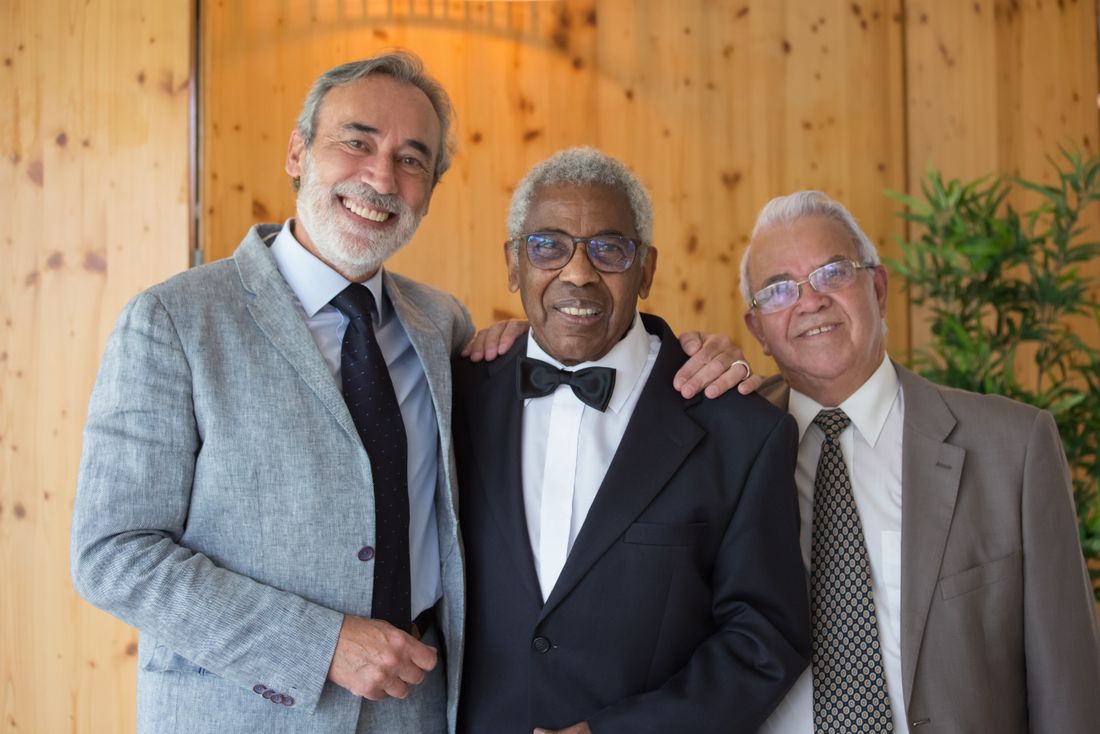
The founder and legacy element separates an anniversary gala from an ordinary company party, and it should be treated as the emotional spine of the coverage, not a photo-op checkbox. A retired founder, a spouse or child standing nearby, an early employee who's been there since the start: these are the people the evening is about.
These moments tend to happen quietly and off to the side, not on a stage. A founder catching up with someone they hired decades ago rarely announces itself the way a scripted toast does. That means the photographer needs to know, before the room fills up, who these people are and where they're likely to be, rather than discovering it mid-event and hoping to catch up.
We ask for a short list ahead of time: who's the founder or founders, is anyone retired attending, is family present, and who counts as long-tenured in a way the client wants documented. A five-minute conversation before the event does more for this part of the coverage than any amount of instinct in the room that night.
The Then-and-Now Problem When the Archive Is Thin
Most companies old enough to hit a milestone anniversary don't have a clean archive to pair with new photos, because early-year photography was an afterthought, not a priority. A few grainy prints, a folder of low-resolution scans, maybe nothing at all from the first decade: that gap is common, and it changes what the current event needs to deliver.
When the archive is thin, the current gala effectively becomes the historical record going forward. That raises the bar on getting real establishing shots of the space, the full team, and the people who represent different eras of the company, because there may not be a comparable "then" photo to sit next to a future "now." We treat the room itself, not just individual faces, as something worth documenting properly for exactly this reason.
When there is old material, even a handful of usable images, it's worth bringing physical prints or a printed board to the event rather than trying to recreate a "then and now" graphic afterward from scratch. It gives the photographer something real to shoot alongside the present-day room, and it solves the pairing problem on the spot instead of in editing.
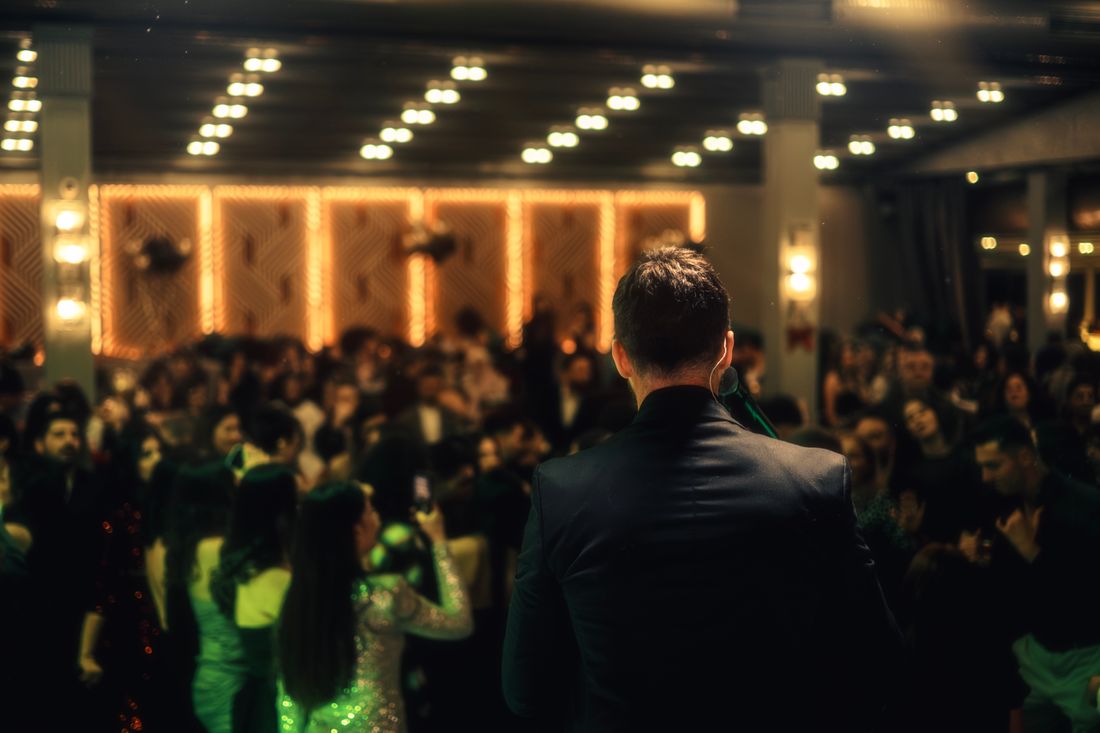
Photo by Wolrider YURTSEVEN via Pexels.
Speeches, Toasts, and Honoring Long-Service Employees
Speeches and toasts are the emotional center of an anniversary gala, and the recognition of long-service employees is usually the part of the program that lands hardest, because it's specific to real people instead of the company in the abstract. Coverage needs to prioritize this segment over almost anything else happening that night.
The challenge is that this is also the hardest segment to shoot well. Speakers move, lighting on a stage or podium is rarely built for photography, and the moment that matters most, someone being called up after twenty years and visibly not expecting it, happens once and doesn't repeat. Positioning matters more here than anywhere else in the room: a clear sightline to both the speaker and the audience reacting is worth more than a technically perfect angle from the wrong seat.
We ask in advance whether long-service recognitions are part of the program and roughly how many people are being honored, because that shapes where we stand and how tightly we watch the run of show. Guessing this in real time produces missed reaction shots that can't be restaged afterward.
The Client and Partner Guest List Makes It a Business Room
An anniversary gala is partly a business event because the guest list usually includes current clients, vendors, and partners alongside employees and family, which means the coverage has to work for a room that's networking as much as it's celebrating. Photos of these interactions have real value beyond the night itself.
This changes a few practical things. Clean, well-lit candids of clients and partners in conversation with company leadership are worth prioritizing, because those are the images that later get used in outreach or a follow-up thank-you, not just an internal recap. It also means being more careful about who ends up in a frame that might get published, since a guest at a business event hasn't necessarily agreed to appear in a company's marketing the way an employee implicitly has.
In practice, that's a short conversation before the event: does the client want a general release covering guest photography, or should certain images be cleared before they're used publicly. Settling that ahead of time is simpler than sorting it out after the gallery is delivered.
What Anniversary Gala Content Gets Used For Later
Anniversary gala photography and video rarely stay inside a single recap post. In practice this content gets reused across recruiting materials, the company's about page, internal decks, and the next year's planning presentation, which means it needs to be shot with more than one future use in mind, not just the night itself.
Recruiting is the most common second life: a candid of the room, a shot of a long-tenured employee being honored, or a genuine moment of founders together tells a hiring story that a stock photo never will. The about page usually wants fewer, calmer images, the ones that hold up without the context of "this was from the gala." And the next year's internal deck, the one that opens with "look how far we've come," leans on exactly the kind of wide room shots and leadership moments this event produces.
We try to flag this during planning rather than after delivery. Knowing in advance that recruiting and an about-page refresh are both on the list changes which shots get prioritized in the moment, not just which ones get selected afterward.
One Photographer or a Small Crew for a Room Like This
A single photographer can cover a smaller anniversary gala, roughly under a hundred guests with one program track and one stage. Once the guest list grows, the program runs two things at once, such as a cocktail reception and a formal dinner, or the founder and business layers both need dedicated attention, a small crew earns its cost back.
The reason isn't just volume, it's that this event asks a single photographer to be in several places simultaneously. Someone needs to be near the founders and family when a quiet moment happens, someone needs a clean sightline on the stage during recognitions, and someone needs to be working the client and partner side of the room. One person can rotate through all three, but rotation means some of them get less attention than others.
Our general guidance is to size the crew to the number of things happening at once, not to the headcount alone. A room of two hundred with one continuous program can still work with one photographer and a second shooter on standby; a room half that size running three simultaneous storylines usually can't.
Frequently Asked Questions
How do we decide if our company's anniversary is a big enough milestone for a gala?
Look at what's actually changed, not just the number. A round number alone (ten, fifteen years) rarely justifies a gala on its own. A genuine milestone usually pairs the number with something real: a founder retiring, a leadership transition, or a company that's grown enough that most employees have never met in person. If none of that applies, a content-only package is often the more honest and useful choice.
What if we don't have good archival photos from the company's early years?
This is common, not a problem to solve before the event. If old material exists, even a few usable prints, bring it to the gala so the photographer can shoot it alongside the current room, solving the then-and-now pairing on the spot. If nothing usable survives, treat the current gala as the new baseline and prioritize thorough documentation of the room and the people, since there won't be a comparable image to pair it against later.
Should we hire one photographer or a small crew for an anniversary gala?
It depends on how many things are happening at once, not just guest count. A smaller gala with one program track and one stage usually works with a single photographer. Once the event runs a reception and a formal program simultaneously, or the founder, recognition, and client layers all need dedicated attention, a small crew covers more of the room without anyone rotating away from a moment that matters.
Do we need permission before publishing photos of clients or guests from the event?
It's worth settling before the event rather than after. Employees generally understand company event photography gets used in marketing, but guests, clients, and partners haven't necessarily agreed to appear in a company's public materials. A short conversation ahead of time about whether a general release covers guest photography, or whether certain images need separate clearance, avoids sorting it out after the gallery is already delivered.
What should we actually plan to do with the photos and video after the event?
Anniversary content typically gets reused well beyond a single recap post: recruiting materials, an about-page refresh, internal decks, and the next year's planning presentation all draw on it later. Flagging these intended uses during the planning stage, rather than waiting until after delivery, changes which specific moments get prioritized during the shoot itself, so the finished gallery ends up serving more than just a same-week internal wrap-up email.
Related Reading
Not sure if hourly or a package makes more sense for your event?
Tell us the expected length, and we'll run the actual numbers before you book.
See Event Coverage Packages