
Photo by Theo Decker via Pexels.
Commercial real estate and REIT executive headshots have a slightly awkward job. They need to feel established enough for investors and lenders, approachable enough for tenants and partners, and consistent enough that the leadership team looks like one group. The building can help, but it shouldn't do all the talking.
The strongest commercial real estate executive headshots choose a clear portrait register before anyone steps in front of the camera. That can mean a restrained environmental set in the building, a neutral studio style, or a measured combination. The decision should serve the people first, with the property supporting their role rather than replacing it.
Table of Contents
- What Should Commercial Real Estate Executive Headshots Communicate?
- Why Team Consistency Matters More Than Matching Poses
- Should the Background Show the Building or Stay Neutral?
- How Do You Photograph a Team in an Occupied Building?
- How Do You Keep the Property From Becoming a Costume?
- How Can One Portrait Set Serve Investors, Tenants, and Partners?
- When Is a Plain Setup the Better Choice?
- How Should You Scope a Commercial Real Estate Headshot Session?
What Should Commercial Real Estate Executive Headshots Communicate?
Commercial real estate executive headshots should communicate judgment, steadiness, and a real connection to the spaces and people the team serves. The image doesn't need to show a skyline or a marble lobby to feel established. It needs a consistent point of view, a comfortable expression, and enough context to make the person's role legible.
That point of view is the portrait register. A portrait register is the shared visual language across a set of portraits, including background, crop, light, clothing guidance, and direction. It gives a leadership page, investor presentation, or company profile a sense of order without asking every person to look identical.
For a REIT or commercial real estate company, the register also has to work across roles. A chief executive, an acquisitions lead, a property manager, and a development director may each need a slightly different expression of authority. The set can accommodate those differences while keeping the camera height, distance, color, and overall mood in the same family. That shared frame is what makes the next decisions easier.
Why Team Consistency Matters More Than Matching Poses
A consistent team portrait set doesn't require every executive to sit in the same pose. It requires the images to feel as if they were planned together. Matching light, crop, color, and visual weight usually does more for cohesion than asking six people to copy one expression or angle.
That distinction matters when a team is photographed across several roles or locations. One person may look natural standing near a window while another works better seated at a table. Those choices can coexist if the camera keeps a similar relationship to each subject and the background remains controlled. Consistency should support comfort, not flatten it.
It also makes the images easier to use. A row of portraits on a leadership page needs a calm visual rhythm. A single executive image in a deck needs to belong to the same company. When the set shares a register, the viewer notices the people and the work instead of wondering why one frame feels like it came from another company.
Should the Background Show the Building or Stay Neutral?
An environmental background earns its place when the property explains something about the executive's role or the company's point of view. A neutral background earns its place when clarity and reuse matter more than location. Neither choice is automatically more credible. The useful decision is whether the setting adds meaning without competing with the face.
A lobby, terrace, corridor, or meeting room can give a commercial real estate portrait a sense of place. It can suggest how the team works and make the image feel connected to the portfolio. The setting still needs restraint. A dramatic architectural feature can become the subject, especially when every surface is polished and every line is asking to be noticed.
Neutral backgrounds are often the cleaner choice for teams whose images will travel widely. A simple wall or controlled studio setup can fit a website, a presentation, a release, and a directory without tying the portrait to one property. The two approaches can also share a set, but only when the lighting and crop keep the difference intentional.
How Do You Photograph a Team in an Occupied Building?
An occupied building needs a portrait plan that respects circulation, privacy, and the working day. The practical setup is usually a small footprint, a defined window for each person, and a background that can be reset quickly. The goal is to make the session feel like a short piece of scheduled work, not an event taking over the lobby.
That starts with choosing the locations before the team arrives. Look for clean sightlines, controllable light, enough distance from passersby, and a place where equipment won't block a doorway or reception desk. If an environmental frame is part of the plan, confirm that the space can stay visually quiet for the needed window.
People flow matters too. A simple arrival order keeps executives from waiting in a public area and gives the photographer a chance to adjust the setup before the next person steps in. The building's own rules still control access and privacy. A good portrait plan works with those rules instead of treating the property like an empty set.
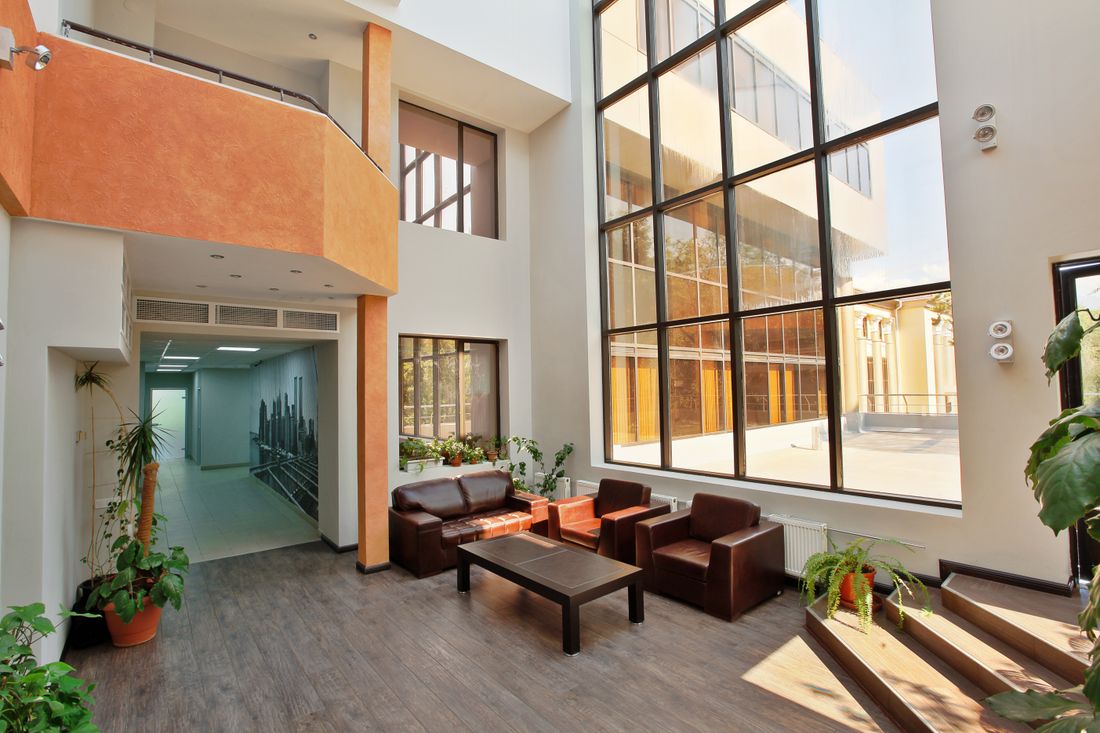
Photo by Bakyt Kosjan via Pexels.
How Do You Keep the Property From Becoming a Costume?
The property should support an executive portrait without turning the person into a walking brochure. That means using architecture as context, not as a prop. Clean lines, a believable working position, and a little breathing room can suggest the world of commercial real estate while leaving the subject enough presence to feel like a person.
Costume usually enters through over-direction. Everyone is placed in front of the grandest staircase, told to fold their arms, and asked to project authority at the same time. The result may show an expensive building, but it gives the viewer very little sense of the executive. A quieter corner, a natural stance, or a seated frame can carry more information.
Wardrobe guidance helps in the same way. The useful brief covers color, texture, and how the clothing will sit against the chosen background. It doesn't ask the team to dress as a building. When the setting, wardrobe, and expression leave room for each other, the portrait feels established without becoming theatrical.
How Can One Portrait Set Serve Investors, Tenants, and Partners?
One portrait set can serve several audiences when it starts with a stable point of view rather than a different performance for each audience. Investors may look for steadiness, tenants may respond to approachability, and partners may want to understand who will be in the room. A composed expression and clear visual system can hold all three without overexplaining.
The audience changes the crop and the context more than it changes the person. A tighter portrait can work in a leadership page or presentation. A wider environmental image can place the executive in a property story or company profile. Both can come from one planned session when the shot list accounts for where the files will actually appear.
This is also where a small set of alternate frames earns its keep. The team doesn't need dozens of versions of the same expression. It needs a few deliberate options, such as a direct portrait, a more open working frame, and a consistent group image when the leadership relationship matters. The set becomes useful because each image has a job.
When Is a Plain Setup the Better Choice?
A plain setup is the better choice when the people, not the properties, need to remain the most reusable part of the image. It works especially well for leadership pages that change often, teams whose work spans multiple buildings, and portraits that need to sit beside dense written information. Simplicity can be a sign of control.
Neutral doesn't have to mean anonymous. Direction, light, expression, and crop still give the set a character. A warm gray wall can feel very different from a bright white background. A slightly wider frame can feel more open than a tight headshot. Those choices create a visual identity without tying the person to one lobby or development.
A plain setup can also be the honest answer when the available property space is busy, recognizable, or difficult to control. Forcing an environmental image because the company owns an impressive building can make the session harder and the final portrait less useful. The setting should earn its place. If it doesn't, remove it and let the team carry the image.
How Should You Scope a Commercial Real Estate Headshot Session?
Scope the session around the people, the locations, and the files the team will actually use. Start with the number of executives, the desired portrait register, the buildings available, and the mix of tight and environmental frames. Then decide what must be consistent across the set and where individual variation can make the portraits feel human.
We'd also settle the building logistics early. That includes access, a quiet holding area, the order of subjects, the time available in each location, and a backup background if the preferred space becomes busy. A concise plan gives the team a calm experience and gives the photographer room to make small adjustments without losing the visual system.
Finally, define delivery by use rather than by a vague request for headshots. A website portrait, a presentation image, a leadership group frame, and a wider property-context image may each need a different crop. When those uses are clear before the shoot, the session can produce a set that feels considered from the first email through final delivery.
Frequently Asked Questions
Should REIT executive headshots use a building background?
They can, when the building adds useful context and stays visually quiet. An environmental portrait can connect an executive to the spaces and people they work with. A neutral background is often better when the image needs to travel across presentations, profiles, and changing properties. Choose the setting based on the image's job, not on the building's price tag. The portrait should remain useful after the current property changes.
How do you keep commercial real estate team headshots consistent?
Plan a shared portrait register before the session. Keep the camera relationship, crop, color, and general light in the same family, then allow small changes in stance or expression so each person remains comfortable. Consistency should make the group feel connected, not make every executive look copied and pasted into the same frame. The result should feel planned together while still leaving room for individual presence.
Can a headshot session happen in an occupied office building?
Yes, with a compact setup and a clear schedule. Choose locations that keep doors, reception areas, and circulation open, then assign an arrival order so people aren't waiting in a public space. Confirm access and privacy requirements with the building team in advance. The session should fit the working day instead of behaving like a production takeover. A backup background keeps the plan steady when the building gets busy.
What should commercial real estate executives wear for headshots?
Choose clothing that supports the selected background and lets the person move comfortably. A short brief about color, texture, and contrast is more useful than a rigid dress code. The goal is a polished, believable version of the executive's working presence. Avoid wardrobe choices that compete with strong architecture or make the image feel like a property advertisement. The person should remain the clearest point of attention.
Is a plain background too generic for a real estate leadership team?
No. A plain background can be the more deliberate choice when the people need to remain reusable across properties, presentations, and website updates. Direction, light, crop, and expression still create a point of view. If a building adds distraction or limits future use, a controlled neutral setup can communicate more confidence with fewer visual demands. It gives the leadership team a steady visual home as the portfolio evolves.
Related Reading
Planning headshots for a finance or wealth management team?
Tell us your team size and the tone you're going for, and we'll build a session that fits the credibility bar this industry actually needs.
See Headshots & Brand Videos