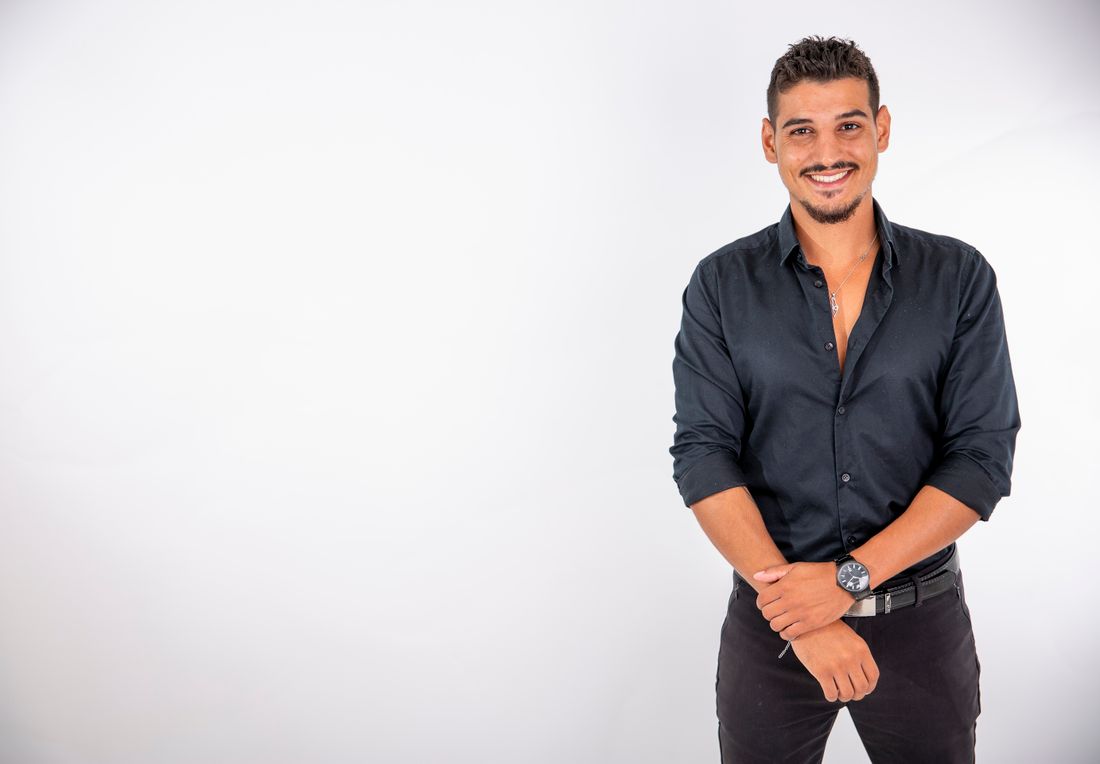
Photo by Nehoray yemini via Pexels.
Most personal-branding advice for creative people boils down to one line: show the work. For an agency creative director, that line runs into a wall. The best campaigns are client-branded, the best decks are NDA'd, and the credit line usually reads the team, not one name.
An agency creative director can build a personal brand without showing client work by substituting three things a portfolio normally carries: documented judgment, a visible decision-making process, and a consistent point of view, expressed through portraits, short talking pieces, panel appearances, and working-environment photography rather than campaign screenshots.
Table of Contents
- Why the Usual Portfolio Advice Breaks Down
- What Actually Substitutes for the Work
- What a Portrait Has to Carry When It Replaces a Portfolio
- The Talking Piece That Shows How You Decide
- A Conference or Panel Asset That Holds Up on Its Own
- A Working-Environment Set That Implies Scale Without Naming Clients
- What Should Stay Private, and Why That's a Strategy
- Building the Set Without Overexposing One Shoot
Why the Usual Portfolio Advice Breaks Down
The advice to show the work assumes the work is yours to show. For an agency creative director, most of it isn't: campaigns ship under a client's name, decks and strategy documents sit behind NDA, and even strong individual contributions get folded into a team credit, leaving little that can legally or professionally be posted.
This isn't a personal failing or a sign the person lacks a body of work. It's a structural feature of agency creative direction: the deliverable belongs to whoever paid for it, and the director's name rarely travels past the internal credit list. Trying to force the old portfolio model onto that reality tends to end one of two ways. Either the director quietly stops building any public presence at all, leaving recruiters and prospective clients with nothing to evaluate, or they post work they shouldn't, creating real exposure with the agency and the client. The more useful move is to stop treating the portfolio as the only asset worth building and start treating judgment, process, and point of view as assets a director actually owns.
What Actually Substitutes for the Work
When campaign screenshots are off the table, three things can carry the same weight: how the director thinks through a problem, the process they use to get from brief to output, and a consistent point of view on the craft. None of these belong to a client. All three are demonstrable without naming an account.
Judgment shows up in how someone frames a decision publicly: what they weigh, what they reject, and why, stated in general terms rather than tied to a specific campaign. Process shows up as a described way of working, the sequence of steps between a brief and a finished piece, again without disclosing whose brief it was. Point of view is the throughline across both: a stated opinion about the craft, held consistently over time. Together these read as a body of expertise even though no individual deliverable is on display. The substitution works because clients and collaborators aren't actually hiring a portfolio. They're hiring the thinking behind it, and that thinking is the one thing an NDA can't touch.
What a Portrait Has to Carry When It Replaces a Portfolio
A portrait doing a portfolio's job has to signal authority and approachability at once, without any prop, screen, or backdrop doing the explaining. That means a plain setting, a relaxed but attentive posture, and a direct gaze at the camera, so the person reads as the subject rather than a stand-in for their work.
This is a different brief than a standard corporate headshot. A headshot mainly needs to look professional and current. A portrait carrying the weight of an entire personal brand needs to hold up next to a bio, a speaker page, and a LinkedIn banner simultaneously, which means it has to avoid anything that dates it or ties it to one context. Busy backgrounds, visible screens, and branded clothing all compete with the person for attention, and in a portfolio-substitute image that competition is the exact problem to avoid. A plain working environment keeps the frame about judgment and presence rather than about a specific desk, agency, or moment in time.
The Talking Piece That Shows How You Decide
A short video of the director explaining how they make a specific kind of decision does more for a personal brand than a reel of finished work, because it demonstrates the actual skill being sold: judgment under constraint. Two to three minutes, one clear question, one clear answer, no client names required.
The format works because it separates the thinking from the output. A viewer doesn't need to see the campaign to understand how the director evaluates a concept, kills a weak idea, or decides when a piece is finished. That evaluation process is the transferable skill, and it's the part a prospective client or employer is actually trying to assess. Framing matters here as much as content: a plain, well-lit setting keeps attention on what's being said rather than on the room. Shot vertically or horizontally depending on where it will run, this kind of piece travels well across a personal site, a LinkedIn post, or a speaker bio page, and it ages more slowly than a case study tied to a specific year's campaign.

Photo by Artem Podrez via Pexels.
A Conference or Panel Asset That Holds Up on Its Own
A well-shot photo or short clip from a talk, panel, or workshop functions as third-party proof: it shows the director being asked to speak, not just claiming expertise. That external validation carries differently than self-published content, because someone else decided the person was worth putting on a stage.
The asset only works if it's usable outside the original event. A wide shot with clean composition, a moment of genuine engagement rather than a mid-blink grab, and audio clean enough to pull a short quote from all extend its life well past the conference itself. Many speakers let the organizer's photographer capture the only record and end up with nothing they can actually reuse: awkward crops, visible slide decks with someone else's branding, low light. Planning for a usable asset before the event, whether that means requesting a specific angle or arranging a separate photographer, is the difference between a one-time post and a recurring credibility signal on a bio page for years afterward.
A Working-Environment Set That Implies Scale Without Naming Clients
Photographing the director in the actual studio or office, mid-conversation or mid-review, communicates scale and seriousness without showing a single piece of client work. The environment itself, not the content on any screen or wall, does the persuading: it says this person runs something real.
This only holds up if the frame stays disciplined. Anything readable in the background, a mood board, a monitor, a printed deck, becomes a disclosure risk the moment it's published, so the brief has to rule those out before the shoot rather than crop them out after. What's left is composition and context: a person at a desk with materials in hand, a small group in conversation, hands arranging unmarked material on a table. None of it names a client, and all of it reads as a working creative practice rather than a posed headshot. Used sparingly across a personal site or LinkedIn, a set like this rounds out the portrait and the talking piece with a sense of where the work actually happens.
What Should Stay Private, and Why That's a Strategy
Not every creative director should build a loud public presence, and that's a legitimate choice rather than a missed opportunity. Some agency roles, client relationships, and contractual arrangements make a low, discreet footprint the correct answer: fewer public opinions, no speaking circuit, a bio page instead of a content calendar.
The decision usually comes down to what the role and the client relationships actually allow, not what looks impressive from the outside. A director working primarily on sensitive or high-security accounts may have real reasons to stay unremarkable online. Someone earlier in a leadership track, trying to build outside visibility for the next move, has different incentives. Neither posture is wrong; the mistake is picking one by default instead of deciding on purpose. Any specific limits on what can be said publicly, what a contract permits, or what an NDA restricts, is a legal question for the director's own counsel, not something a photography brief or a blog post can settle. The photography can only reflect a decision that's already been made about how visible to be.
Building the Set Without Overexposing One Shoot
A personal brand built this way isn't one photoshoot, it's a small library assembled over time: a current portrait, a talking piece refreshed every year or two, a panel asset from whatever the director speaks at next, and an environment set that gets updated when the studio or team changes.
Treating it as a library rather than a single deliverable also solves the overexposure problem. No single image or clip has to carry the entire brand, so there's less pressure to include something borderline just to make one shoot feel complete. It also matches how these assets actually get used: a portrait on a bio page, a clip on a LinkedIn post, a panel photo pulled out for the next speaking application. Custom personal branding work like this, built as an evolving set rather than a one-time shoot, is exactly the kind of scoped, judgment-heavy project a director benefits from mapping out with a photographer before booking a single date, sitting down first to talk through which pieces the set actually needs.
Frequently Asked Questions
Can an agency creative director build a personal brand without showing any client work?
Yes. The substitute set is judgment, process, and point of view, expressed through a strong portrait, a short talking piece on how the director decides, a conference or panel asset, and a working-environment photo set. None of these require naming a client, showing a campaign, or disclosing anything under NDA, and together they demonstrate the thinking a portfolio usually stands in for, without any legal exposure attached.
What should a creative director's portrait communicate that a standard headshot doesn't?
It has to carry authority and approachability on its own, since it's replacing an entire portfolio rather than accompanying one. A plain setting, relaxed posture, and direct gaze keep attention on the person. A standard headshot only needs to look current and professional; this portrait needs to hold up next to a bio and a speaker page, often for years, without any caption explaining who the person is.
Is video necessary, or can photography alone carry an agency creative director's personal brand?
Photography alone can carry it, but a short talking piece adds something a still image can't: a demonstration of how the director actually reasons through a decision. It doesn't have to be elaborate, two or three minutes on one clear question is enough, but it does more to show judgment than any static portrait, and it travels well across a personal site, LinkedIn, or a speaker bio page.
How much should a creative director share publicly versus keep private?
That depends on the role, the client relationships, and what any existing agreements permit, which makes it a question for the director's own counsel rather than a general rule. Some creative directors are well served by a loud public presence; others are better served by a deliberately quiet one. Either is a legitimate strategy when chosen on purpose rather than defaulted into by inertia or habit.
How often should this kind of personal-brand content be refreshed?
Treat it as a small library rather than a one-time shoot: a current portrait, a talking piece revisited every year or two, a panel asset added whenever a new speaking engagement happens, and an environment set updated when the studio or team changes. Spreading updates out also keeps any single shoot from having to carry the whole brand at once, which lowers the pressure on any one session.
Related Reading
Have a launch or brand project where scale is actually the story?
Tell us what the aerial shot needs to show, and we'll scope it alongside the ground coverage from the start, permits included.
See Personal Branding & Launches