Photo by Matheus Bertelli via Pexels.
A demo day looks simple from the back of the room: one stage, one lighting state, a dozen founders taking the same six minutes in the same spot. That sameness is exactly the problem. The accelerator needs one recap that proves the cohort mattered. Each founder needs a set of images that works completely on its own — on their site, in their deck, in a cold email to an investor who wasn't in the room. Those are two different jobs pulled from one shoot, and the difference only shows up if it's planned for before the first pitch starts.
A demo day produces two deliverables from one shoot: an accelerator recap built from wide, whole-room moments, and a dozen founder-specific sets built from what varies inside an unchanging stage — position, lens, the moment in the pitch, the slide behind them, and the room's reaction. Getting both requires planning crew position around the cut-over between pitches, covering the audience as deliberately as the stage, and being honest that a stage photo rarely doubles as a headshot.
Table of Contents
- Why the Recap and Each Founder's Set Are Two Different Jobs
- What Actually Changes When the Stage and Lighting Don't
- The Cut-Over Between Pitches and What It Does to Crew Position
- Capturing the Audience and Investor Energy That Proves the Event Mattered
- The Demo Moment That Isn't a Person Talking
- What a Founder Actually Needs Afterward — and What They Don't Get
- The Delivery Problem: Splitting One Shoot Into a Dozen Labeled Sets
- What the Accelerator Should Decide Before the Day, Not During It
Why the Recap and Each Founder's Set Are Two Different Jobs
A demo day produces two separate deliverables from one shoot: a single accelerator recap that proves the event mattered, and a dozen individual founder asset sets that each have to work alone, out of context, on that company's site and in its pitch deck. Planning for only one of those jobs is why demo day galleries tend to blur together.
The recap serves the accelerator itself: a handful of images that read as one event, useful for the next cohort's marketing and the program's year-end report. It wants width — a packed room, a full stage, a sense of scale. A founder's set serves a completely different audience. Nobody looking at a founder's LinkedIn post or a seed deck cares that eleven other companies pitched that same day; they're comparing that founder's two or three frames against every other founder's deck they've seen that week, not against the rest of the cohort. If a shoot plan only budgets time and angles for the recap, the founder sets get built from whatever's left over — usually one wide shot repeated twelve times with a different face. Planning for both from the start is the fix, not a longer shot list.
What Actually Changes When the Stage and Lighting Don't
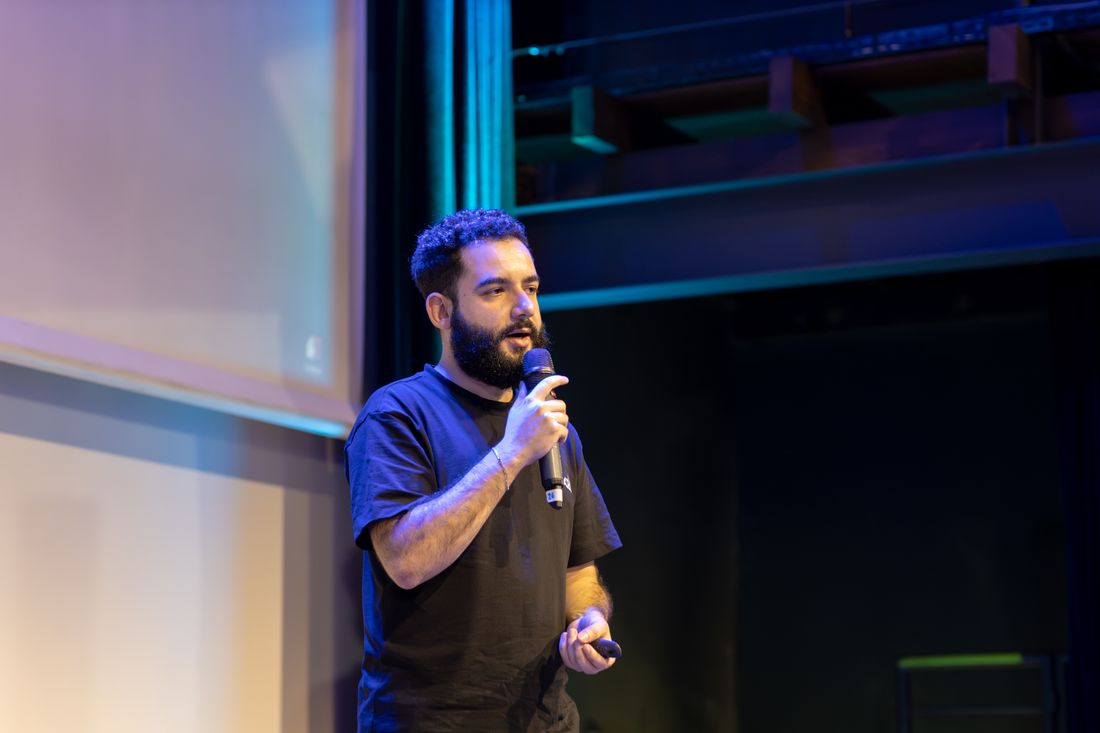
Even with one stage and one lighting state fixed all day, five things can still change between founders: camera position, lens choice, which moment in the six-minute pitch gets shot, what's on the slide behind them, and whether the frame is a reaction shot instead of a straight pitch shot. Working those five variables deliberately is what keeps twelve founders from looking identical.
A wide shot from center house repeated twelve times produces twelve versions of the same photo. Moving position between pitches — house left for one, closer to the stage lip for the next, a higher angle from a mezzanine if the venue has one — changes the geometry enough that consecutive founders don't read as the same frame with a different face swapped. Lens choice does similar work: a tighter lens isolates a founder against a blurred stage for one pitch, a wider lens shows them against their slide for the next. The moment matters too — the confident opening line reads differently than the pause before the ask, and not every founder's best frame comes from the same second. None of this requires more time on stage. It requires deciding, pitch by pitch, which variable moves.
The Cut-Over Between Pitches and What It Does to Crew Position
A demo day runs on a tight clock, and the thirty-to-sixty-second cut-over between one founder leaving the stage and the next one starting is the real constraint on coverage, not the six minutes of the pitch itself. Crew position has to be set before that window opens, because there's no time to relocate, re-meter, or rebuild a composition once the next founder is already talking.
In practice that means picking two or three fixed positions for the day and rotating through them on a schedule, rather than chasing a better angle mid-pitch and missing the opening seconds of the next one. It also means pre-setting exposure for the stage's one lighting state so there's no metering lag during the cut-over, and deciding in advance who covers the stage versus who covers the room during that window, if there's a second shooter. A single shooter working alone has to accept that the cut-over itself — the handshake, the walk-off, the next founder's first step into light — is often unusable, and plan coverage around the pitch itself rather than around catching a transition that's too fast to compose for anyway.
Capturing the Audience and Investor Energy That Proves the Event Mattered
A demo day recap that only shows founders on stage misses half of what actually proves the event mattered: investors leaning forward and taking notes, a packed room reacting to a strong pitch, the specific energy of people who came to evaluate, not just watch. That audience coverage is what separates a demo day recap from a generic stage-photo gallery.
Getting it requires physically leaving the stage-facing position for part of the day, which is exactly why crew planning matters — a single shooter locked onto the stage the whole time never turns around. A few minutes positioned at the side or back of the room during a strong pitch captures the reaction that makes the recap read as a real event with real stakes, not a rehearsal. This is also where a second shooter earns their spot on a bigger program: one person holds the stage rhythm while the other works the room for investor body language, side conversations during breaks, and the moment a name gets written down. None of that footage helps any individual founder's set. It's entirely for the accelerator's own story about the day, and it's worth protecting time for on purpose.
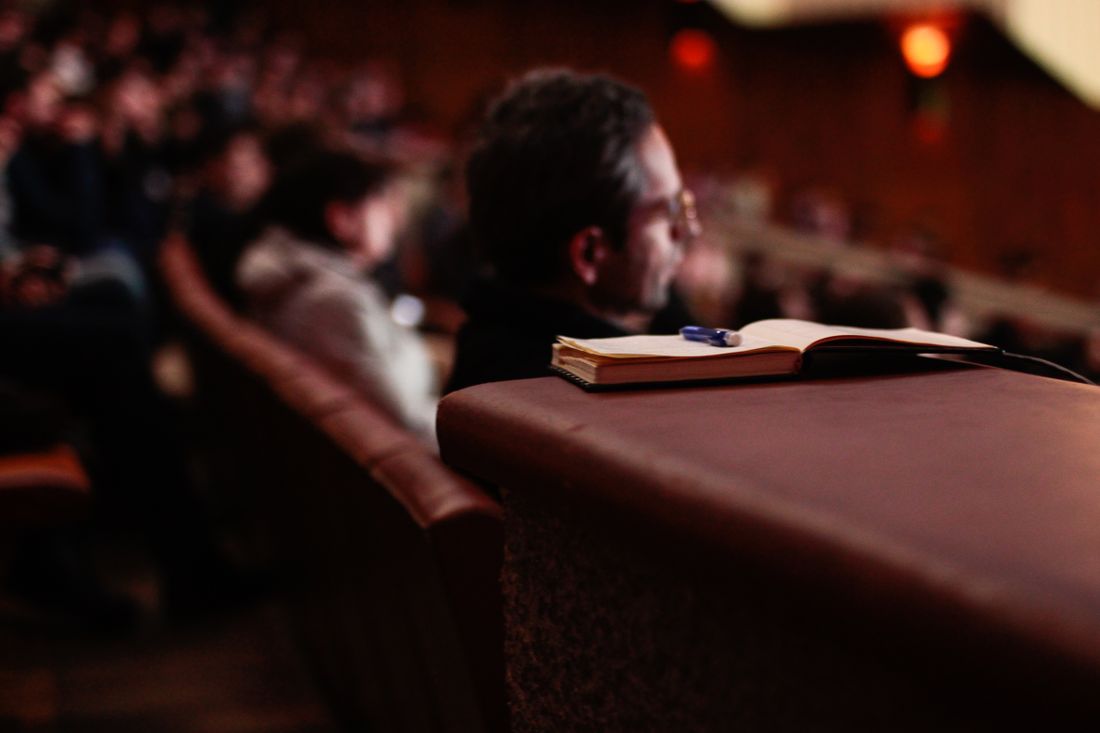
Photo by John-Mark Smith via Pexels.
The Demo Moment That Isn't a Person Talking
Some pitches include a real demo — a product on screen, a physical prototype held up to the room, a live app walkthrough — and that moment needs its own frame, not a wide shot of a founder gesturing at a laptop. It's often the most useful image in that founder's set.
A demo moment works because it shows the thing, not just the person selling it, which a generic stage photo can't do. That usually means a tighter frame on the object or screen itself when the founder holds it up, timed to the specific second it's visible and in focus rather than a continuous wide shot of the whole segment. For a screen demo, the frame needs to avoid legible interface text or specific numbers that might be outdated or confidential by the time the image gets used months later — the shape and gesture matter more than reading every pixel. Not every pitch has this moment, and forcing one where there isn't a real demo produces an awkward staged shot. When it's there, though, it's worth a deliberate frame of its own instead of getting absorbed into the general pitch coverage.
What a Founder Actually Needs Afterward — and What They Don't Get
A founder coming off a demo day pitch usually wants a strong action shot for their story, and often hopes a stage frame will also work as a professional headshot — it almost never does. Stage lighting, distance, and angle are built for a room, not for a face, so that expectation needs to be set honestly rather than promised.
What a stage shoot reliably delivers is energy: a founder mid-sentence, hand raised, genuinely present in their pitch, useful for a recap post or an internal update. What it doesn't reliably deliver is the tight, evenly lit, direct-to-camera frame a founder actually needs for an investor deck cover slide, a team page, or a press kit — that needs its own setup, close enough and controlled enough to hold up at a small size next to other founders' headshots. Saying this upfront, before the day, is more useful to a founder than letting them discover it when they open their delivered set looking for a bio photo and don't find one. If a program wants founders walking away with both, that's two different coverage plans, not one stretched to cover both jobs.
The Delivery Problem: Splitting One Shoot Into a Dozen Labeled Sets
One shoot day produces one set of cards, but delivery has to split into thirteen distinct pieces: one accelerator recap gallery and twelve individually labeled founder sets, each containing only that company's own images and clearly identified so nobody has to dig through the full day to find their three or four usable frames.
That split is a culling and organization problem more than a shooting one, and it's easy to underestimate before the day. Every frame needs to be tagged to a founder during or immediately after the shoot — by pitch order, company name, or both — because reconstructing who's in which photo from memory two days later, across a hundred near-identical stage frames, is where delivery timelines actually slip. A workable system tracks pitch order against a timestamp log kept live during the event, so culling starts from “founder six, minutes fourteen to twenty” instead of scrubbing the whole card looking for a face. The accelerator gets the full gallery; each founder gets a small, clean folder with only their own images in it, ready to use without wading through eleven other companies' pitches first.
What the Accelerator Should Decide Before the Day, Not During It
Three decisions determine whether demo day coverage works: whether founders get individual asset sets at all or just a shared recap, whether any founder gets a separate headshot-style setup before or after their pitch, and how images get labeled and delivered per founder. Deciding these during the event, under a tight schedule, is how galleries end up unsorted and founders end up with nothing usable.
These aren't complicated decisions, but they change how the day gets planned and staffed. A program that wants twelve clean founder sets needs that stated in the shoot brief, not assumed, because it changes crew position, shot variety, and the labeling system from the first pitch onward. A program that also wants headshot-grade frames needs a separate window built into the schedule — before doors, during a break, or after the program — since that can't happen on the fly between pitches. None of this adds meaningfully to cost if it's scoped upfront; it mostly adds a conversation before the day instead of a scramble during it. The accelerators that get this right treat the shoot brief the way they'd treat their own pitch coaching: specific, planned, and settled well before anyone's on stage.
Frequently Asked Questions
Do all twelve founders need to be shot the same way at a demo day?
No, and shooting them identically is what makes a demo day gallery feel repetitive. With one stage and one lighting state fixed, coverage should vary position, lens, the moment captured in each pitch, and whether a frame is a reaction shot or a straight pitch shot. Rotating those variables between founders, rather than repeating one wide composition twelve times, keeps each founder's set visually distinct even though the physical setup itself never changes.
Can a demo day photo double as a founder's headshot?
Rarely, and it's worth saying so before the day rather than after. Stage lighting, distance, and angle are built to cover a room, not to flatter a single face the way a controlled headshot setup does. A strong stage frame works well for a recap post or a pitch recap slide, but a founder who needs a headshot for a deck cover or team page needs a separate, dedicated setup — before the program, during a break, or afterward.
How does coverage capture the audience and investors, not just the founders on stage?
By deliberately turning away from the stage for part of the day, which only happens if it's planned for. A single shooter locked onto the podium the whole time never captures investor reactions or room energy. Positioning at the side or back of the room during a strong pitch, or assigning a second shooter to work the crowd, produces the audience images that make a recap read as a real event instead of a stage-only slideshow.
How do you organize a hundred photos from twelve pitches into sets each founder can actually use?
By tagging images to a founder during the event, not after. A live timestamp log tracking which company is on stage during which minutes turns culling into a lookup instead of a search — founder six, minutes fourteen to twenty — rather than scrubbing a full card of near-identical frames afterward. The accelerator gets one full recap gallery; each founder gets a small labeled folder containing only their own images, ready to use without digging through eleven other companies' pitches.
What should an accelerator decide before booking a demo day photographer?
Three things: whether every founder gets an individual labeled asset set or just a shared event recap, whether any founder needs a separate headshot-style setup outside the pitch window, and how sets get delivered and organized per company. Settling these in the shoot brief, not during the event, changes crew position, shot variety, and the labeling system from the first pitch on — the difference between twelve usable sets and one long, undifferentiated gallery.
Related Reading
Not sure if hourly or a package makes more sense for your event?
Tell us the expected length, and we'll run the actual numbers before you book.
See Event Coverage Packages