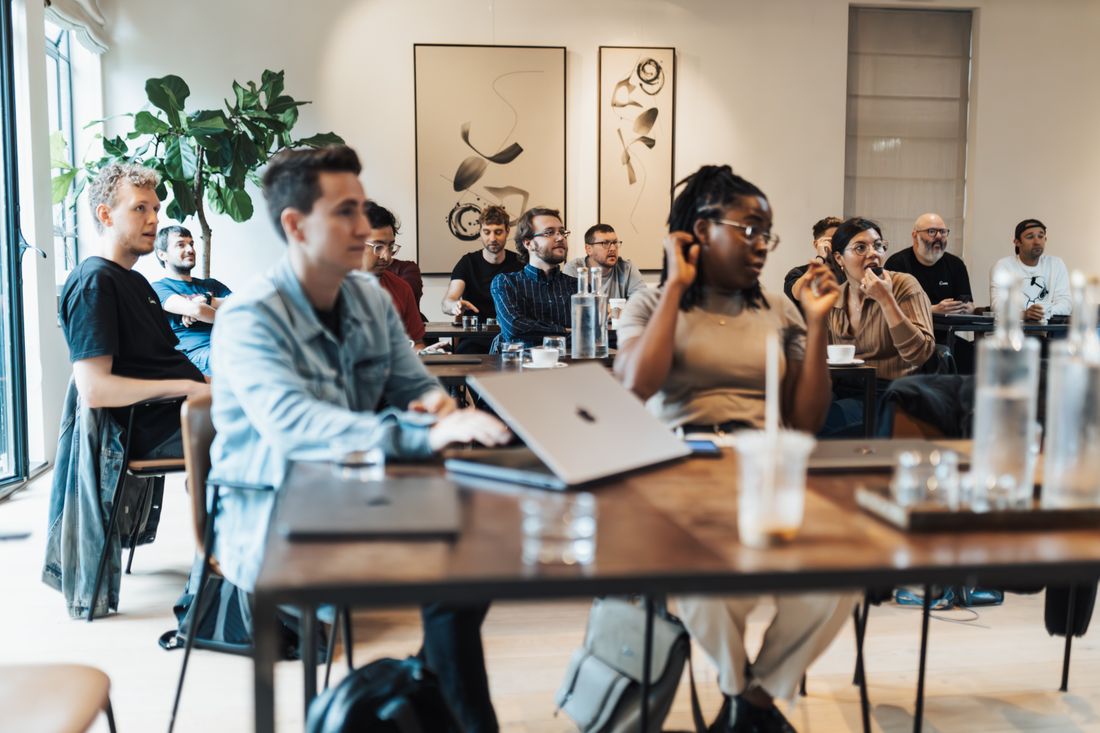
Photo by Matheus Bertelli via Pexels.
A hackathon looks simple to shoot on paper: one room, one guest list, one continuous event. That's exactly what makes it hard. There's no stage cueing the next moment, no new backdrop every hour, and no fresh group of people walking in after lunch. It's the same fifty or two hundred people, the same tables, the same overhead lighting, for twenty-four straight hours. A photo and video plan built around a schedule of stage moments doesn't hold up here, because there isn't one. Here's how coverage actually gets planned for a hackathon: as a set of visually distinct phases across the day, not a timeline, plus what that means for crew scheduling and consent when part of the event happens while people are asleep.
Hackathon photography and video coverage should be planned as visually distinct phases, kickoff, the long working middle, overnight, and the final push toward judging, rather than a timeline of stage moments, because the room, lighting, and people barely change on their own. Crew works in shifts, and overnight coverage needs a real opt-out for people who are effectively off duty.
Table of Contents
- Why Doesn't a Normal Event Timeline Work for Hackathon Coverage?
- What Should Coverage Focus on During Hackathon Kickoff?
- How Do You Keep the Long Working Middle From Looking Repetitive?
- What Changes About Coverage During the Overnight Hours?
- How Should Coverage Shift for Judging and Demos?
- How Should a Crew Be Scheduled Across a 24-Hour Hackathon?
- What Does Hackathon Photo and Video Coverage Actually Get Used For?
- Why Does an Overnight Hackathon Need a Real Photo Opt-Out?
Why Doesn't a Normal Event Timeline Work for Hackathon Coverage?
A normal event timeline doesn't work for hackathon coverage because a hackathon has one room, one lighting setup, and the same group of people for 24 straight hours, with no stage cues telling anyone when the next moment is coming. The plan has to track how the room's energy changes over time, not a printed schedule.
Most event coverage logic assumes stage moments: a keynote starts, a speaker changes, an award gets handed out, and the shot list follows those cues. A hackathon doesn't hand out cues like that. Teams sit at the same tables from Saturday morning through Sunday afternoon, working in the same gym or open floor under the same fluorescent or LED house lights the entire time. Nothing about the room itself changes enough on its own to keep a gallery from looking repetitive.
What does change is the energy in the room: people are louder and more social early, quieter and more focused mid-event, looser overnight, and visibly wired again as the deadline closes in. Planning coverage around those energy phases, instead of an agenda that doesn't exist here, keeps a full day of photos from reading as one frame repeated fifty times.
What Should Coverage Focus on During Hackathon Kickoff?
Kickoff coverage should focus on scale and social energy: the full room filling up, team formation happening in real time, organizers setting expectations, and the wide shots that establish what the event actually looks like before everyone sits down and disappears into laptops. This is the one phase with genuine movement and mixing.
Kickoff is the closest a hackathon gets to a normal event opening. People are standing, talking to strangers, sorting themselves into teams, and moving around a room that will look completely different in six hours. That makes it worth treating as its own distinct visual set: wide establishing shots of the crowd, candid shots of people meeting teammates for the first time, sponsor booths or table setups before anyone has cluttered them with cables and empty cans.
The mistake is treating kickoff as a warmup and saving the real effort for later. It's actually the only window where the room has this particular energy. Once teams sit down at their tables, that version of the event is gone, and every phase after it starts from a quieter, more static baseline.
How Do You Keep the Long Working Middle From Looking Repetitive?
The long working middle, roughly the bulk of the event where teams sit heads-down at the same tables for many hours, gets kept visually varied by changing distance, angle, and subject rather than waiting for something new to happen, because nothing structurally new is going to happen. Vary the frame, not the moment.
This phase is the real test of a hackathon coverage plan, because it's the longest stretch and the least eventful one. A wide shot of a table of laptops looks fine once. Shot the same way every ninety minutes for eight hours, it becomes the same photo over and over. The fix is deliberately rotating coverage style: a tight detail shot of hands on a keyboard, a wider environmental frame from across the room, a candid reaction to a bug or a breakthrough, a shot from a different table entirely.
Treating the middle as several short visual assignments, rather than one long open-ended shoot, keeps a shooter from defaulting to the easiest repeatable frame. It also produces a gallery that actually shows the range of what twelve hours of building looks like, instead of one representative image copied in spirit five times.
What Changes About Coverage During the Overnight Hours?
Overnight coverage changes on two fronts at once: the technical problem of shooting in whatever ambient light a venue leaves on after most fixtures dim or shut off, and the human reality that people are tired, unguarded, and not performing for a camera anymore. Both call for a lighter touch than daytime coverage.
Technically, overnight hours usually mean lower and more uneven light than the rest of the event, since many venues cut overhead lighting to a fraction of daytime levels once the main crowd thins out. That calls for faster lenses, higher ISO tolerance, and accepting some grain over blowing out a shot with an on-camera flash that would wake a room full of people who are finally quiet.
The human side matters just as much. Overnight is when the performance drops: people are in hoodies, half asleep at their keyboards, having the kind of unguarded conversation that never happens at 2 p.m. It's often the most honest footage of the whole event. It's also the footage that needs the most care about who's actually comfortable being in it, which is its own planning question covered later here.
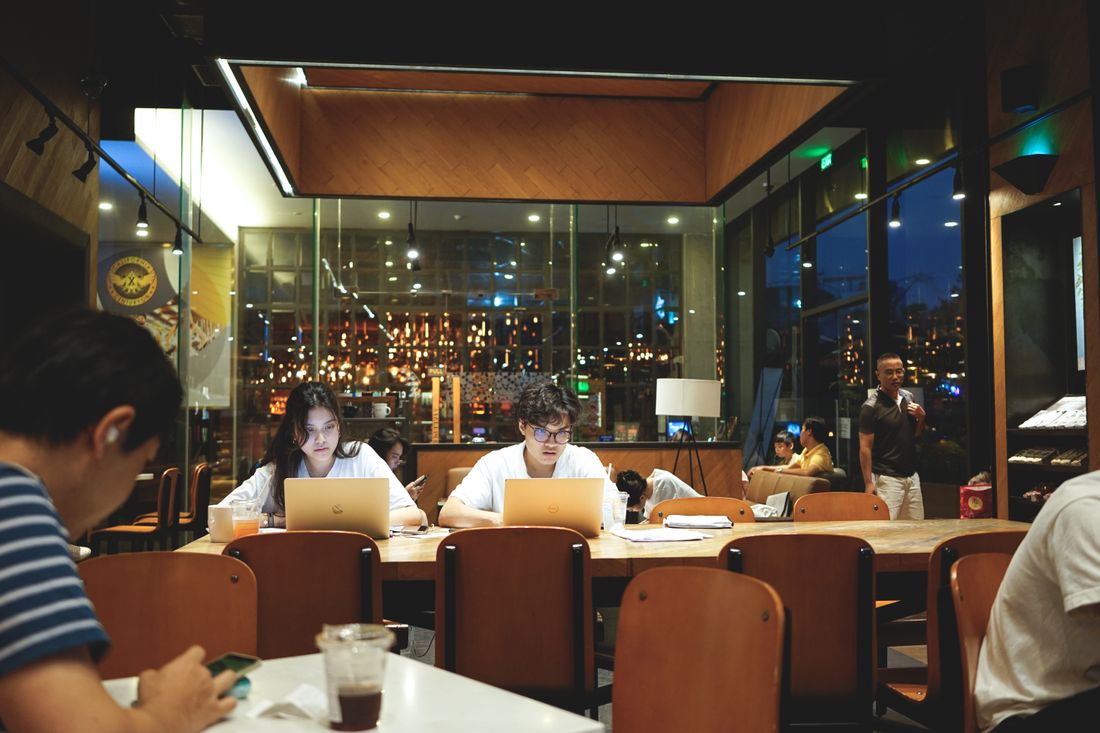
Photo by Q. Hưng Phạm via Pexels.
How Should Coverage Shift for Judging and Demos?
Coverage should shift from wide, ambient room shots to tighter, faster-paced coverage of presenters, judges, and reactions once judging and demos begin, since this phase is the visual payoff the rest of the day has been building toward. It looks and feels closer to a normal event again, briefly.
After hours of quiet, heads-down work, judging brings the room's energy back up: teams presenting under time pressure, judges reacting, teammates watching from the side visibly nervous about their own turn. That shift deserves its own coverage rhythm, closer to how a pitch competition or demo day gets shot than how the overnight middle does, moving fast between teams rather than settling into one long static setup.
The mechanics of covering pitches and judging in real depth, camera positioning relative to judges, timing cutaways to a countdown clock, capturing a winning reaction, are their own subject and covered in a separate post on demo day coverage. What matters here is simply recognizing this phase needs a different plan than the eighteen hours before it, not an extension of the same wide room shot.
How Should a Crew Be Scheduled Across a 24-Hour Hackathon?
A 24-hour hackathon should be staffed in shifts, not by one shooter working the entire event, because judgment and attention both decline over a full day and night without rest, and the overnight and closing phases, the two that matter most, are exactly when an exhausted single shooter performs worst.
One person can technically be present for 24 hours. Whether they're producing usable work during hour twenty is a different question. Fatigue shows up as missed moments, slower reaction time to what's actually happening in the room, and a narrowing instinct toward the easiest repeatable shot, the exact failure mode this kind of coverage is trying to avoid in the first place.
A shift structure, two or more people splitting the day into defined blocks with a real handoff between them, covers more of the event's actual range and keeps each shooter working during hours they're actually sharp. The specific mechanics of deciding crew size for an event like this, and when a second person is worth it versus overkill, are covered in more depth in a dedicated post on second shooters.
What Does Hackathon Photo and Video Coverage Actually Get Used For?
Hackathon footage mostly ends up serving three audiences afterward: sponsors who want a recap proving their name showed up at a real, well-attended event, a company's own recruiting content showing what its engineering culture actually looks like, and next year's organizers who need promotional material to sell the event before registration opens again.
Knowing which of those three matters most for a given hackathon should shape the shot list before the event starts, not just the selects afterward. A sponsor recap wants branding visible in context, booth interactions, and a wide sense of scale and turnout. Recruiting content wants people looking genuinely engaged in work, not staged productivity. Next year's promo wants a small number of striking, high-energy frames that sell the feeling of the event to someone who's never been.
Those three uses pull toward slightly different shots. Planning for all three during the day, rather than realizing afterward the gallery only really serves one of them, is what makes a single day of coverage do triple duty instead of getting reshot in spirit next year.
Why Does an Overnight Hackathon Need a Real Photo Opt-Out?
An overnight hackathon needs a real opt-out because part of the event happens while people are exhausted, unkempt, and sometimes asleep at their table or in a designated rest area, effectively off duty at what is still a work event. Consent handled at check-in, honored consistently overnight, is a production step, not a courtesy.
A person at a 2 p.m. kickoff, dressed and alert, is a low-stakes photo subject. That same person at 4 a.m., asleep on a beanbag or slumped over a keyboard, is a different situation, and being caught that way in recruiting or sponsor content is a real thing to protect against, not a hypothetical. Most people at a hackathon are fine being photographed working. Not all of them are fine being photographed unconscious.
The fix is the same simple mechanism used at other long-format events: an opt-out communicated clearly at check-in, something visible like a wristband or badge marker, briefed to whoever's shooting overnight. Deciding this before the event starts, rather than guessing in the moment at 3 a.m., is what keeps the honest, unguarded overnight footage from becoming a problem for the people in it.
Frequently Asked Questions
How do you keep hackathon photos and video from all looking the same after 24 hours?
Coverage gets planned around energy phases instead of a fixed schedule: kickoff, the long focused middle, overnight, and the final push toward judging. Each phase gets its own visual approach, wider shots early, tighter candid work during the middle, deliberate low-light setups overnight, and faster-paced reaction shots near the deadline. Rotating through those phases, rather than repeating the same wide room shot every hour, keeps a full-day gallery from reading as one frame copied fifty times.
How should a crew be scheduled for a 24-hour hackathon?
A single shooter working a full 24-hour hackathon alone gets tired, and tired shooters miss the overnight and closing phases that matter most. A shift structure, two or more people splitting the day into blocks with a real handoff and rest between them, covers more of the event's range and keeps judgment sharp during the hardest hours to shoot well. Crew size and scheduling mechanics for events like this are covered in a dedicated post on second shooters.
What actually happens to hackathon photos and video afterward?
Most of it ends up serving three audiences: sponsors who want a recap showing their name at a real, well-attended event, a company's own recruiting content showing what its engineering culture actually looks like, and next year's organizers who need promotional material to sell the event before registration opens. Knowing which of those three matters most for a given hackathon should shape what gets shot during the day, not just what gets selected from it afterward.
Do people at a hackathon need to consent to being photographed overnight?
Yes, and it matters more here than at most events. People are exhausted, unkempt, and sometimes asleep at their table or in a rest area, effectively off duty at what is still a work event. A clear opt-out, communicated at check-in and honored consistently overnight, protects people from appearing in recruiting or sponsor content in a moment they never agreed to share, and it should be planned before the event starts, not improvised at 3 a.m.
Does hackathon coverage need to include the judging and demo presentations?
Yes, but that phase deserves its own plan rather than being treated as an extension of the long working middle. Coverage should shift to tighter, faster-paced shots of presenters, judges, and team reactions, since judging is often the visual payoff of the whole event. The specific mechanics of covering pitches and demo-day judging are covered in a separate post on demo day coverage, since the two formats overlap in that one phase.
Related Reading
Not sure if hourly or a package makes more sense for your event?
Tell us the expected length, and we'll run the actual numbers before you book.
See Event Coverage Packages