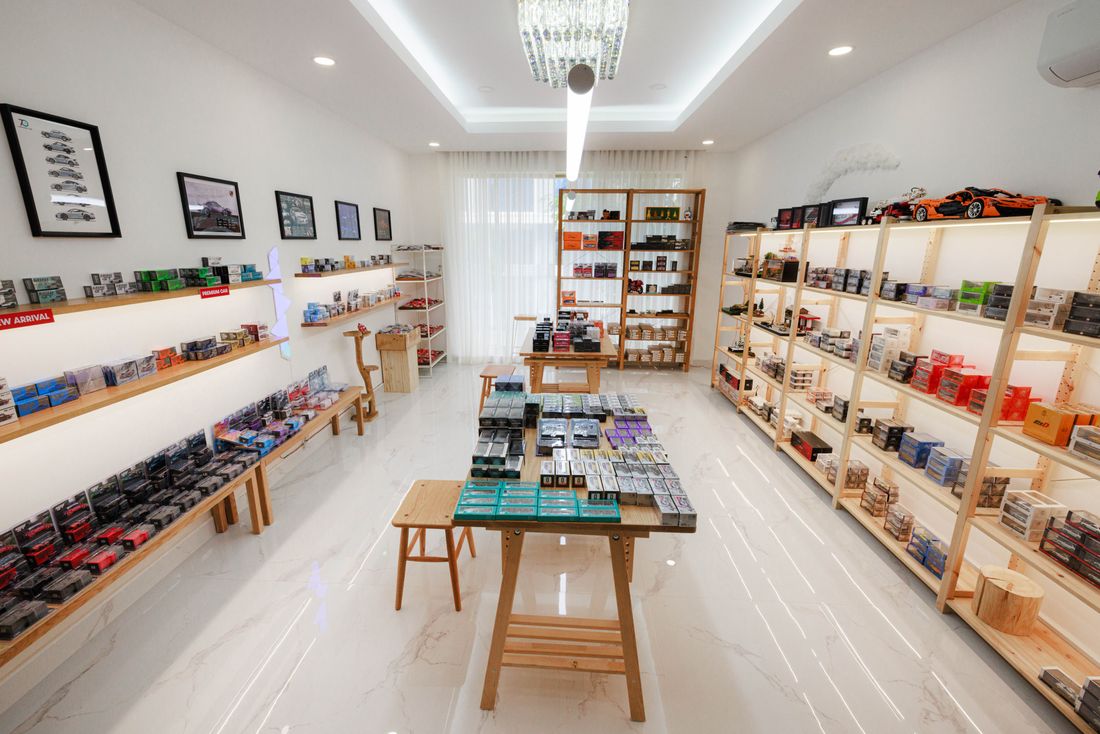
The empty store is the shot that disappears first. Once the doors open, the space is never again as clean as it was at 9am, and the frame that shows what the brand actually built is gone for good — replaced by photos of it full of people, which is a different and equally necessary picture.
A retail flagship opening needs three distinct sets: the clean empty store before doors, the customer-facing moment with the queue and first arrivals, and the storefront exterior with signage. Press and social use them differently, and only the first one is impossible to recreate later in the day.
Table of Contents
The Empty Store Is the Shot With a Deadline
Before doors, a new flagship is in a condition it will never be in again: full stock, untouched displays, no fingerprints, no shopping bags, no crowd. Those frames are what a brand's own archive, a design portfolio, and most press placements actually want, and there is a window of roughly an hour to get them.
The practical requirement is arriving well before the event brief suggests. Opening-day schedules tend to be written around the ribbon cutting and the guest arrival, which places a photographer on site about ninety minutes too late to capture the store in a clean state. That is a briefing decision, not a photography one.
It is worth being specific about what the empty-store set includes: a wide of the full space, the key fixture or feature wall, the product presentation as designed, any architectural detail the brand paid for, and the view from the door as a customer sees it. Those five frames account for most of the reuse over the following year.
Staff photographs belong in this window too, before the room fills. A team portrait in the finished store, taken while everyone still looks composed, is an asset the brand will use on a careers page and a location listing for years. An hour later it becomes impossible to arrange.
The Exterior Frame Everyone Assumes Someone Took
A storefront with visible signage is the image that proves this store exists at this address, and it is the one that runs in local press, on maps listings, on the brand's own location page, and in every future announcement about the location. It also gets forgotten remarkably often, because the exterior is where everyone is standing rather than shooting.
It usually needs two versions: one clean, ideally before the crowd builds, and one alive with the queue or arrival energy. The clean version has the same deadline problem as the empty interior, and the busy version cannot be staged later.
Light matters here more than anywhere else in the day. A storefront facing the wrong direction at noon can be a difficult frame, and the fix is usually scheduling a few minutes at a better hour rather than fighting it during the event. That is a five-minute conversation during planning and an unsolvable problem on the day.
An evening version is worth adding wherever the storefront is lit. Illuminated signage and a warm interior seen from a dark street is one of the strongest images a retail location ever gets, and it cannot be captured at the same hour as the opening itself.
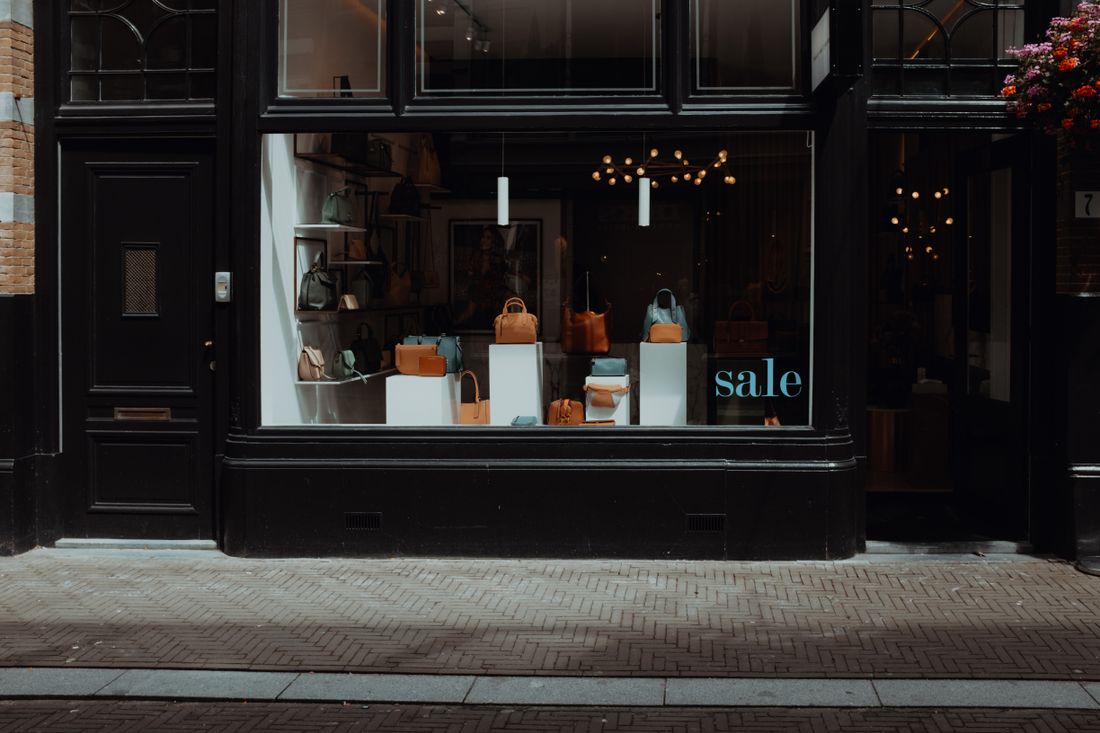
Photo by Tasso Mitsarakis via Pexels.
The Queue, the Doors, and the First People Through
The customer-facing story of an opening is turnout and reaction, and it lives in three moments: the line before doors, the actual opening, and the first people inside interacting with the space. These are what social and press use to establish that the launch worked.
The queue frame is worth planning deliberately, because a line photographs very differently from the front, the back, and across the street. The version that reads as a genuine crowd usually requires the photographer to be outside and slightly removed at a specific moment, which conflicts with being inside for the doors opening — a real reason to consider a second shooter on a flagship day.
First customers inside are the frames that make a store look like a store rather than a set. People handling product, staff assisting, a bag being handed over. That last one in particular is the image that says commerce is happening, and it is easy to miss during the busiest twenty minutes of the day.
This Is Not a Ribbon Cutting
Retail openings often include ceremonial elements — a ribbon, remarks, a founder, a local official — but the ceremony is not the deliverable. A groundbreaking or civic ribbon cutting exists to record an institutional milestone. A flagship opening exists to sell things, and its coverage is judged on whether the store and the customer response look compelling.
That difference should shape time allocation. If a photographer spends the first hour on speeches and handshake photos, the empty store is gone, the queue has dispersed, and the resulting gallery is a corporate event set that happens to be in a shop.
The ceremonial frames still matter for local press and internal use, and they are cheap once the priorities are ordered correctly: they happen at a known time, in a known place, with people who are expecting a camera. It is everything else that requires planning.
What Video Adds at a Store Opening
Video's strongest contribution at a retail opening is movement through the space — a walk-through of the finished store before doors, and the same route once it is full. That pairing communicates what a still cannot, which is what the store feels like to be inside.
The second useful piece is short vertical footage of the doors opening and the first customers entering. It is the moment social actually wants, it is over in about fifteen seconds, and it requires someone positioned for it in advance rather than reacting to it.
What rarely earns its cost is a full produced launch film with interviews and a score. Those take weeks to finish, by which point the opening is no longer news, and the same budget spent on faster, simpler coverage usually reaches more people while the moment is still live.
Product Detail Is a Different Job From Event Coverage
Brands frequently expect an opening-day gallery to include usable product photography, and that expectation deserves an early conversation. Event coverage of merchandise on a shelf is not the same as product photography — the light is the store's, the angles are opportunistic, and nothing is styled.
What opening-day coverage can honestly deliver is product-in-context: how the merchandise sits in the space, how the presentation reads, what a customer sees. That is genuinely useful for social and for the brand's own record, and it should be framed as such rather than as a substitute for a controlled product shoot.
If real product imagery is needed, the efficient answer is usually a short dedicated session in the finished store before opening day, when the space is complete but nobody is in it. That is a separate hour with a separate purpose, and it produces a far better result than trying to extract it from an event gallery.
Merchandising details are worth a short pass regardless: a well-built display, a materials choice, a fixture the brand invested in. Those frames tend to be reused by the design and construction teams as well as marketing, which is a second internal audience nobody usually briefs for.
Speed Matters More Here Than at Most Events
Retail openings have an unusually short news window. Local press, social, and any partner or landlord announcement all want images within a day, sometimes within hours, and a gallery delivered the following week has missed most of its purpose.
That argues for planning a same-day selects delivery into the booking rather than treating it as a rush request afterward. A small batch of edited frames — the storefront, the crowd, the interior, the ceremonial moment — covers the immediate need while the full set follows on a normal schedule.
It also affects how the day is shot. A photographer who knows a same-day batch is expected will work with that in mind, capturing a small number of clearly usable frames early rather than assuming everything gets sorted in a long edit. That coordination is worth more than an extra hour of coverage on this specific kind of event.
It is worth agreeing which specific frames belong in that first batch rather than leaving it to judgment under pressure. Storefront, a wide interior, the crowd, and one detail is usually the right four, and naming them in advance means the batch goes out while the news window is still open.
Frequently Asked Questions
What is the most important shot at a retail store opening?
The clean empty store before doors open. Full stock, untouched displays, no crowd — a condition the space will never return to. It is what the brand archive, design portfolio, and most press placements actually use. Everything else on opening day can be captured at some point during the event, but the empty-store window closes about an hour before guests arrive.
How early should a photographer arrive for a flagship opening?
Well before the schedule suggests, typically at least ninety minutes before doors. Opening-day run sheets are usually written around the ribbon cutting and guest arrival, which puts a photographer on site too late for the clean interior and clean exterior frames. That timing is a briefing decision rather than a photography problem, and it is the most common regret afterward.
Do you need two photographers for a store opening?
Often yes, because the queue outside and the doors opening from inside happen simultaneously and are both essential. The frame that makes a line read as a genuine crowd usually requires being outside and slightly removed at exactly the moment someone else needs to be inside. A flagship day is one of the clearer cases for a second shooter.
Can opening-day coverage replace product photography?
No, and it is worth settling that expectation early. Event coverage of merchandise uses the store's light and opportunistic angles with nothing styled. What it delivers honestly is product-in-context — how the presentation reads and what a customer sees. For real product imagery, a short dedicated session in the finished store before opening day works far better.
How fast do retail opening photos need to be delivered?
Faster than most events. Local press, social, and partner announcements typically want images within a day, sometimes within hours, so a same-day selects batch should be planned into the booking rather than requested afterward. Knowing that batch is expected also changes how the day is shot, since the photographer captures clearly usable frames early instead of relying on a long edit.
Related Reading
Opening a store this season?
Tell us the doors time and we'll work backward from it — empty store, storefront, queue, and a same-day batch for press.
See Event Coverage