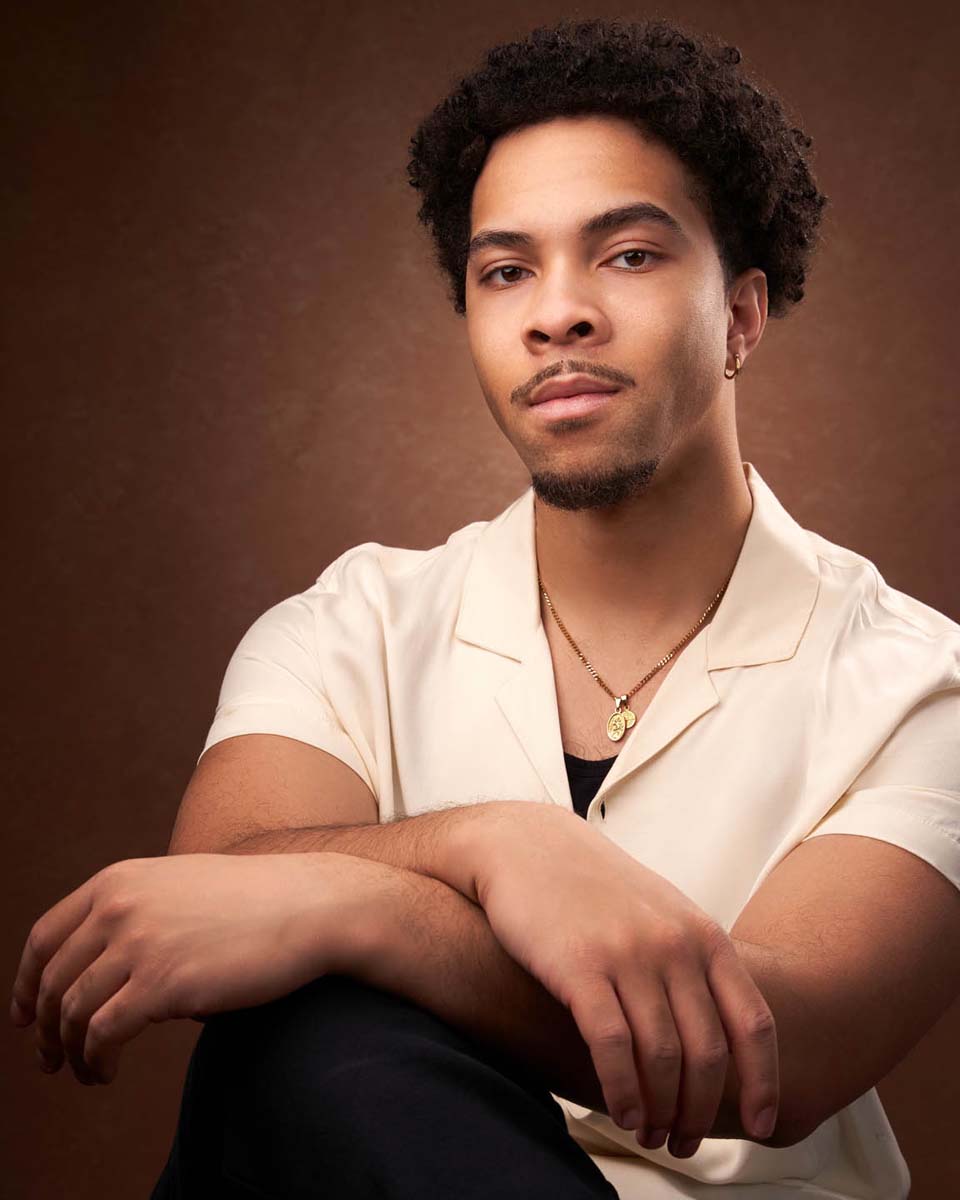
Photo: Core Visuals NYC
A private jet's cabin never actually appears in a charter operator's headshot set, and that's not an accident. The client paying for discretion is the same client who'll notice if a portrait gives away more than a name and a title should. Every choice in this set (who's in it, what's behind them, how formal the wardrobe reads) is quietly answering a question the client never asks out loud: can this operation keep my flight as quiet as it keeps its photos?
A charter or fractional-ownership headshot set has to read discreet and operationally serious at once: no client names, no tail numbers, no recognizable aircraft in the background, paired with wardrobe and posture steady enough for a safety audit. It typically covers the founder, charter sales leads, the director of operations and chief pilot, and a safety or compliance lead.
Table of Contents
- Why this headshot set has two jobs, not one
- Who actually needs to be in this set
- Client-facing sales and flight operations don't photograph the same way
- Wardrobe that reads discreet, not corporate-generic
- The discretion problem: what can never appear in the frame
- Where these portraits actually get used
- The turnover clock on a charter sales desk
- How to brief this shoot so it holds up
Why this headshot set has two jobs, not one
A charter operator's headshot set has to do two things most business headshots never have to reconcile: read as discreet enough that no client could ever place themselves in the frame, and read as operationally serious enough that a broker, insurer, or safety auditor trusts the person in the photo.
Most corporate headshots stop at approachable-and-competent. This one adds a third constraint: the client buying private aviation is paying for discretion as much as for the airplane, and imagery that leans into luxury-marketing gloss (hard rim light, a glossy cabin backdrop, wardrobe styled more like a concierge than an operator) undercuts the seriousness the rest of the business is trying to project. The register that actually works sits between two failure modes. Too polished reads like a lifestyle ad nobody in the room is selling. Too casual reads like the operator hasn't thought hard about who's making decisions on a given flight. What lands is warm, direct, and unhurried, the same tone a chief pilot would want from whoever's handing over a preflight checklist, not a tone borrowed from a watch ad.
Who actually needs to be in this set
Four roles typically make the cut: the owner or founder, charter sales and client-service leads who talk to buyers directly, the director of operations and chief pilot who run the flying side, and a safety or compliance lead whose portrait quietly signals the operation takes audits seriously.
The founder's photo usually anchors the About page and any press mention, so it carries the most weight and the least room for a bad day. Charter sales and client-service leads are the faces a prospective client sees before ever boarding anything, which makes their portraits closer to a sales asset than an org-chart formality. The director of operations and chief pilot rarely appear on a marketing page at all. Their photos live on operator profiles, safety-audit documentation, and broker platforms, where the audience is evaluating competence, not warmth. A safety or compliance lead is easy to skip and shouldn't be; on a broker's due-diligence page, that face next to a real name does more trust-building than another paragraph of policy language.
Client-facing sales and flight operations don't photograph the same way
Charter sales and client-service portraits can carry a touch of warmth and eye contact built for a first impression, because that's the register a buyer expects before trusting anyone with a six-figure charter decision. Operations and safety portraits need to read calmer and more procedural (competence first, personality second).
That's a real split, not a stylistic preference. A sales lead's photo is doing persuasive work. It needs a genuine, slightly forward expression, because the person looking at it is deciding whether to trust a stranger with their family or their board. A chief pilot or ops director's photo is doing evidentiary work instead: steady eye line, neutral expression, nothing performative, because the person looking at it is checking a box on an operator-vetting form, not shopping. This isn't the same as the operational or field register used for logistics and supply-chain teams, where the photo is proving hands-on competence in a physical environment; here the environment stays invisible, and the seriousness has to come entirely from posture and expression.
Wardrobe that reads discreet, not corporate-generic
Wardrobe for this set skips both extremes: no epaulets or aviation-costume signaling for anyone who isn't flight crew, and no runway-adjacent tailoring that reads like a private-jet ad. Dark, well-fitted suits or blazers for client-facing roles and simple collared shirts for operations keep the focus on the face, which is the actual point.
A working chief pilot photographed in uniform is honest and appropriate. That's their actual job. A sales lead photographed in a captain's jacket they don't wear to work is the kind of detail that erodes trust the moment a client who's flown enough notices it doesn't match reality. The safer default for anyone off the flight deck is a suit or blazer in a dark, neutral color, the same register a discreet private bank or a boutique law firm would use, since the buyer evaluating a charter program is often the same buyer evaluating those other services. Avoid anything with a visible watch brand, cufflink monogram, or lapel pin that reads as a status marker rather than a professional one; the point of this wardrobe is that nobody should remember it.
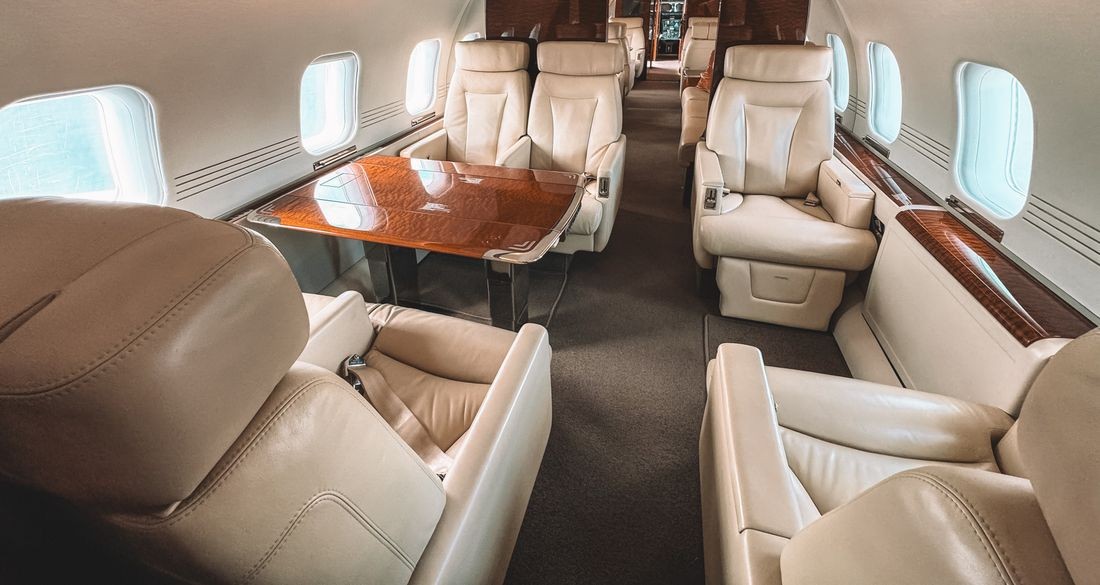
Photo by Katie Cerami via Pexels.
The discretion problem: what can never appear in the frame
The hard rule for this set is simple to state and easy to violate by accident: no client names, no tail numbers, and no recognizable aircraft anywhere in a portrait's background, because any of those can identify a real flight, a real passenger, or a real route to anyone who knows what to look for.
Tail numbers are the obvious trap, but the subtler one is a background specific enough to be searchable (a hangar with a visible operator logo other than the one being photographed, a ramp shot at an airport with a distinctive control tower, a lounge with recognizable branding from a partner FBO). The safer backgrounds are the ones that could be almost anywhere: a neutral interior, an unmarked tarmac at a distance, soft daylight through a window. None of this is about hiding the business. It's about making sure the photo can't accidentally do a client's job of confirming who flew where, which is exactly the kind of detail a charter buyer is paying to never have to worry about.
Where these portraits actually get used
These photos rarely live only on a team page. Broker platforms and operator-vetting profiles pair them with a compliance record, safety-audit documentation sometimes requires a current photo with each name and role, proposal decks use them to make an unfamiliar operator feel known, and LinkedIn carries them for as long as someone holds the job.
Each use case has a slightly different bar. A broker's vetting page rewards a calm, credible portrait over a stylish one, because the person reading it is comparing operators, not shopping for a brand feel. A proposal deck for a new jet-card client benefits from a touch more warmth, since it's often the first face a prospective buyer sees before a call. Safety-audit documentation cares about almost nothing except that the photo is current and the person is identifiable. This is not the place for a heavily styled or aggressively retouched image. Knowing which use case a given role's photo will mostly serve is a useful way to decide how far toward warmth or toward gravity that particular portrait should lean.
The turnover clock on a charter sales desk
Charter sales desks turn over faster than most departments in this industry, and every departure leaves a stale headshot sitting on a broker platform or a proposal template until someone notices. A set that's accurate on day one starts drifting within a year, which makes this one of the few headshot categories where a fixed refresh cadence earns its keep.
A stale photo in this specific category isn't just embarrassing. It's a small credibility problem, because a client or broker on a video call with someone who looks noticeably different from their profile photo notices, and noticing anything off is exactly what a discretion-focused buyer is primed to do. The operations and safety-adjacent roles turn over more slowly, so those portraits can run on a longer cycle without much risk. Sales and client-service headshots are the ones worth checking at every hire, departure, or title change, since those faces do the most first-impression work and are the most likely to go out of date without anyone flagging it.
How to brief this shoot so it holds up
The useful brief for this shoot names the roles in advance, flags which backgrounds and props are off-limits before anyone shows up, and separates client-facing subjects from operations subjects so each group gets direction suited to the register they actually need. A vague brief produces a set that looks fine individually and inconsistent as a group.
Worth deciding ahead of time: whether the chief pilot and safety lead photograph in uniform or in business dress, whether any background needs to be shot far enough back that a tail number or hangar logo can't be identified even after cropping, and whether the founder's portrait should visually match the sales team's set or stand slightly apart as a leadership photo. None of these are hard questions, but they're easier to answer before the shoot than to fix afterward, and a photographer who's shot this category before will ask about them without being prompted. The goal isn't a flashy set. It's one that a broker, an auditor, and a nervous new client all read the same way: this operation is careful about everything, including its own photos.
Frequently Asked Questions
Should a chief pilot be photographed in uniform for a headshot set?
Yes, when the photo will appear on operator profiles, safety-audit documentation, or broker-vetting pages, since uniform photography for an actual working pilot is accurate rather than costume-like. The same choice doesn't extend to sales or client-service staff, who shouldn't wear flight-crew styling they don't actually work in. If a chief pilot's portrait also appears on marketing pages, a simple, neutral uniform photo still reads fine there and avoids maintaining two separate versions of the same face.
Can a charter company's headshots show the interior of a jet?
An empty cabin with no visible tail number, registration marking, or partner branding is generally safe, since it establishes context without identifying a specific aircraft or flight. Anything showing a passenger, a visible door number, or an interior distinctive enough to match a public listing crosses into identifiable territory and should be avoided. When in doubt, a generic interior or a distant, unmarked ramp shot is the safer choice for a discretion-focused brand.
How often should charter sales headshots be updated?
Sales and client-service headshots are worth refreshing at every hire, departure, or title change, since those roles turn over faster than operations and do the most first-impression work on broker platforms and proposal decks. Operations and safety-lead portraits can run on a longer cycle, since those roles change less often. A full-set refresh every couple of years catches anything smaller updates missed, but it shouldn't be the only trigger.
Does a safety or compliance lead really need a professional headshot?
Yes, on a broker's due-diligence page or an operator-vetting profile, a real photo next to a real name does more trust-building than another paragraph of policy language, since it makes an otherwise abstract compliance function feel accountable to an actual person. Skipping this role is a common gap, and it's an easy one to close in the same session as the rest of the leadership set.
What's the biggest mistake in private aviation headshots?
Leaning into luxury-marketing gloss (hard rim lighting, a styled jet-cabin backdrop, wardrobe that reads more concierge than operator) when the actual buyer is evaluating discretion and operational seriousness, not lifestyle appeal. The second most common mistake is a background specific enough to be identifiable, like a hangar with a visible operator logo or a ramp shot near a recognizable tower, which undercuts the entire point of a discreet set.
Related Reading
Booking headshots or a brand video for your team?
Tell us how many people and whether you need photo, video, or both, and we'll send back a fixed price with the volume discount already applied.
See Headshots & Brand Videos