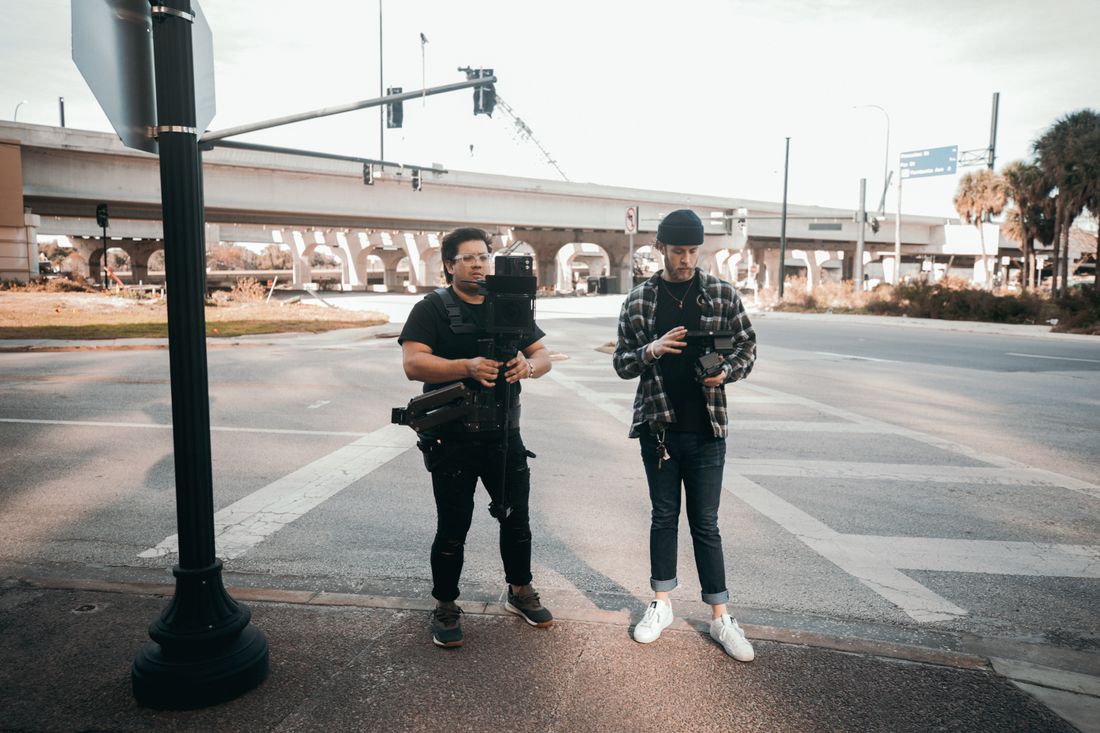
Photo by Kyle Loftus via Pexels.
Most people who reach the point of knowing they need both photo and video skip straight to comparing photographers against videographers, as if that's still the open question. It isn't. Once both formats are decided, what actually determines the shoot is whether one crew carries both cameras or two independent vendors each show up to do their own job. Those are different bookings with different failure points, and the honest tradeoffs between them rarely get said out loud — mostly because whoever's pitching either structure has an obvious reason to make their own setup sound like the safer one.
Whether to hire one crew for both formats or two specialists comes down to coordination, not taste. One vendor means one shot list, one timeline, one point of contact. Two specialists add depth but also two schedules and two galleries. The deciding question: which format is the primary deliverable, and which is supporting?
Table of Contents
- You already know you need both — now the real decision is who shoots it
- The most common failure: two crews chasing the same shot
- When one crew's equipment works against the other's shot
- Two delivery timelines mean two galleries, two rounds of waiting
- Who owns the shot list when two vendors are both working it
- When something's missing afterward, who do you call
- The honest case for hiring two specialists instead
- The one question that resolves most of these calls
You already know you need both — now the real decision is who shoots it
Once someone knows they need both photo and video for an event, the question that actually decides the booking isn't which format — it's whether one crew shoots both or two separate vendors each shoot one. That's a coordination and cost decision, not a taste decision, and it changes how the whole shoot day runs.
People researching photo-and-video bookings tend to compare photographers to videographers, when that question is already settled once you know you want both. What's left is structural: does one crew carry both cameras, or do you hire a photographer and a videographer as two independent vendors who happen to work the same event? Those two setups produce different shoot days, different invoices, and different failure points.
One combined crew usually means one point of contact, one schedule, and gear chosen not to compete with itself. Two specialists usually means two people fully dedicated to their own format, with nothing splitting their attention — but also two calendars, two contracts, and two sets of equipment sharing the same room. Neither is automatically right. This piece assumes you've already answered the earlier question of whether you need both formats — if not, that decision comes first.
The most common failure: two crews chasing the same shot
The most common problem with two separate vendors isn't quality — it's redundancy. Both crews instinctively move toward the best angle for the same big moment, because that's their job, and both end up covering the exact same second from close to the exact same spot while other things happening in the room go uncovered.
A toast, a ribbon cutting, an award handed across a stage — these are the moments every vendor knows matter, so every vendor gravitates toward them without being told to. Two independently-run crews don't have a mechanism for splitting up coverage in the moment unless someone built one in advance. The photographer and the videographer both want the clean sightline to the podium, so they end up shoulder to shoulder, and the guest reaction three tables back, or the room filling in before doors opened, goes unshot because neither crew was assigned to it.
One combined crew doesn't have this problem by default — it still needs a plan — but there's one team making the call in real time instead of two teams each protecting their own coverage of the same five seconds.
When one crew's equipment works against the other's shot
Two independently-run crews also tend to work against each other physically. A videographer's on-camera light spills into a photographer's frame and blows out a shot; a photographer's flash pops into a video take and ruins the exposure; a boom mic or light stand ends up in the edge of a photo nobody notices until the edit.
This isn't a competence problem — both people can be excellent at their own format and still collide, because neither is watching what the other's equipment does to their shot. A flash timed perfectly for a still photo is a lighting error in the video rolling next to it, and a continuous video light can just as easily wash out a photo from a different angle. Positioning solves most of this, but it has to be planned — and two separately-hired vendors usually meet for the first time on event day, with no shared runup to work out where each will stand.
A single crew shooting both formats plans this in advance by default, because it's the same team choosing both the photo and video setup at once — not because one vendor structure is more careful than the other.
Two delivery timelines mean two galleries, two rounds of waiting
Hiring two vendors usually means two separate post-production timelines, which means two separate galleries and two separate delivery emails to track down. The photo gallery and the video cut rarely land on the same day, and each one carries its own review and revision window that has to be tracked separately.
A photographer typically culls and delivers on one schedule; a videographer edits and delivers on a different one, because the two workflows don't share software, don't share a review process, and often don't share a sense of how fast the other one moves. That's not a flaw in either vendor — it's just two independent businesses running their own production pipeline. The result on your end is a photo gallery link one week and a video file or link the next, sometimes further apart than that, each needing its own approval pass before either is fully closed out.
One combined vendor doesn't guarantee same-day delivery of both, but it does mean one team is managing both timelines against each other, which is usually enough to keep the gap from stretching into two separate follow-up threads you have to manage yourself.

Photo by Jakub Zerdzicki via Pexels.
Who owns the shot list when two vendors are both working it
When two vendors both work an event, the shot list is the thing most likely to fall through the middle. Each assumes the other has the harder or more specific shots covered, so both default to easy, obvious coverage — and specific requests, like a particular sponsor logo or a certain executive, quietly go unassigned.
A shot list sent to two separate vendors is really two shot lists unless someone explicitly divides it, because each person reads it through their own format and assumes their counterpart is handling anything that overlaps. That's how a "get a shot of the check presentation" line item ends up either doubled or, more often, missed entirely — each vendor assumed it was covered because it seemed obvious enough that surely someone was on it.
With one crew, the shot list has one owner by default, because there's only one team reading it and deciding how to split the coverage between the photo and video roles. That doesn't make the list itself better — it just removes the gap where "someone else has this" quietly becomes "no one has this."
When something's missing afterward, who do you call
If a shot turns out to be missing after the event, the honest question is who you call, and with two independently-hired vendors, the answer is often unclear — each one can reasonably say it wasn't specifically theirs to cover, and neither is technically wrong.
That's not either vendor acting in bad faith. Two separate businesses, each responsible only for their own format, genuinely don't share accountability for coverage that fell in the gap between them — the photographer wasn't hired to guarantee video existed of a moment, and the videographer wasn't hired to guarantee a still photo of it. Sorting out what happened after the fact usually means two separate conversations with two separate people who each remember the day from inside their own format.
With one vendor, there's one contract and one team responsible for both outputs, which means one conversation instead of two, and no ambiguity about whose job the missing shot was. That single point of contact is often the more practical reason people consolidate to one crew — not lower cost, just fewer people to chase down afterward.
The honest case for hiring two specialists instead
Two specialists is genuinely the better call in a few real situations: when the video needs its own creative direction beyond documenting the event, when the event is large enough that both formats need real depth of coverage at once, or when there's an existing vendor relationship worth keeping rather than replacing for the sake of consolidation.
A brand film, a recap built around interviews and a distinct visual style, or anything where the video is its own creative project rather than a record of the event usually benefits from a dedicated director and editor thinking about video specifically, not a generalist covering it alongside stills. A very large event — multiple simultaneous sessions, several rooms running at once — can also need more people in more places than a single combined crew can reasonably staff, regardless of format. And if there's already a photographer you trust and know, adding a separate videographer can beat replacing that relationship just to get everything under one vendor.
None of these make two vendors the default. They make it the right call in a specific, identifiable situation — not a hedge against the coordination problems above.
The one question that resolves most of these calls
The question that resolves most of this is simple: which format is the primary deliverable, and which is the supporting one? If one clearly matters more, choose the vendor structure that protects that format first, rather than treating both as equally weighted.
If the event's real purpose is the video — a keynote recording, a brand film — hire the format that needs the more specialized eye, and treat photo as supporting coverage, whether that comes from the same crew or a second person working around the video team's setup. If photos are what actually gets used afterward — headshots, a gallery, social content — the reverse applies. Whichever structure you choose, ask the same handful of questions before booking: who owns the shot list, what's the delivery timeline for each format, who is the single point of contact if something's missing, and has this vendor actually coordinated both formats together before, not just delivered each one separately.
Answering the primary-versus-supporting question first usually makes the one-vendor-or-two decision obvious on its own, without needing to weigh every tradeoff in the abstract.
Frequently Asked Questions
Is it cheaper to hire one vendor for both photo and video, or two separate specialists?
It depends on the vendors involved more than the structure itself, so treat any blanket claim about cost with suspicion. One combined crew often reduces coordination overhead — one contract, one invoice, one schedule to manage — while two specialists each price their own format independently. Ask both setups for a quote against the same event before assuming either is automatically less expensive; the honest answer varies by market and by who you're actually hiring.
What's the single question that decides whether to hire one vendor or two?
Which format is the primary deliverable, and which is supporting? If the video is the real purpose of the shoot — a brand film, a keynote recording — protect that format first and treat photo as secondary, or vice versa. Once you know which one matters more, the right vendor structure to protect it usually becomes obvious, without needing to weigh every coordination tradeoff separately.
Can two separate photographers and videographers actually work the same event well together?
Yes, but only with a coordination plan built before event day — a shared shot list with clear ownership, agreed positioning so gear doesn't collide, and a single point of contact either vendor can reach with questions during the shoot. Without that groundwork, two skilled specialists can still produce redundant coverage of the exact same moments and gaps everywhere else, simply because nothing was ever assigned to either one of them.
When does hiring two separate specialists make more sense than one combined crew?
Three situations stand out: the video needs its own creative direction beyond documenting the event, like a brand film or a stylized recap; the event is large enough that both formats need real depth of coverage happening at once; or there's an existing vendor relationship worth keeping rather than replacing just to consolidate. Outside those cases, two vendors usually add coordination risk without a matching benefit.
If something's missing from the final coverage, how do I know which vendor was responsible?
With two independently-hired vendors, that's often genuinely unclear — each one can reasonably say the missing shot wasn't specifically theirs to cover, since neither was contracted to guarantee the other's format existed, and sorting it out means two separate conversations after the fact. With one vendor covering both, there's one contract and one team accountable for the full deliverable, which removes that ambiguity before it ever becomes a post-event disagreement.
Related Reading
Not sure if hourly or a package makes more sense for your event?
Tell us the expected length, and we'll run the actual numbers before you book.
See Event Coverage Packages