Photo: Core Visuals NYC
A lunch-and-learn is not a small town hall. It is a completely different kind of event, one that happens every month or even every other week, with a room of twenty to forty people, a single speaker, and a lunch order instead of a stage. Treating it like a scaled-down all-hands, with the same crew size and the same shot list, is how a company ends up overspending on its cheapest, most frequent internal event. The coverage that actually works for a recurring speaker series looks almost nothing like the coverage built for a once-a-year company gathering.
Lunch-and-learn event coverage means a lighter, faster, repeatable photo or video setup, sized for a small recurring internal talk rather than a large company-wide gathering, built so the same simple approach can run again next month without re-planning the shoot from scratch each time.
Table of Contents
- Why is a lunch-and-learn a different coverage job than a company town hall?
- What actually needs to be captured at a small recurring internal talk?
- Why does how often a lunch-and-learn happens change the production approach?
- Should a lunch-and-learn be covered with photography, video, or both?
- What do the actual room and lighting conditions look like at a lunch-and-learn?
- How does coverage stay repeatable across a whole year of the same series?
- How fast does lunch-and-learn coverage need to turn around, and where does it end up?
- How does Core Visuals approach coverage for a recurring lunch-and-learn series?
Why is a lunch-and-learn a different coverage job than a company town hall?
A lunch-and-learn happens far more often, draws a much smaller room, and runs on a fraction of the budget a company-wide town hall gets, so the coverage has to be built as a repeatable habit rather than a one-time production planned around a single big day.
A town hall gets one shot a year or a quarter to represent the whole company, which justifies a bigger crew, a longer planning window, and a heavier shot list. A lunch-and-learn happens monthly or biweekly, sometimes more often, which makes that same level of production impossible to sustain and, honestly, unnecessary for what the content is actually used for.
The right question for a lunch-and-learn is not how to make it as polished as a town hall. It is how to make coverage light enough that it survives being repeated a dozen times a year without becoming a line item anyone wants to cut when budgets tighten, or a task the internal team quietly stops requesting once it feels like more effort than the event warrants.
What actually needs to be captured at a small recurring internal talk?
A lunch-and-learn needs the speaker mid-talk, the room engaged and listening, a few candid reaction shots, and any slides or visual aids the speaker is actually using, which is a far shorter list than a full event shot list built for a larger, less frequent gathering.
There is no need for sweeping room-wide crowd shots, arrival and networking coverage, or a formal group photo, since a lunch-and-learn rarely has the scale or the occasion to justify any of that. The point of the coverage is proof the series is happening and worth attending, not a full documentary of the day.
Keeping the list short is not a compromise. It reflects what the content actually gets used for afterward: a short internal recap, a still or two for a newsletter, maybe a clip for the speaker to share. None of that needs the breadth a bigger event would call for, and reaching for it anyway usually just adds time to a shoot that was supposed to stay quick and easy to schedule.
Why does how often a lunch-and-learn happens change the production approach?
A monthly or biweekly cadence means the coverage plan has to be reusable without a fresh setup conversation each time, since re-planning a shoot from scratch a dozen times a year burns time and budget a once-a-year town hall never has to account for.
A town hall's production plan gets built once and executed once. A lunch-and-learn's plan gets built once and then run again and again, month after month, sometimes with a different speaker and a different room each time. That reality pushes the whole approach toward something simple and consistent rather than something bespoke and elaborate.
We treat the first lunch-and-learn as the template for every one after it. Once the setup, angle, and shot list are settled, the next session just repeats it, which is the only way a recurring series stays affordable enough to keep running instead of quietly getting cut after a few months, once whoever approves the budget notices how much time each session is actually taking.
Should a lunch-and-learn be covered with photography, video, or both?
Most lunch-and-learns are well served by photography alone, since the internal recap and newsletter use cases rarely need moving footage, and adding video only makes sense when the speaker's actual talk, not just their presence, is the thing worth preserving and reusing.
Photography covers proof of the event happening and who attended, which is what most internal comms teams actually need, more than a cinematic record of the talk itself. It is faster to shoot, faster to turn around, and cheaper to produce at a recurring cadence than video, which requires more setup and more editing time per session.
Video earns its place when a specific talk has value beyond that one room, a subject matter expert covering something worth referencing later, or a speaker who wants a clip for their own professional use. Even then, a simple single-camera setup usually covers it. A lunch-and-learn rarely needs a multi-camera video plan, and adding one usually spends budget on production value nobody watching the recap actually asked for.
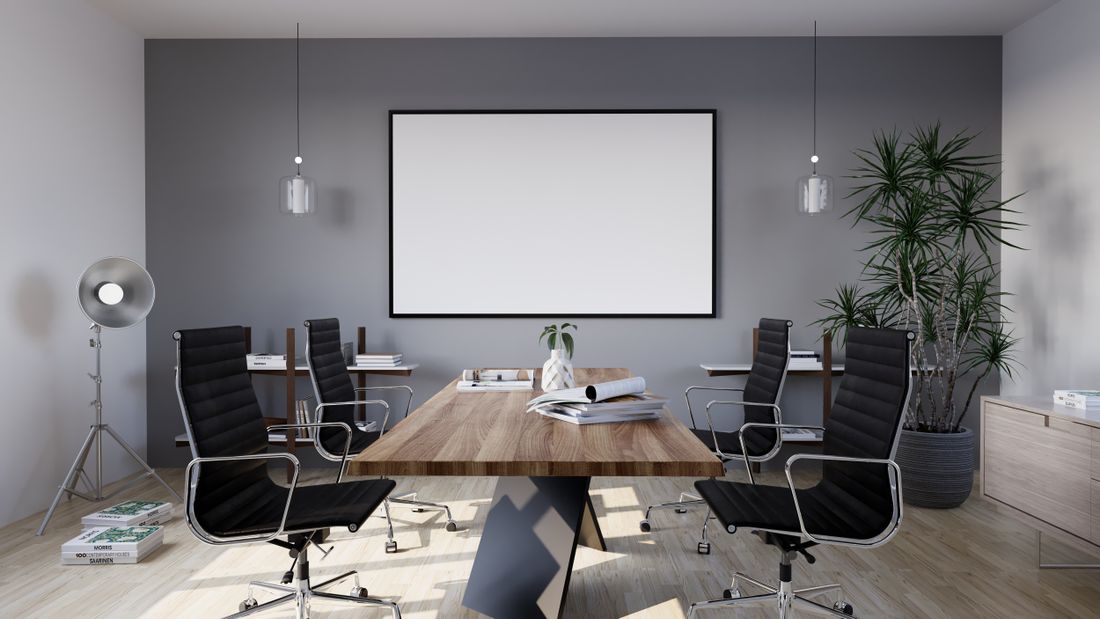
Photo by Paul Seling via Pexels.
What do the actual room and lighting conditions look like at a lunch-and-learn?
A lunch-and-learn usually happens in a small conference room or breakout space with mixed daylight and overhead office lighting, a setup that was never designed with a camera in mind, which means the coverage plan has to work around the room rather than reshaping it.
There is rarely time or reason to bring in a full lighting kit for a room this size and an event this frequent. A compact bounce or a single small light, positioned to soften the flat overhead office lighting on the speaker's face, usually does the job without adding meaningful setup time before the talk starts.
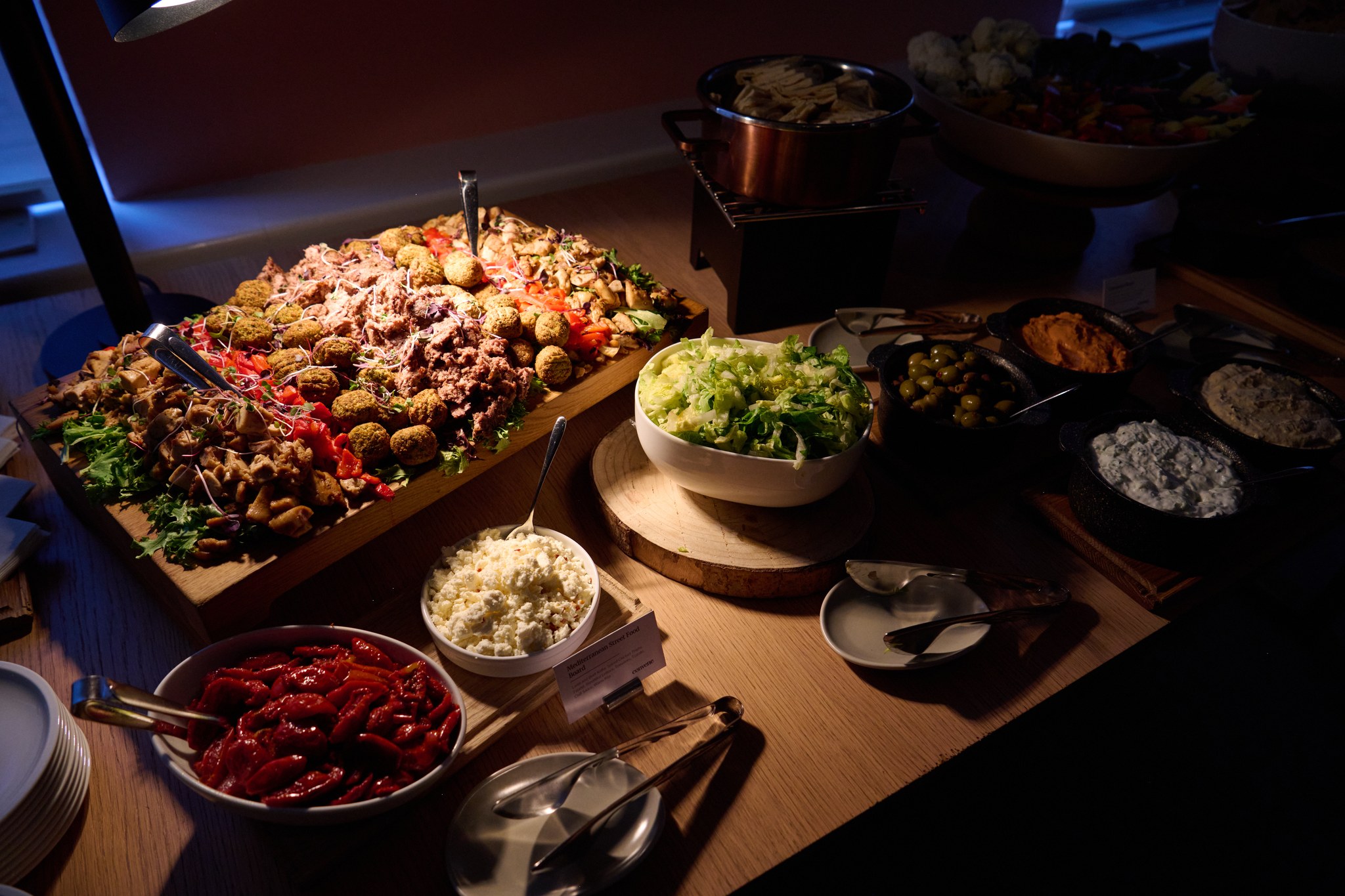
The lunch itself is part of the room's reality too. Coffee cups, plates, and a casual spread often sit somewhere in frame, and a good coverage plan works with that texture rather than trying to hide it, since it is an honest part of what a lunch-and-learn actually looks like, and a coverage plan that pretends otherwise usually just looks staged instead of real.
How does coverage stay repeatable across a whole year of the same series?
A repeatable setup means the same camera position, the same basic shot list, and the same simple lighting fix get used every session, adjusted only for the room's layout that day, so nobody has to relearn the coverage plan each time a new lunch-and-learn gets scheduled.
We write the setup down after the first session the same way we would for any recurring shoot, noting where the camera stood, what worked with the room's lighting, and what the shot list actually covered. That short reference is what lets a later session run smoothly even with a different speaker or a slightly different room.
The goal is for the tenth session of the year to take the same amount of planning as the first one: almost none. A series that requires fresh planning every single time is a series that eventually stops getting covered at all once the internal team gets busy, since nobody has the bandwidth to reinvent the plan on a monthly deadline.
How fast does lunch-and-learn coverage need to turn around, and where does it end up?
Lunch-and-learn content is usually most useful within a day or two, while the talk is still fresh enough for an internal recap email or a newsletter mention, which puts a premium on a fast, simple turnaround rather than an elaborate post-production process.
The content typically ends up in a handful of predictable places: an internal comms recap, a slide or photo dropped into a company newsletter, occasionally a still or short clip the speaker asks to share on their own professional profile. None of those uses require heavy editing or a long delivery window.
Because the series repeats so often, a slow turnaround compounds fast. A three-week delay on one lunch-and-learn's photos might be tolerable once. A three-week delay repeating every month means the internal team stops trusting the coverage to be useful, which defeats the point of documenting the series at all, and it makes the whole exercise feel like extra work rather than something the team actually looks forward to using.
How does Core Visuals approach coverage for a recurring lunch-and-learn series?
We build the coverage plan around the series' actual cadence from the first conversation, sizing the crew, the shot list, and the turnaround to a monthly or biweekly rhythm rather than borrowing a plan built for a once-a-year company event that happens to be smaller.
The first session sets the template: camera position, lighting fix, shot list, delivery format. Every session after that runs against the same reference, which keeps the cost and the planning time proportional to what a lunch-and-learn actually is, a small, frequent, low-stakes internal talk, not a scaled-down version of a big production.
We think that proportionality is what keeps a recurring series alive past its first few months. Coverage that costs and takes as much effort as a much bigger event gets cut the first time a budget gets reviewed. Coverage sized to match the actual event tends to just keep running, which is really the only measure of success a recurring internal series needs, quarter after quarter, without anyone having to defend the line item again.
Frequently Asked Questions
Does a lunch-and-learn need the same size crew as a company town hall?
No. A town hall happens once a year or once a quarter and gets a bigger crew and a longer shot list to match that scale. A lunch-and-learn happens far more often with a much smaller room, so a single photographer or a compact one-camera video setup usually covers it. Matching a town hall's production size to a monthly recurring talk makes the series too expensive to sustain.
Should a lunch-and-learn series be covered with photos, video, or both?
Most lunch-and-learns are well served by photography alone, since internal recaps and newsletters rarely need moving footage. Video makes sense when a specific talk has value beyond that one room, such as a speaker wanting a clip for their own professional use, and even then a simple single-camera setup is usually enough. Adding a full video production plan to every session is rarely worth the added cost.
How do you handle a small conference room with mixed daylight and overhead office lighting?
A compact bounce or a single small light, positioned to soften the flat overhead lighting on the speaker's face, usually solves it without adding meaningful setup time before the talk starts. There is rarely a reason to bring a full lighting kit into a room this size for an event this frequent. The coverage plan works with the room as it actually is, not a rebuilt version of it.
Why does a recurring lunch-and-learn series need a repeatable coverage setup instead of planning each session fresh?
Re-planning a shoot from scratch a dozen times a year costs more time and money than a once-a-year event ever has to account for. A repeatable setup, the same camera position, shot list, and lighting fix, means the tenth session of the year takes about as much planning as the first one. Without that, a busy internal team eventually lets the series stop getting covered at all.
How fast should photos from a lunch-and-learn get delivered?
Within a day or two, while the talk is still relevant for an internal recap email or a newsletter mention. Because the series repeats so often, a slow turnaround compounds quickly: a delay that might be tolerable once becomes a pattern the internal team stops trusting if it happens every month. Fast, simple delivery matters more for a recurring series than heavy post-production polish ever would.
Related Reading
Not sure if hourly or a package makes more sense for your event?
Tell us the expected length, and we'll run the actual numbers before you book.
See Event Coverage Packages