First, who "we" is, because it matters to the story. Alongside Core Visuals, I run a second studio called The Lightroom Studio — our art-documentation outfit, where we photograph and film work for NYC galleries and artists. Same hands, different subject: one studio points the camera at your conference, the other at a canvas. This story started over at The Lightroom Studio, on a renewal notice, and it ended up reshaping how both of them are built.
The email came in the way these always do — polite, with a deadline. The renewal itself was no shock; we'd signed up for the plan and it auto-renews every year, same as anyone's. What stopped me was the number. The price had quietly climbed to $915.79, up from $740.43 the year before, set to charge automatically on June 30th — nineteen days before the cycle even ended. A renewal I expected. A price hike I didn't. So before the card got hit, I asked the question I should've asked years earlier: what am I actually paying for here?
Here's the short version, and you can stop reading after it if you just want the answer. You can rebuild a studio website yourself with AI and walk away from monthly platform fees. You describe each page in plain English, the AI writes the actual code, and you stay in charge of the taste — what it says, which photo carries it. It costs a few evenings, not a computer-science degree. What it won't do is replace your judgment about what's worth keeping.

I'll be honest about why this stuck with me. I tell every event client the same thing: no mystery pricing, no number that moves after you've said yes, you own what we make for you. And there I was, watching my own bill climb on a frame I didn't even own. The irony was a little loud. So this is the story of what I built instead — and why it's the same instinct I bring to a conference floor at 7am.
Table of Contents
What was I actually paying for?
A website builder sells you ease, and the ease is real — drag a block, pick a template, publish. The catch is what that convenience quietly keeps. The site lives on their system, in their format, behind their monthly fee. You can edit it, but you don't really own it, and the price is theirs to raise whenever they like. Mine just got raised.
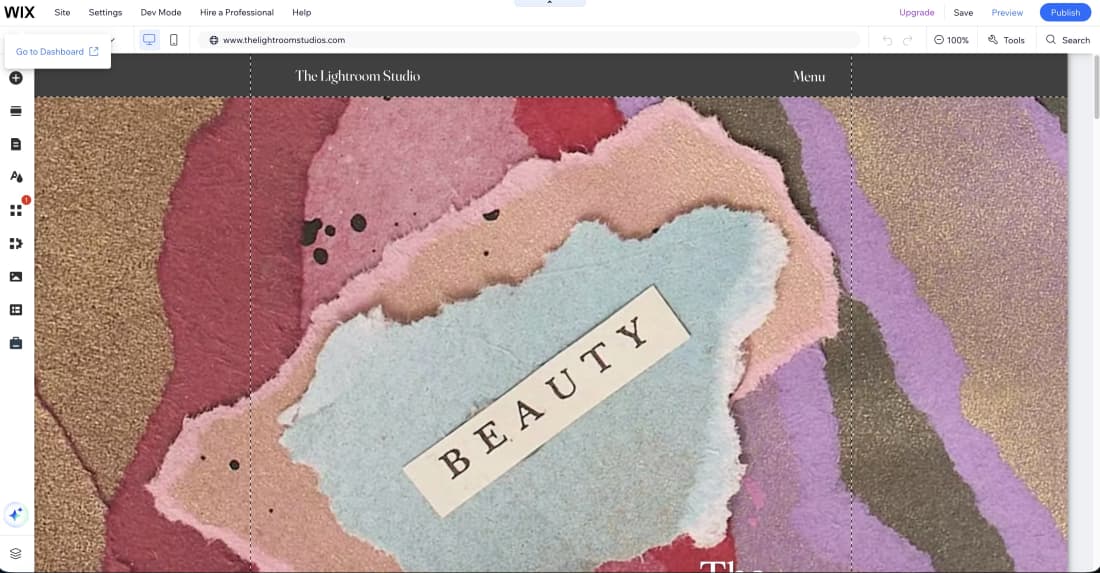
At The Lightroom Studio the irony cut even deeper. We obsess over reproducing a painting so the artist owns a clean record of it forever — and there we were renting our own frame, month after month, with no way to take it with us. Once I saw it on one studio's site, I couldn't unsee it on the other. So I decided to own it, the same way a photographer keeps the negatives. The files should be mine.
What a website is actually made of
A static website is a handful of plain files — HTML — sitting on a server that your domain name points at. That's the whole thing. No page builder renting you access, nothing to update on someone else's schedule, nothing to renew. Strip away the dashboard and a site is far simpler than the monthly fee makes it feel.
The stack I landed on is boring in the best way. Plain HTML for the pages, so they load almost instantly. Free static hosting, which replaces the builder's monthly bill with nothing. A media service — the same one this blog's images load from — that resizes and compresses every photo on the fly, so a thumbnail never quietly drags down a full-resolution original. And a real structure underneath: one folder for the live site, one for reference, a running change log. The dull part most do-it-yourself sites skip, and the exact reason mine is still easy to touch a year later.
How we built it with AI
Building it was a conversation, and that's the part that surprised me most. I described a page in plain English — what it's for, what it should say, how it should feel — and the AI drafted the actual code. I previewed it, reacted, asked for changes, moved on. Describe, draft, refine, repeat. The machine is fast. It is not tasteful. That part stayed mine.
I want to be straight about the division of labor, because the "AI built my website" headline oversells it. The AI handled the building — the markup, the styling, the tedious consistency across pages. I handled the directing: what each page needed to prove, which photo carried it, and keeping the words in my voice instead of the smooth, weightless tone these tools drift toward if you let them. The skill isn't coding. It's briefing — the same muscle I use on a shoot. A vague brief gets you a generic frame whether you're talking to a second shooter or a language model. A specific one gets you something usable on the first try.
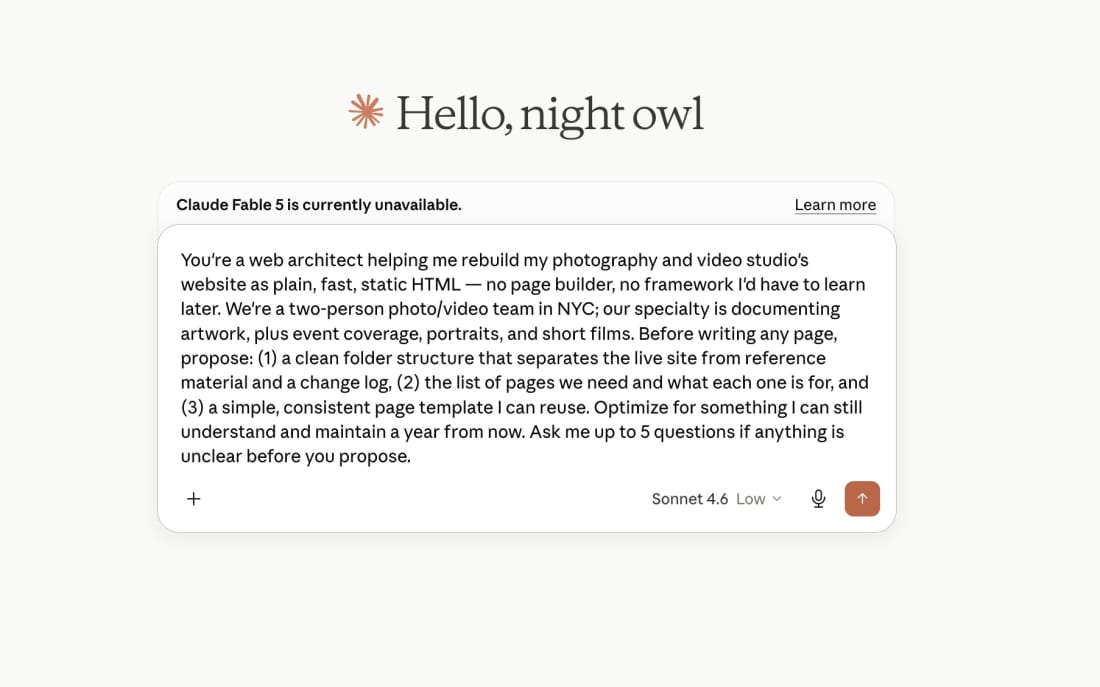
People imagine there's one magic prompt. There isn't. It's a handful of clear ones, each doing a single job: give it a role, give it your real constraints, tell it what not to do, and demand a specific result. Here's the one I'd hand to anyone — steal it.
The voice pass — run it on every page
"Rewrite this page in my voice: conversational, direct, warm, a little dry. Short paragraphs, no corporate filler. Hard bans: 'passionate about,' 'industry-leading,' 'elevate your brand,' 'seamless,' 'cutting-edge.' Lead with what we actually do for the client, not how great we are. Keep any sentence that already sounds like a real human — don't rewrite for sport."
The part that quietly matters: being found
The thing I was most nervous to leave behind turned out to be the biggest upgrade: being found. A builder handles a lot of search plumbing invisibly, so when you rebuild by hand you have to put it back. But you also get to do it on purpose, which beats having it done vaguely on your behalf.
A few things matter more than people expect. Real file names and written alt text on every photo, so the work shows up in image search and the page makes sense to engines that can't actually see a picture. Structured data — a small block of code that tells Google plainly that I'm an event photo and video studio in New York, what I offer, and where I work. A sitemap that hands search engines a literal map of every page. And there's a newer reason now: more people start their searches inside AI tools, and those tools quote the pages they can read clearly. Structured, well-labeled pages don't just rank — they're the ones an answer engine repeats with confidence. Being legible to a machine has quietly become part of being found by a human.
Core Visuals runs on the same bones
The site you're reading this on was built the exact same way. No page builder, no monthly platform fee, every page plain and fast, the photos and video served from a media service so a packed portfolio still loads quickly. I wrote the words, I chose the work, the AI did the heavy lifting on the code. If something on this site feels off, there's no support ticket and no account manager — there's me, opening the file.
That's not a tech flex. It's the same promise the whole studio runs on. Fixed packages instead of mystery pricing. Footage and galleries that are yours, delivered, not held hostage on someone's platform. The person who shot your event is the person you email afterward. I didn't want to preach transparency and ownership on a website I was secretly renting at a price I couldn't control.
The honest test: a studio that won't cut corners on its own footer is unlikely to cut them on your conference, your gala, or your brand video. The care is the whole product — yours and mine.
What this has to do with your event
You might be wondering why an event and corporate video studio is writing about websites. Fair. The honest answer is that the instinct that made me rebuild the site is the same one I bring to your event: own the files, sweat the parts nobody sees, and refuse to pay a vague toll on something you could control outright.
When I cover a conference or a brand event, I'm making a record you'll rely on long after the room empties — for recap reels, recruiting, the next sponsor deck, the post that's still relevant because it landed while the event was fresh. I price it in fixed packages because I hate a number that moves after you've said yes as much as you do. I deliver fast because content that shows up three weeks late may as well not exist. And it's all yours to keep. Same instinct, different camera.
Planning an event or a content push?
No sales pitch, no mystery pricing. Tell me what you're working on and I'll send back honest options — fixed packages, fast delivery, content you actually own.
Tell Me What You NeedFrequently Asked Questions
Do you need to know how to code to rebuild a website with AI?
No. The AI writes the actual code. You direct it — deciding what each page is for, choosing which photo carries it, and keeping the words in your own voice. The skill is briefing clearly, the same muscle you use telling a photographer what you need from an event. You need taste and patience more than a computer-science degree.
Is a static website worse for SEO than Wix or Squarespace?
Usually it's better. A static site is faster and cleaner, and it's easy to fill with proper titles, meta descriptions, structured data, and a real sitemap. Speed and clean structure help your rankings rather than hurting them, and they make the page easier for AI search tools to quote correctly.
What does a site like this cost to run?
For a studio site, it's a domain name per year plus a free static-hosting tier. That's the whole bill. There's no monthly platform fee and no renewal invoice quietly climbing toward a thousand dollars. You trade a recurring rent for a one-time build you own outright.
Why is an event and corporate video studio writing about websites?
Because the instinct is the same one I bring to your event. Wanting to own the files, sweating the parts nobody sees, refusing to pay a vague toll on something I could own — that's exactly how I handle your footage, your photos, and your pricing. A studio that won't cut corners on its own footer won't cut them on your coverage.