Photo by Luis Quintero via Pexels.
A franchise or multi-unit conference looks like a conference from the outside — a general session, a stage, a room full of name badges. Underneath, it's a different kind of room than a single company's sales kickoff. The people in the seats aren't employees of one employer. They're independent business owners who happen to share a brand, and that changes the staging, the breakout structure, the recognition moments, and what each attendee actually walks away needing.
A franchise conference puts corporate leadership in front of a room of independent business owners, not one company's staff. That single fact reshapes the event: the general session has to read as a brand briefing rather than a directive, regional breakouts carry as much weight as the main stage, and the recognition segment honors operators for running their own businesses, not employees for hitting a quota.
Table of Contents
- Why a Franchise Conference Isn't Built Like an Internal Sales Kickoff
- Staging the General Session for a Room of Owners, Not Employees
- The General-Session-Plus-Regional-Breakout Structure Most Multi-Unit Conferences Use
- What Regional Breakout Coverage Actually Needs to Capture
- Recognizing Operators, Not Employees: The Awards Segment
- Why a Single-Employer Shot List Doesn't Transfer to a Franchise Conference
- Deliverables That Work for Dozens of Separate Businesses, Not One
- What to Plan For Before Booking Coverage for a Multi-Unit Conference
Why a Franchise Conference Isn't Built Like an Internal Sales Kickoff
A franchise or multi-unit conference puts corporate leadership on stage in front of a room full of independent business owners, not one company's employees. That single difference reshapes the whole event: how the general session gets staged, how breakout content gets organized, who gets recognized on stage, and what each attendee actually needs to walk home with.
An internal sales kickoff has one employer and one chain of command in the room — everyone reports up to the same leadership, and the messaging can assume shared incentives across the board. A franchise conference has a franchisor on stage and dozens or hundreds of separate business owners in the seats, each running their own P&L, hiring their own staff, and answering to nobody in that room but themselves. The corporate message still needs to land, but it lands as guidance for independent operators, not direction for staff. Coverage has to reflect that: the room reads as a partnership meeting between a brand and its operators, not a company all-hands, and the shot list needs to say so from the start.
Staging the General Session for a Room of Owners, Not Employees
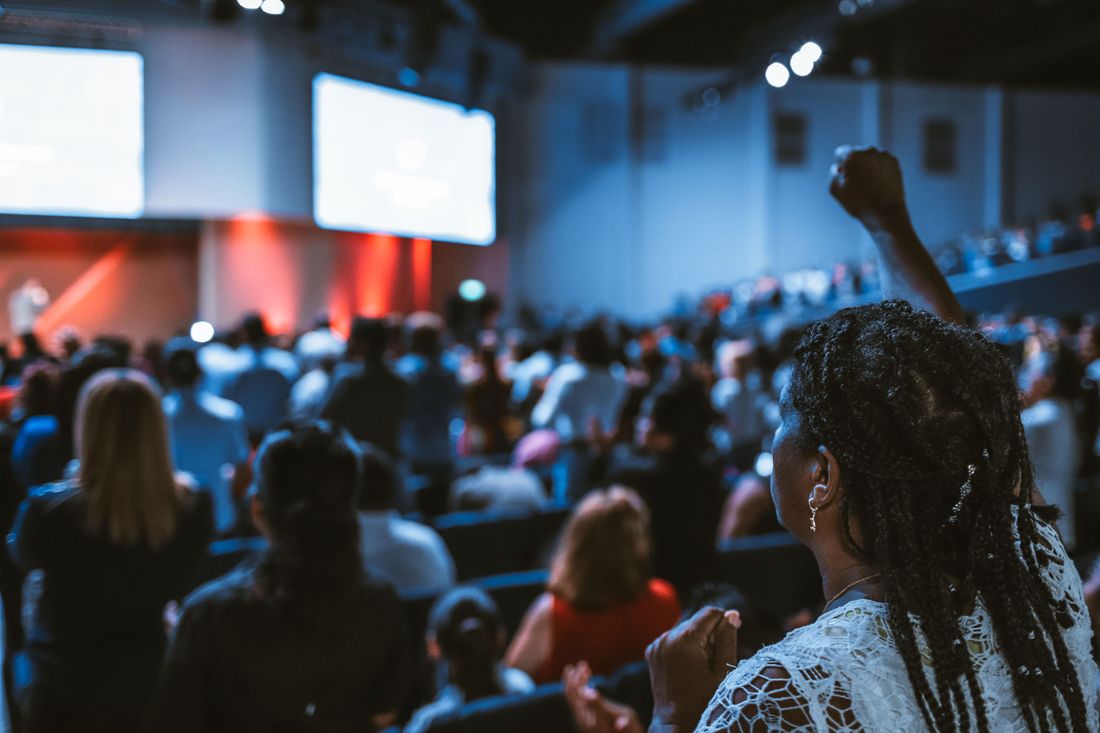
The general session at a franchise conference needs to read as a brand briefing a room of business owners, not a corporate directive handed down to staff. That distinction is mostly about how the room gets photographed and framed: wide shots that show the audience as peers taking in the same information, not subordinates absorbing instructions, and stage coverage that puts corporate leadership in dialogue with the room instead of above it.
In practice, that means paying attention to different moments than a typical internal kickoff would call for. Reaction shots matter more, because operators in the audience are evaluating what corporate is proposing, not simply receiving it — a raised hand during Q&A, a table of operators from the same region comparing notes mid-session, someone photographing a slide on their phone because it affects their own store's numbers. Stage-side shots of a franchisor presenting alongside a panel of operators, rather than solo at a podium, capture the two-way relationship the event is actually built around.
The General-Session-Plus-Regional-Breakout Structure Most Multi-Unit Conferences Use
Most franchise and multi-unit conferences run one general session covering brand-wide strategy — new product rollouts, system-wide marketing, the year's overall direction — then split the room into regional or market-specific breakouts where operators from the same territory work through issues that don't apply evenly across the whole system: local competition, regional pricing pressure, staffing markets that vary city to city. That two-layer structure is the backbone of the event, and coverage needs to follow both layers, not just the one with the biggest stage.
The general session is easier to plan for because it's one room, one agenda, and one clear priority list from start to finish. The regional breakouts are where a coverage plan actually gets tested, since several territory-specific conversations run at the same time, each relevant to a different subset of the operators in the building. Treating the breakouts as an afterthought because the general session already looks like the event misses a large share of where the real, usable conversation actually happens.
What Regional Breakout Coverage Actually Needs to Capture
Regional breakout coverage at a franchise conference needs to show operators from the same market working through territory-specific material together, not just a speaker standing at a podium. The value of a regional breakout is usually the peer conversation between owners running stores in similar markets, comparing what's actually working in their territory, so the coverage should show that exchange rather than treating the session as a smaller version of the general session.
That changes what gets prioritized in the room: a round-table or workshop-style setup calls for coverage that captures operators talking to each other, not just facing forward. A facilitator moving between tables, an operator gesturing while making a point to the group beside them, name badges and territory labels that make clear which market is in the room — those are the images a regional team actually reuses afterward, in an internal recap or a follow-up note to the operators who attended. A generic wide shot of a breakout room says far less than one that shows the working session happening inside it.
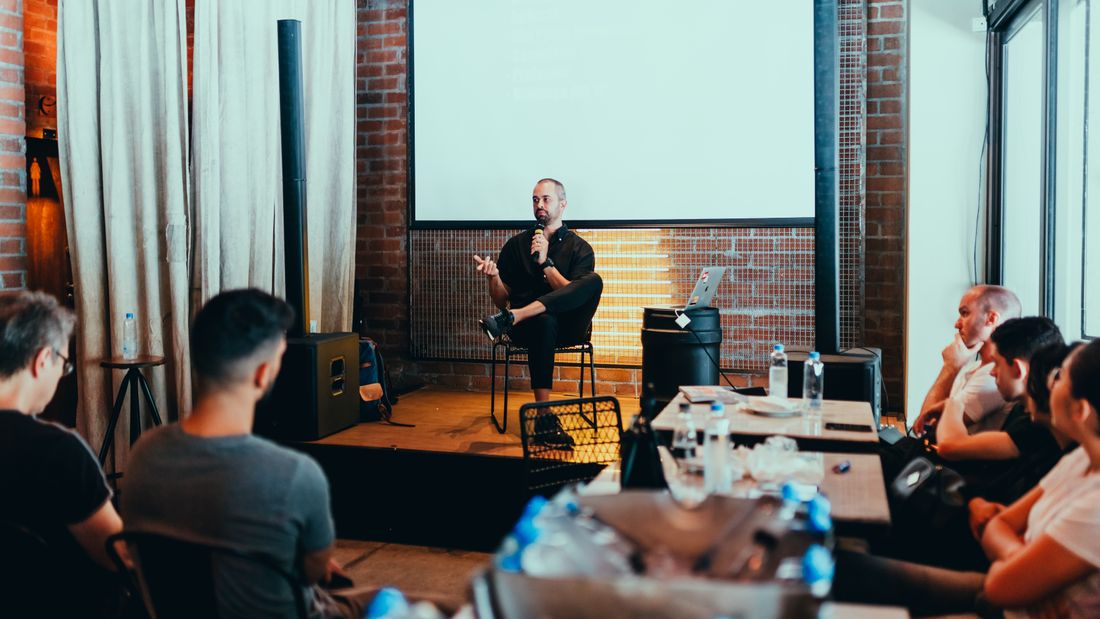
Photo by Matheus Bertelli via Pexels.
Recognizing Operators, Not Employees: The Awards Segment
A recognition segment at a franchise conference typically honors business owners for running their own locations well — highest-growth market, top-performing store, longest-tenured operator in the system. That's a different photograph than an employee-of-the-year moment at an internal kickoff, because the person walking across the stage isn't being praised by a boss. They're being recognized by a brand partner, in front of a room of other owners who compete in the same system and know exactly what that recognition took.
Coverage has to treat that difference seriously. The handshake-and-hold still matters, but so does a clean individual portrait taken right after, because unlike an employee who might see the award photo once in a company newsletter, an operator often wants that image for their own store's marketing, social presence, or local press. A rushed group shot or a frame with the winner's face half turned doesn't hold up the way it might for an internal use case that ends at an all-hands recap deck.
Why a Single-Employer Shot List Doesn't Transfer to a Franchise Conference
A shot list built for one company's internal sales kickoff assumes a single hierarchy, one brand identity in the room, and images that stay inside one organization's internal channels. None of that holds at a franchise or multi-unit conference. The room contains dozens or hundreds of independently owned businesses operating under a shared brand, and each one may want to use the coverage separately, for their own local marketing, not just for a corporate recap.
That difference shows up in small, practical ways a copied-over SKO list misses: whether deliverables need to be split and organized by operator or region instead of handed over as one undifferentiated gallery, whether individual operator portraits are worth budgeting time for the way they wouldn't be at an internal event, and whether reaction shots need to avoid isolating one operator's table in a way that reads as favoritism among businesses that, in most other contexts, are competitors within the same system. A list written for one employer talking to its own staff simply doesn't ask those questions.
Deliverables That Work for Dozens of Separate Businesses, Not One
Because a franchise conference serves many independently owned businesses instead of one employer, the deliverables usually need a different structure than an internal event's gallery. A sales kickoff recap can ship as one organized set for one internal comms team to pull from. A franchise conference works better organized so each operator can find their own material — their store's recognition photo, their region's breakout shots — without sorting through hundreds of images built for one company's internal use.
That's less about the shoot itself and more about how the coverage gets planned and delivered afterward: grouping images by region and operator name where possible, flagging which shots are appropriate for an individual operator's own social or local marketing versus which are meant for corporate-only internal use, and setting turnaround expectations up front, since dozens of separate business owners asking for their own photo on their own timeline is a different support load than one internal recap deck going to one comms team.
What to Plan For Before Booking Coverage for a Multi-Unit Conference
Planning coverage for a franchise or multi-unit conference means mapping the general session, every regional breakout, and the recognition segment before the event, then deciding in advance which pieces need a dedicated shooter and which can share coverage. The multi-layered structure — one general session plus several concurrent regional tracks plus a recognition segment somewhere in the agenda — makes this a bigger planning conversation than a single-track internal event, closer to a multi-track conference than a company kickoff.
It also means asking who the deliverables actually serve before the event starts, not after: the franchisor's internal recap, each operator's own marketing, and next year's conference deck may all draw from the same shoot but need different treatment. Venue logistics matter too — a general session ballroom and several breakout rooms running at once across a hotel conference floor is a different footprint than one company's meeting space, and it changes how much ground a crew needs to cover in a single day.
Frequently Asked Questions
How is a franchise conference different from an internal company sales kickoff for coverage purposes?
A franchise or multi-unit conference puts corporate leadership in front of independent business owners, not one company's employees. That changes the staging of the general session, requires coverage across region-specific breakouts instead of one track, and turns the awards segment into owner recognition rather than employee recognition. A shot list built for a single-employer sales kickoff assumes one hierarchy and one internal audience — neither assumption holds at a franchise event.
Do we need coverage in every regional breakout room, or just the general session?
The general session covers brand-wide messaging, but the regional breakouts are where operators from the same market compare notes on issues specific to their territory, often the most useful material for that region afterward. Skipping breakout coverage because the general session already looks like the event misses real, reusable content. Whether every breakout needs its own shooter depends on how many run concurrently, but the regional layer shouldn't be an afterthought in the plan.
What does an operator recognition moment need that an employee award moment doesn't?
An operator recognition moment honors someone for running their own business well, not for performance as an employee, so it carries more weight for a wider audience of other owners in the same system watching a peer be recognized. Beyond the handshake-and-hold, a clean individual portrait matters because many operators reuse that image in their own local marketing or social presence afterward, a use case an internal employee award rarely needs to account for.
Should photo and video deliverables be organized differently for a franchise conference than a single-company event?
Usually, yes. An internal event can ship one organized gallery for a single comms team to pull from. A franchise conference serves many independently owned businesses at once, so deliverables work better grouped by region or operator, with clear guidance on which images are appropriate for an individual operator's own marketing versus corporate-only internal use. Planning that structure before the event saves confusion once dozens of separate owners are asking for their own photos.
How far in advance should a franchise or multi-unit conference book photo and video coverage?
Book as soon as the general session date is confirmed, since these events involve more planning than a single-track internal kickoff: mapping the general session, every regional breakout, and the recognition segment in advance, then deciding which pieces need dedicated coverage. Multi-unit conferences also tend to cluster around the same months each year across an industry, which narrows the pool of crews experienced running a general-session-plus-breakout structure once planning starts late.
Related Reading
Not sure if hourly or a package makes more sense for your event?
Tell us the expected length, and we'll run the actual numbers before you book.
See Event Coverage Packages