Photo by Jakub Zerdzicki via Pexels.
Every client who calls asking for “a brand video” is actually asking for one of three different things, and they almost never say which. One wants something for the homepage that makes a stranger feel the company before they read a word. Another wants something a salesperson can drop into a deck to answer “what does this actually do.” A third wants something for the careers page that answers “what's it like to work here.” Same request, three different jobs — and the wrong one fails no matter how well it's shot.
“Brand video” usually means one of three formats: an anthem film for the homepage that sells a feeling, a product video for the sales deck that explains what the thing does, or a culture video for the careers page that answers what it's like to work there. The placement — not the budget — decides which one to make, because each answers a different question from a viewer in a different mindset.
Table of Contents
- Why “we need a brand video” always means three different things
- The anthem film: selling a feeling before anyone reads a word
- The product video: answering what it does and why buy it
- The culture video: proving what it's actually like to work here
- Why placement decides the format, not the budget
- What happens when the wrong format lands in the wrong place
- Choosing one format first when the budget only covers one
- What one production day can realistically cover across formats
Why “we need a brand video” always means three different things
Three requests come in using the exact same phrase — “we need a brand video” — and they describe three different projects. One is for the homepage, meant to make a stranger feel something before they've read a headline. One is for a sales deck, meant to answer what the product does and why it's worth buying. One is for a careers page, meant to answer what it's actually like to work there. Same words, different jobs, different failures if you mix them up.
The mistake isn't picking the wrong crew or the wrong budget tier. It's skipping the one question that actually sorts the request: where does this video live, and what is the person watching it trying to decide in that moment? A homepage visitor, a prospect in a sales call, and a job candidate scrolling a careers page are three different audiences asking three different questions, even when the brief says the same six words. Get the placement right first, and the format — anthem, product, or culture — follows without much debate.
The anthem film: selling a feeling before anyone reads a word
An anthem film lives on the homepage or a landing page, and it answers one question: who are you, and why should I care in the next fifteen seconds? It's built on feeling, not features — no pricing, no feature walk-through, no staff bios. Tone, pace, and a point of view carry the whole thing, because the viewer hasn't decided yet whether this company is worth their attention.
That's why an anthem film reads as the most “brand video” of the three formats, and why it's the one people default to asking for even when it's not what they actually need. It works because a stranger arriving at a homepage isn't ready for detail — they're deciding whether to keep scrolling. A thirty- to sixty-second loop with strong visuals and a clear voice does that job. Load it with product specifics or an org chart of employee testimonials, and it stops doing the one thing it's actually for: making someone feel like they've found the right company before they've read a single sentence of copy.
The product video: answering what it does and why buy it
A product video lives in a sales deck, a demo call, or a pricing page, and it answers a completely different question: what does this actually do, and why should I buy it over the alternative? The viewer already has some interest — someone put it in front of them, or they clicked through looking for specifics — so it needs to earn trust with clarity, not mood.
That means screen capture, a walk-through of a real workflow, and a narration track that explains what's happening on screen, not a music bed doing the emotional work. The pace is slower and more explanatory than an anthem film's, because a prospect evaluating a purchase wants to understand a feature before moving on to the next one, not feel a vibe for fifteen seconds. Where an anthem film is judged on whether it moves someone, a product video is judged on whether a viewer who's never used the product could explain it to a colleague afterward. Style still matters, but only in service of clarity — a beautiful cut that leaves someone unsure what the product actually does has failed at its one job.
The culture video: proving what it's actually like to work here
A culture video lives on the careers page, and it answers a question neither of the other two formats touches: what is it actually like to work here, day to day? A job candidate scrolling that page isn't evaluating the product or deciding whether the brand feels premium — they're trying to picture themselves in the building, at the desk, in the meeting.
That makes real employees in a real space the whole point, not a supporting detail. Actual team members talking in their own words about the work, the office, and the pace of the place does more here than any amount of polish, because polish is exactly what a culture video isn't selling. A scripted, over-produced version of this format reads as corporate theater to the one audience it's for — people who are specifically trying to detect whether a company is being honest about its own culture. The bar for a culture video isn't cinematic; it's credible. If it looks like an ad, it's failed the only test that matters for where it lives.

Photo by olia danilevich via Pexels.
Why placement decides the format, not the budget
A bigger budget doesn't tell you which of these three to make — where the video will actually sit does. A homepage visitor, a sales prospect, and a job candidate are three different people asking three different questions, and no amount of production value changes what question a given placement is answering.
This is the sorting question worth asking before any conversation about crew size or shoot days: where does this live, and what does the person looking at it in that spot need to walk away knowing? A homepage needs a feeling in fifteen seconds. A sales deck needs a workflow explained clearly enough to repeat. A careers page needs proof that real people actually like working there. Two companies with identical budgets can end up needing completely different videos once you ask where each one runs, and one company can need all three at once without any of them needing to cost the same amount or use the same crew.
What happens when the wrong format lands in the wrong place
An anthem film dropped into a careers page reads as generic marketing to a candidate who's specifically hunting for honesty — they wanted real employees, and they got a mood reel. A product video used as a homepage hero loses a visitor who hasn't decided whether they care yet, because it starts with a feature walk-through instead of a reason to keep watching.
A culture video repurposed as a sales tool undersells the product just as badly, because a prospect evaluating a purchase doesn't need to see the office kitchen — they need to see the thing work. Each of these failures looks like a production problem from the outside — people say the video “didn't land” or “didn't perform” — but the footage itself is often fine. The mismatch is almost always upstream of the shoot: the wrong question got answered for the placement it ended up in. That's a planning fix, not a reshoot, which is exactly why sorting the request before booking anything saves more than a bigger budget would.
Choosing one format first when the budget only covers one
When only one of the three fits this cycle's budget, the honest tie-breaker is which placement is currently losing the most people, not which video sounds the most impressive to make. A homepage with high traffic and low time-on-page usually needs the anthem film first. A sales team that keeps fielding the same clarifying questions on calls usually needs the product video first. A careers page with plenty of applicants who ghost after one interview usually needs the culture video first.
That's a business-stage question, not a creative one, and it's worth answering honestly before booking anything. A young company still explaining what it does to strangers probably needs the anthem film before the other two matter. A company that's past that but struggling to close deals needs the product video. A company that's winning deals but can't hire fast enough needs the culture video. None of these is the “better” video in the abstract — they're just the one solving the actual bottleneck this quarter, which is a more useful filter than budget size alone.
What one production day can realistically cover across formats
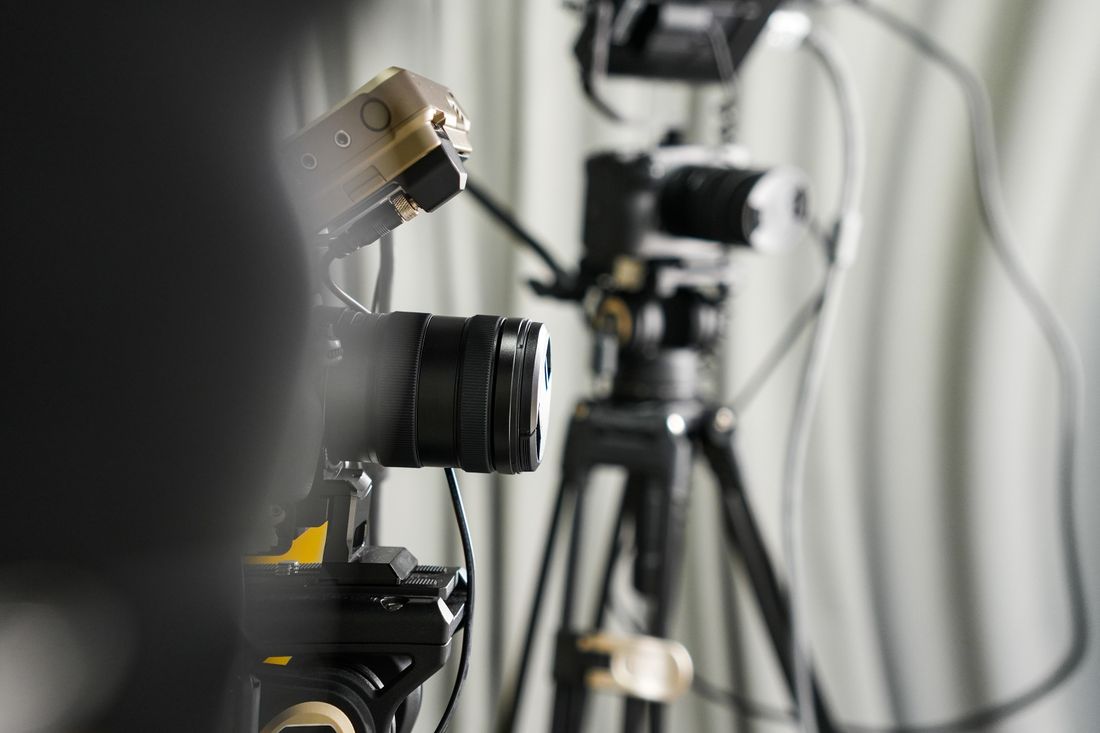
A single, well-planned shoot day can gather raw material toward more than one of these formats, but it can't fully deliver all three without treating each as its own edit with its own pacing and its own answer to its own question. The camera setup, lighting, and even some of the same interviews can serve two formats at once — the edit is what has to stay separate.
Interview footage of a founder or team member, for instance, can supply both an anthem film's emotional beats and a culture video's honest, in-their-own-words moments — the same raw conversation, cut two different ways for two different questions. A product walk-through shot cleanly can sometimes double as a b-roll layer under an anthem film's voiceover. What doesn't stretch across formats is the edit itself: a fifteen-second emotional hook and a five-minute feature explainer are different structures, not different lengths of the same cut. Planning which formats share a shoot day, before the day happens, is what makes that reuse possible instead of accidental.
Frequently Asked Questions
How do I know if I need an anthem video, a product video, or a culture video?
Start with where it will actually run. If it's the homepage or a landing page facing strangers, that's an anthem video. If it's a sales deck, demo call, or pricing page facing someone evaluating a purchase, that's a product video. If it's a careers page facing job candidates, that's a culture video. The placement tells you the question the viewer is asking, and the question tells you the format.
Can one video serve two of these purposes at once?
Rarely well. An anthem film and a product video are judged on opposite things — feeling versus clarity — so stretching one to do both usually blurs both jobs. What can share resources is the shoot itself: the same interview or the same day of filming can supply raw footage for two separate edits, each cut for its own placement and its own question, rather than one video trying to answer all of them.
Which of the three should a small company make first if budget only covers one?
Whichever placement is currently losing the most people. A homepage that gets traffic but little engagement usually needs the anthem film first. A sales process where prospects keep asking the same clarifying questions usually needs the product video first. A careers page with applicants who drop off after one interview usually needs the culture video first. Match the format to the actual bottleneck, not to which video sounds most exciting to make.
Why does a culture video need to look less polished than an anthem film?
Because the audiences are judging opposite things. A homepage visitor is deciding whether the brand feels credible and put-together, so polish helps. A job candidate is specifically checking whether the company is being honest about its own culture, so an over-produced, ad-like culture video reads as staged rather than trustworthy — the same quality that helps an anthem film can actively work against a culture video.
Is a product video the same thing as a full case study video?
No — a product video explains what a product or service does in general, aimed at anyone evaluating whether to buy it, with or without a real client involved. A case study is built around one specific, documented result and generally needs a real client's participation and approval before it runs anywhere public. A product video can exist entirely without client references; a case study cannot exist without one — that's what keeps the two formats genuinely separate.
Related Reading
Have a launch or brand project where scale is actually the story?
Tell us what the aerial shot needs to show, and we'll scope it alongside the ground coverage from the start, permits included.
See Personal Branding & Launches