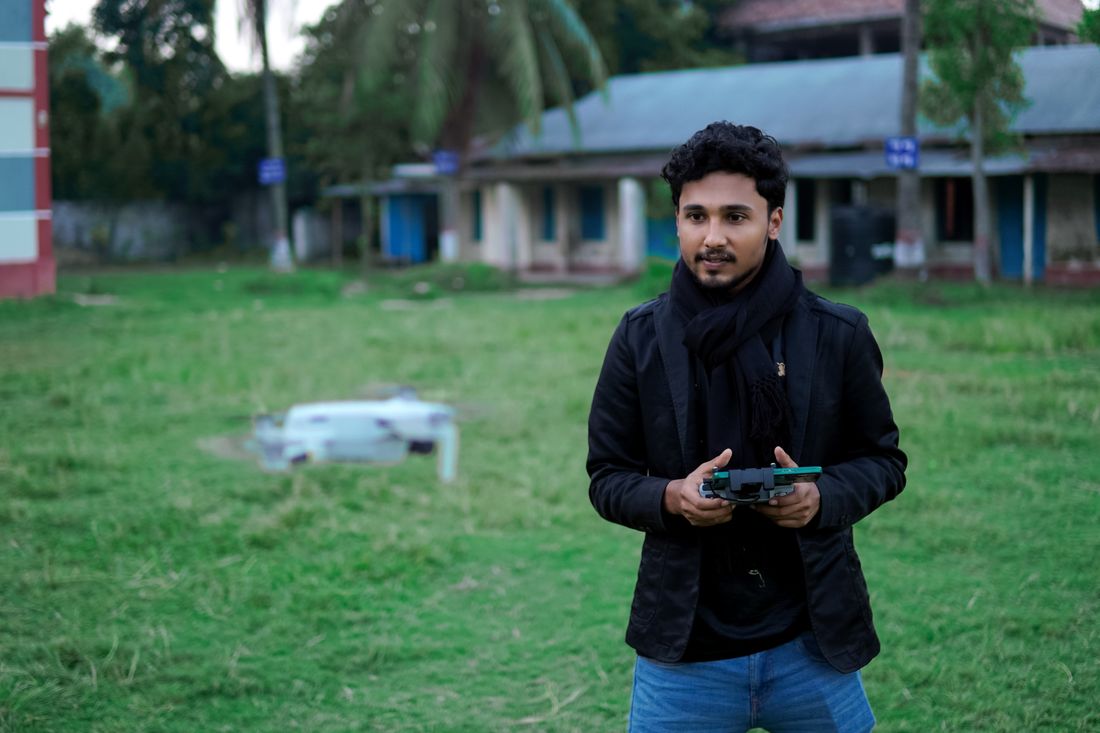
Photo by Sabir Khan Shourov via Pexels.
Someone on the planning team asks if we can add drone to the event quote, usually after the ground coverage is already scoped and the budget already discussed. It sounds like one more line item. It isn't. Aerial is a different discipline, usually a different operator, a narrower window of usable time, its own space at the venue, and its own edit pass, all of which change the number and the plan before drone footage ever gets added to what's already booked.
Adding drone footage to an existing event quote changes more than the price. It usually means a separate operator, a feasibility check before a firm number, a narrow weather-and-light window that rarely matches what the ground crew can't leave, added setup time at the venue, and a distinct deliverable with its own edit pass.
Table of Contents
- Can I Just Add Drone to My Event Quote?
- Does the Event Photographer Just Fly a Drone Too?
- Why Does the Quote Arrive in Two Stages?
- Why Does Drone Coverage Get Such a Narrow Window?
- What Does Drone Add at the Venue Itself?
- Is Aerial Just a Few Extra Clips in the Same Edit?
- Can Aerial Be Scoped Down Instead of Skipped Entirely?
- When Is the Honest Answer to Skip Aerial Entirely?
Can I Just Add Drone to My Event Quote?
Not as a single add-on line. Asking to add drone to an event quote is really four separate questions bundled into one: whether the site allows it, who actually flies it, when it can fly during the event, and how the footage gets delivered. Each question changes the number before it means anything.
The request usually shows up late, after the ground coverage is already scoped and the budget already discussed, which is exactly why it feels like it should be a quick addition. It isn't, and treating it as one is how a quote ends up wrong on the day, not just wrong on paper.
What actually changes when aerial gets bolted onto an event booking falls into a handful of buckets: crew, feasibility, timing, staging, and the deliverable itself. Each one is covered on its own below, in the order they usually come up in a real planning conversation, so a buyer knows which question to ask first instead of jumping straight to a price.
Does the Event Photographer Just Fly a Drone Too?
Usually not. Aerial is its own discipline with its own equipment, its own flight skill, and its own attention demands, so it's typically handled by a separate operator rather than the ground photographer or videographer putting a camera down and picking up a controller. That's the first thing that changes the crew math on a quote.
A ground shooter's attention during an event is already fully committed: watching the room, anticipating the next moment, staying close enough to react. Flying safely and framing a useful shot from the air asks for that same level of attention, aimed somewhere else entirely. Splitting it between two jobs at once is how both jobs get done poorly.
That's why aerial on an event booking almost always means adding a person, not just adding a camera to someone who's already working. A second body on site changes labor cost, coordination, and scheduling in ways a single extra lens never would. It's the first real cost driver, and it's worth naming plainly before any other factor gets discussed.
Why Does the Quote Arrive in Two Stages?
Because feasibility has to be answered before a number means anything. Whether the site, airspace, and event actually allow a drone to fly there is a separate question from what it costs, and it usually can't be answered on the spot. That's why an aerial add-on typically produces a feasibility check first, then a price.
The feasibility and permissions side of this is its own topic, covered in detail in our aerial commercial photography guide and when aerial belongs on a launch project, so it isn't repeated here. What matters for a quote is simply that this question gets asked and answered before a firm price gets attached to the add-on.
In practice that means a two-stage conversation: first, confirming the site and the event actually support a flight, then pricing the crew, time, and deliverable once that's settled. Skipping straight to a number without the first stage is how a quote turns out to be theoretical rather than real, so this question is worth raising as early in planning as the venue itself gets confirmed.
Why Does Drone Coverage Get Such a Narrow Window?
Aerial coverage at an event usually has a short, specific window: good light, acceptable weather, and the one part of the event that's actually outdoors or open enough to shoot. That window rarely lines up with the moments the ground crew can't leave, like a keynote, a ceremony, or the exact minute guests start arriving.
Most events don't happen outdoors, and the ones that do usually only have a portion that does: an entrance, a rooftop segment, a tented lawn before the program moves inside. That sliver of usable time and space is what aerial actually has to work with, and it's often much smaller than people picture when they first ask about adding a drone.
The mismatch is the real planning problem. The moment worth shooting from the air, like everyone arriving or the venue at golden hour, is frequently happening at the same time the ground crew is covering something they can't step away from either. Naming that overlap early is what keeps the whole schedule from colliding later.
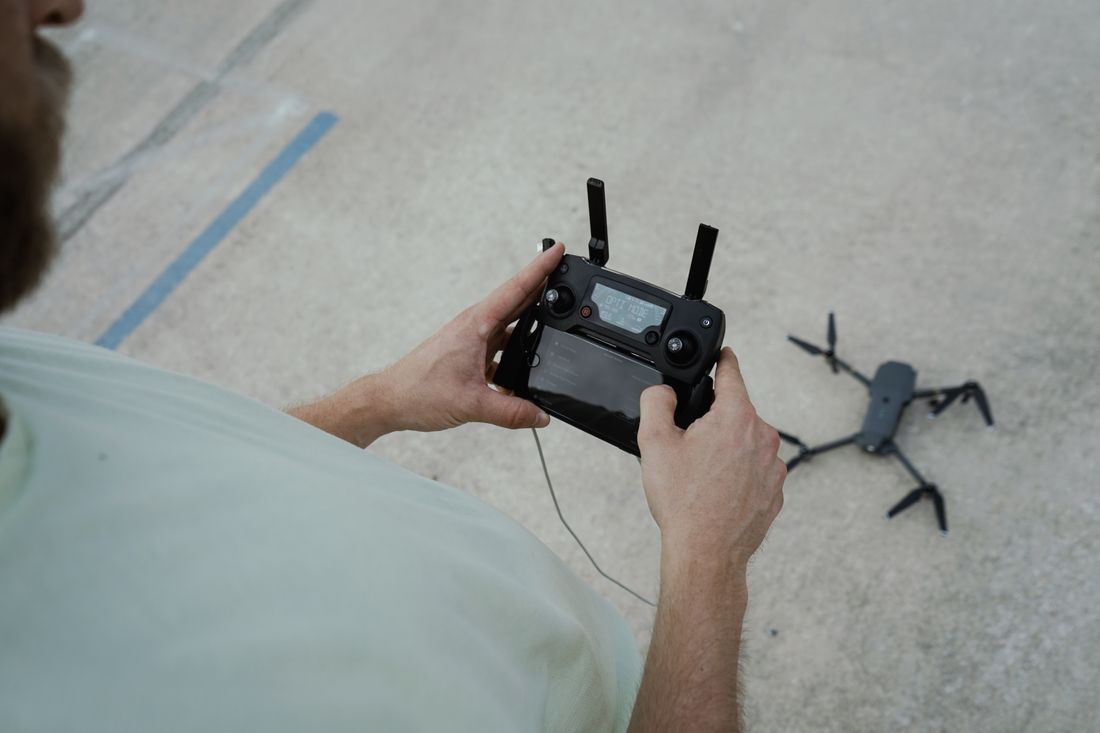
Photo by Kyle Loftus via Pexels.
What Does Drone Add at the Venue Itself?
A drone operator needs a real staging area: room to lay out and check equipment, a clear takeoff and landing spot away from guests, and enough setup and teardown time built into the schedule on both ends. None of that is automatic at a venue chosen for an event, not for a flight.
Most event venues are picked for guest flow, catering logistics, and how a room photographs, not for whether there's a clear patch of ground to launch from. A rooftop with mechanical equipment, a courtyard shared with a neighboring building, or a street-facing entrance can all complicate where a drone can safely take off and land, separate from whether it can fly there at all.
That space and time has to get coordinated with the venue ahead of the event, not discovered by the crew that morning. It's a logistics conversation as much as a pricing one, and it's part of why the aerial add-on needs its own line in the planning timeline, not just in the invoice.
Is Aerial Just a Few Extra Clips in the Same Edit?
No. Aerial footage is usually its own deliverable with its own edit pass, not a handful of clips folded into the ground video. It has a different look, different pacing, and often a different purpose, like an opening establishing shot or a standalone highlight, so it gets built and reviewed separately.
Color, motion, and framing from the air don't cut into ground footage the way two ground cameras cut into each other. An editor has to decide where aerial belongs in the final piece, how much of it earns screen time, and whether it opens the video, closes it, or sits somewhere in the middle. That's a real editorial decision made by a person, not a drag-and-drop step handled automatically.
This is the same logic that already separates a video quote from a photo quote for the same event: different footage means different post-production work, and different post-production work means a different line item on the quote, not a footnote tucked onto an existing one.
Can Aerial Be Scoped Down Instead of Skipped Entirely?
Yes, and it often should be. A short establishing sequence before doors open, showing the venue and the arrival, is a legitimate scaled-down version of aerial coverage when the full treatment isn't worth it for the event. It's a real middle option between the full aerial package and skipping it altogether.
Not every event needs aerial coverage of the whole day. A brief flight before guests arrive, capturing the building, the setup, and the arrival flow, can do real work in an opening sequence without asking the aerial crew to solve the narrow-window problem described earlier. It's a smaller booking, a smaller footprint at the venue, and a shorter edit pass.
Scoping it down honestly means being specific about what that short window is buying: an establishing shot, not full event coverage from above. Framing it that way upfront keeps expectations matched to what a limited aerial booking can actually deliver, instead of a client expecting something closer to the full treatment for a fraction of the effort.
When Is the Honest Answer to Skip Aerial Entirely?
When the event is fully indoors, the outdoor portion is too brief or too crowded to shoot safely, or the moment worth capturing from above doesn't actually exist. In those cases, the honest answer is that aerial won't earn its place at that event, and saying so upfront is better than billing for it anyway.
A ballroom with no windows worth shooting, a rooftop event too small and too full of people for a safe flight path, or a program where nothing outdoors happens are all real reasons to leave aerial off the quote, not reasons to shrink it into something token. A drone shot that adds nothing to the story isn't a bonus, it's an extra cost with no payoff.
The way to raise this honestly is early, before the ground coverage is finalized: describe the venue, the outdoor portion if any, and what the aerial shot would actually need to show. That's enough for a real feasibility and scope conversation to start, instead of a drone getting added to a quote as an assumption nobody checked.
Frequently Asked Questions
Does adding drone footage to an event quote always require a separate operator?
In most cases, yes. Aerial work is a distinct discipline from ground event photography or videography, with its own equipment and flight demands, so it's typically handled by a separate operator rather than the ground shooter putting down one camera and picking up a controller. That changes the crew count and the coordination on site, not just the deliverable list, and it's usually the first real cost driver once drone gets added to an existing event booking.
Why does an aerial add-on turn a quote into two steps instead of one?
Because feasibility has to be confirmed before a price means anything. Whether the venue, the site, and the event itself actually support a flight is a separate question from what the coverage costs, and it usually can't be settled instantly. The practical result is a feasibility check first, then a price built around the crew, the window available, and the deliverable, rather than a single number quoted upfront without knowing if the flight can happen at all.
Does drone footage get edited into the same video as the ground coverage?
Usually not as a simple merge. Aerial footage has a different look, different motion, and often a different purpose than ground coverage, so it typically gets its own edit pass and a deliberate decision about where it belongs in the final piece, whether that's an opening sequence, a closer, or a standalone highlight reel. It's treated as its own deliverable with its own editorial choices, not a batch of extra clips folded into an existing timeline.
Can a smaller, scoped-down version of aerial coverage make sense at an event?
Yes. A short establishing sequence before doors open, covering the venue and the arrival, is a legitimate scaled-down option when full aerial coverage of the whole event isn't worth booking. It uses a smaller crew footprint, a shorter window at the venue, and a shorter edit pass than the full treatment would. Being specific that it's buying an opening shot, not complete aerial coverage, keeps expectations matched to what that smaller booking can actually deliver.
When should drone footage be left off an event quote entirely?
When the event is fully indoors, the outdoor portion is too brief or too crowded to shoot safely, or there simply isn't a moment worth capturing from above. In those cases, aerial won't earn its place at that event, and saying so upfront is more useful than billing for a shot that adds nothing to the final piece. Naming the venue and the outdoor portion early keeps that scope conversation honest from the start.
Related Reading
Not sure if hourly or a package makes more sense for your event?
Tell us the expected length, and we'll run the actual numbers before you book.
See Event Coverage Packages